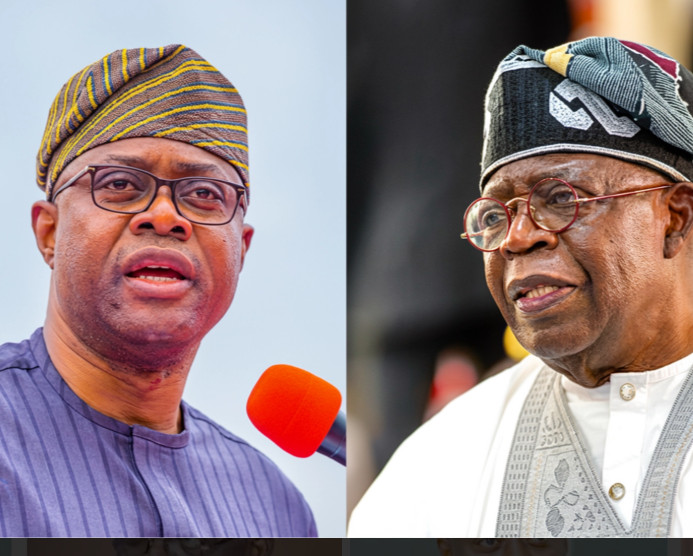
Financial analysts and anti-corruption experts have demanded transparency and accountability in how Nigeria LNG (NLNG) dividends are shared among the three tiers of government, saying the lack of full disclosure is deepening the dispute between the federal government and Oyo State governor, Seyi Makinde.
According to them, lack of full disclosure and transparent revenue sharing template between all tiers of government is fueling the current agitation for proper accounting and disbursement of taxes paid to the federation account by the Nigeria LNG.
They are demanding strict transparency and structural overhauls in how the Federation Account Allocation Committee (FAAC) distributes revenue to Nigeria’s subnational governments.
Makinde, who is also the Governors’ Forum vice-chairman and the APM presidential candidate, accused the federal government of withholding N250 billion in NLNG dividends for each state until after the 2027 elections, and that it has already spent the money.
The Presidency called the claim false. It said N250 billion for each of the 36 states would total N9 trillion, which would need a single NLNG dividend of about $25 billion.
It said NLNG has paid the Federation about $21.5 billion in 25 years and has never paid anything near that at once. It also accused Makinde of making misleading claims since he began his presidential bid.
Makinde replied that the Presidency missed the point. He said a consultant engaged by the Nigeria Governors’ Forum, with federal government support, found a shortfall of about N9 trillion due to states and local governments, and that the federal government accepted the findings. He describes this as an accumulated shortfall, not a single payout.
The records that would settle the matter have not been made public.
LEADERSHIP sent enquiries to the NGF on whether the report exists, who commissioned it, what it found, and what the basis is for saying the federal government accepted its findings. As at press time, the Forum had not responded.
Speaking to LEADERSHIP on the issue, Human Rights, Anti-Corruption, Policy and Legislative Advocacy Activist, and the executive director of Civil Society Legislative Advocacy Centre (CISLAC), Auwal Musa Rafsanjani, said that there is a big disconnect between the citizens and authorities on accountability of public funds with the accounting process lacking in transparency.
Musa, said the accounting reporting line and in particular the distribution of resources by federal government is progressively becoming worrisome.
According to him, the impunity demonstrated by the national government is calling for concern as it arbitrarily withholds allocation to some states especially where the ruling party is not in power.
He gave instances of Osun and Ondo states where the governors have alleged irregularities in revenue sharing to their respective governments.
Musa, said the country is still grappling with the consequences of financial mismanagement when the regime decides where to allocate funds against the wish of the citizenry.
He said the fight against corruption is very crucial in our national development as we are all witnesses to the damage that unbridled corruption has inflicted on our development aspirations.
The anti-corruption crusader pointed out that apart from deliberate and wanton looting of national wealth and common patrimony, corruption has eroded our values and ethical foundation as a nation and also negatively affected our political, economic and social life.
He therefore called for a review of the sharing formula and strict compliance with the law as revenue sharing shouldn’t be seen as complimentary but statutory to national development.
Also commenting, the chief executive officer (CEO) of the Center for the Promotion of Private Enterprise (CPPE), Dr Muda Yusuf, cautioned on the inflammatory rhetoric of the tax payment by Nigeria LNG.
In his own opinion, he said though there is need for transparency and accountability in the sharing of revenue among the federating states however, he suspects a political angle to the query raised by the Governor.
Yusuf, said there is the National Economic Council (NEC) which comprises of the 36 State Governors, the Governor of the Central Bank of Nigeria and other co-opted Government officials, which is a veritable platform for all the Governors to engage and discuss matters of this nature.
He opined that for the Governor to raise the issue outside the platform points to political coloration.
However, he said the Federation Account Allocation Committee (FAAC) is the statutory body in Nigeria responsible for sharing monthly revenue accrued to the Federation Account among the three tiers of government: the Federal Government, the 36 state governments, and the 774 local government councils, and should be responsible to make public statements on this.
NLNG Facts And Figures: At the unveiling of its Facts and Figures 2026, NLNG said it has generated $149.6 billion in revenue since it began operations in 1999 and has assets valued at over $22.9 billion.
It said it has paid $47.2 billion in dividends to shareholders and remitted $10.8 billion in taxes to the federal government since it became fully tax compliant.
The federal government holds 49 per cent of NLNG through the Nigerian National Petroleum Company (NNPC) Limited. The other shareholders are Shell (25.6 per cent), TotalEnergies (15 per cent) and Eni (10.4 per cent). On a pro rata equity basis, the federal government’s share of the $47.2 billion is about $23.1 billion, LEADERSHIP’s calculation, showed.
This leaves a difference of about $1.6 billion from the Presidency’s $21.5 billion total dividends received.
We’ve got the edge. Get real-time reports, breaking scoops, and exclusive angles delivered straight to your phone. Don’t settle for stale news. Join LEADERSHIP NEWS on WhatsApp for 24/7 updates →
Join Our WhatsApp Channel