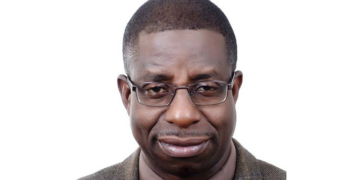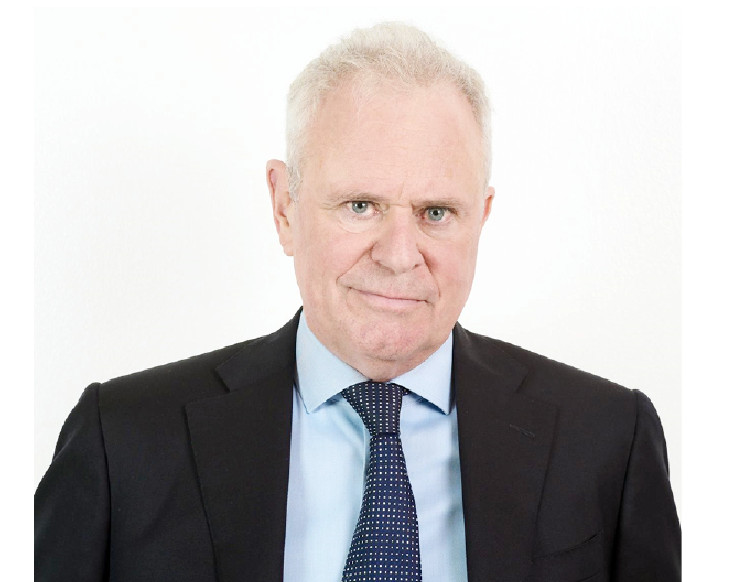
In this interview with INNOCENT ODOH, Ambassador of The Netherlands to Nigeria, Bengt van Loosdrecht offers great insights into security as a key factor in Nigeria’s quest for agricultural revolution, especially the need to transform cattle farming. He also highlights trade, industry and investment as the bedrock of Nigeria-Netherlands bilateral ties.
What is the current state of bilateral relations between Nigeria and the Netherlands in terms of trade and investment?
What defines our relations with Nigeria is definitely trade. Dutch companies have been in Nigeria for a long time. When you look at Nigerian breweries, or Heineken, they have been here for a long time. FrieslandCampina / WAMCO has been here for 72 years. Many Dutch companies here have become more or less Nigerian. These companies invest quite a bit in the Nigerian economy. Bilateral trade cannot thrive or grow without investments.
What is interesting in the bilateral trade is that Nigeria has a substantial trade surplus with the Netherlands. These exports are mainly oil and gas-related. In fact, the Netherlands remains among the top export destinations for Nigerian produce.
As a result of tensions in the Gulf Region, the closure of the Strait of Hormuz, and, before that, the war in Ukraine, we have even imported more oil and gas from Nigeria. So we turned to Nigeria to meet our energy needs, and a third of our crude oil imports came from Nigeria.
Apart from that, we imported agricultural produce, which makes up to 15% of our imports, mainly cocoa. Besides that, we import natural resources and relatively small quantities of raw materials. Conversely, Nigeria imports the first components, refined petroleum products, foodstuffs, condensed milk, powdered milk, fish, and chickens from the Netherlands. The third category of imports from the Netherlands is machinery and vehicles, including import management and logistics.
Can you give us specific figures for trade volume?
In 2024, Nigeria recorded a trade surplus of 1.674 billion Euros. So, in 2024, we imported almost 4 billion Euros in oil and other products, and we exported a little over 2 billion Euros. Last year, due to Dangote Refineries’ refining capacity, the oil supply was lower. So, we imported 2.5 billion Euros, down from 3.8 billion Euros, and our exports were 2.2 billion Euros. There is still a trade surplus for Nigeria, but the oil sector is dented by lower supply due to Nigeria needing its own crude for the Dangote Refinery. We also offered computer and financial services worth 400 million Euros to Nigeria.
In the area of renewable energy, Nigeria has great potential, and the two countries cooperate, but how significant is this?
It is not yet significant, but it warrants further elaboration. Energy is a big problem in Nigeria, even though Nigeria is an oil-producing country. This has to do with a lack of investment in infrastructure and also the diversification of energy sources. There is enormous solar power potential that has not been fully utilised. In the Netherlands, we have a program called Combi Tracks, which aims to encourage Dutch companies, especially in solar power, as we want to be a partner in the transition to more sustainable energy sources.
So, it is actually a system in which Dutch companies receive seed funding to establish operations in Nigeria. China is a leader in solar, and we have strong expertise, especially in building mini-grids, off-grid systems, and other solar projects that offer greater durability and sustainability. The solar marketplace is a platform where we bring together suppliers and solar demand in the country.
We want to connect Dutch companies with vetted Nigerian companies seeking support through our financial institutions and development banks. The Netherlands will provide grants and loans to encourage these companies to partner with demand in Nigeria.
The Solar marketplace is gaining traction as more companies join the platform, including German and Chinese companies. It is early, and it’s not profitable yet, but we expect to make it profitable.
How are you mitigating the impact of rising oil prices following the crisis in the Middle East?
We are mitigating the crisis because we need new energy sources. Dutch companies found crude oil in Nigeria, but at the same time, Nigeria has expanded its refining capacity with the Dangote refinery, and the supply of energy or crude oil has diminished. So, it was a win-win situation for both Nigeria and the Netherlands. The fact that Nigeria now has its own refining capacity means it will buy less on the world market. On the flip side, it means that Nigeria can also export less. This new balance is better for the nation as a whole.
Nigeria and the Netherlands have collaborated on tackling the root causes of insecurity. Despite all the collaboration, insecurity appears to be worsening. Is the collaboration not potent enough, or is one side not doing enough, or are the root causes so endemic that the solution is far-fetched?
It’s a combination of all. First, I understand you said we are cooperating because the Netherlands isn’t a big country. Nigeria is a sovereign country responsible for its own law and order. If we disregard the terrorist aspect, let us look at the country’s law-and-order aspect. The Nigerian government is first responsible for dealing with insecurity, whether it is terrorists, cattle rustling, kidnapping or banditry.
But we are trying to assist Nigeria when they want and when they ask us. We cannot be everywhere, but we can support mostly through the UN. In the north east, we support programmes in the Lake Chad basin through the UNDP on the regional stabilisation programme.
We may not be able to avoid violence, but I think we can contribute to diminishing violence. It is a lesson that early action and early reaction are quite positive. We try to prevent violence, mainly in the Middle Belt, Jos and Kaduna, and we have been supporting inter-religious dialogue through our projects such as the Joint Initiative for Strategic Religious Action (JISRA) and the Promotion and Protection of Freedom of Religion or Belief (PP-FoRB).
Security is an issue we all share; we are interconnected, and we should work on it together.
Nigeria is also very good at producing agro-commodities such as sorghum, millet, soya beans, and sesame seeds. How many of these products have found their way into the Dutch market?
We have an organisation called the CBI, the Centre for Exports to Europe. It is a Dutch organisation that supports exporters in Africa in complying with EU import rules, not only in the Netherlands. The good thing is that once you enter the Netherlands, you can access the EU under the Schengen Agreement. If you meet them in one EU member state, you can meet them in all other EU member states. There is serious support for the Shea value chain. Ginger is another one, because Nigerian ginger is top quality compared to Chinese ginger.
Nigerian Breweries is embarking on barley production in Jigawa State because it needs barley for malt drinks. Cocoa is also important, and we are working with Nigeria on how to improve the value chain.
In terms of agriculture and food security, the Netherlands is the second largest exporter of agricultural products in the world after the United States, and we are very good at adding value to products such as tomatoes and peppers. We want Dutch seed producers to come to Nigeria with their improved seeds and know-how to strengthen the value chain through knowledge transfer, teaching farmers to use better tomato seeds and avoid post-harvest losses.
In Nigeria, tomatoes are shipped in raffia baskets and are piled on top of each other, and before they reach the market, farmers lose about 60% of their tomatoes. This is not necessary because using plastic crates instead of the raffia basket lets you stack them on top of each other without compressing the tomatoes, resulting in fewer losses.
Moreover, tomato seedlings or seeds from the Netherlands can yield eight times as much and produce better quality than the depleted variety we have in Africa. The varieties in Nigeria are prone to diseases, and you need to renew the gene pool. They are more expensive, and they are what we call hybrid seeds, not GMOs. A hybrid has been bred to produce higher-quality offspring. So, it is better to invest in new, higher-quality seed; it is more expensive, but it yields much more.
We are also looking to improve potato production in Plateau State. Five companies were invited to look at Plateau, and they saw ample opportunities. There is a potential of 120,000 hectares of potato, which has only one variety, the Irish potato, which is a depleted variety. Now we get at most 10 tons per hectare, but with the Dutch seed, we want to reach 20-40 tons per hectare.
It requires a lot of expertise and knowledge transfer because you need to know how to dig, irrigate, and when to harvest. If done well, it will quadruple the harvest and yield top-quality potatoes. Nigeria is importing potatoes for fries, which is unnecessary because you can grow them in Plateau State. We hope that within one or two years we will be able to eat fries from Nigeria.
What is your take on the persistent crisis of poor animal husbandry in Nigeria, and why has the Netherlands never invested in cattle ranching in Nigeria?
This is a difficult question, and we’ve tried it multiple times, including with WAMCO. WAMCO aims to control the chain up to a certain level. They have tried to invest in cattle farms, but it has been difficult due to security concerns. There have been attempts even to import cows and cross-breed them with cows in Niger state, but after a few months, they were all dead. And the places where the cow or the milk will be collected were burnt down. Without security, it will be very difficult to sustain that business.
Dutch companies have explored several options to improve cattle rearing in Nigeria, but none have worked because security is a major issue that we cannot resolve.
We’ve got the edge. Get real-time reports, breaking scoops, and exclusive angles delivered straight to your phone. Don’t settle for stale news. Join LEADERSHIP NEWS on WhatsApp for 24/7 updates →
Join Our WhatsApp Channel