The unreliability of public power supply is no longer news. However, with the unbundling of the Power Holding Company of Nigeria (PHCN), the success recorded in the telecommunications sector was a good reason for Nigerians to expect such a miracle to happen in the power sector. So far, that has turned out to be a misplaced hope.
But no one anticipated the bedlam in the nation’s hospitals, where patients were asked to provide an alternative power supply to sustain relations in intensive care. The scandal trended in the media as Nigerians told their stories of how they lost loved ones due to power failure in hospitals, especially public ones.
These unfortunate incidents have continued to recur in health facilities across Nigeria as generating companies Gencos) and distribution companies (Discos) continue to offer excuses in place of electricity. For decades, the government at different levels, has failed to find a lasting solution to the issue of poor power supply, which has led to loss of lives, crippled businesses, and sent investors away from Nigeria.
Government hospitals, which are expected to provide medical care for the sick and injured by offering specialised treatments, have become death fields as power failure continues to wreak havoc during surgeries and other emergencies.
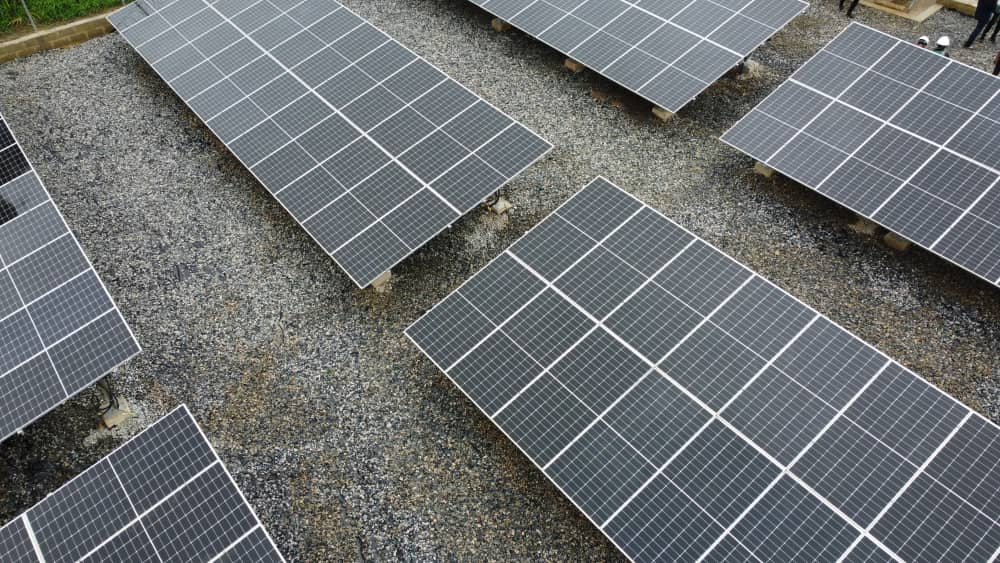
The situation has persisted despite the administrations’ efforts to reform the sector as it strives to find a reliable and sustainable alternative power source. Recently, solar energy has become attractive as a power source, and the Presidency has budgeted a princely sum of N10 billion for the State House alone. We had hoped the health facilities would have earned the pride of place on the priority list in this direction.
In making this suggestion, we consider that the nation’s healthcare system is grossly underfunded, a clear contradiction of the commitments made in the 2001 Abuja declaration by African Union leaders who pledged to allocate at least 15 per cent of annual budgets to health.
Nigeria has consistently failed to meet this obligation, as recent reports from the 2025 budget reveal that the provision is a mere 5.18 per cent. Failure to honour the Abuja Declaration is evident in its huge health infrastructure gap. This shortfall compromises the quality of care, leading to increased mortality rates and disease prevalence, ultimately diminishing the overall well-being of Nigerians.
In November 2013, under former President Goodluck Jonathan, the federal government, through the Bureau of Public Enterprises, officially privatised the six successor power generation companies and 11 distribution firms unbundled from the defunct Power Holding Company of Nigeria (PHCN).
According to the BPE, investors paid $1.26 billion to acquire a 60 per cent stake in the distribution companies, while the government retained 40 per cent.
The BPE generated $1.27 billion from the power plant sales for the six generation companies, bringing the total proceeds from the privatisation of the Discos and Gencos to $2.53 billion. Based on the exchange rate at the time, the value of both transactions was about N404 billion. The federal government still manages the transmission arm of the business through the Transmission Company of Nigeria.
However, 12 years after the private investors took over the country’s power assets, the sector has continued to grapple with daunting challenges that have stunted its growth.
Most health facilities, including teaching and general hospitals, are battling huge electricity debts running into billions of naira. Their managements continue to lament that despite paying huge bills, they still have to source funds to provide alternative power.
To mitigate these challenges, we urge the federal government to prioritise off-grid solutions for its premier teaching hospitals, such as installing solar power to avert avoidable deaths caused by incessant power failure and provide debt relief to quickly rebound those already in huge debts.
We are not unaware of the extra cost implication of adopting the solar solution after years of wastage in other sources that have not yielded the desired result. In our view, it is time for the government to give commensurate attention to solar energy. Experts have continued to argue that it has advantages that make it preferable. It is cost-effective and renewable, ensuring a reduced cost in the long run.
As a newspaper, we are calling on the federal government to consider providing targeted subsidies to the health sector to reduce operating costs, which are made worse by the skyrocketing cost of energy. Nigeria, as a signatory to the Abuja Declaration, should do the needful by honouring the commitment of allocating 15 per cent of its annual budget to the health sector to achieve a robust healthcare system.
The right to health is fundamental; without electricity, hospitals, which should save lives, will continue to be the opposite. Decisive action in the energy sector should be taken to prevent this silent catastrophe from becoming a global model of systemic failure. Solar power may be a good starting point.
We’ve got the edge. Get real-time reports, breaking scoops, and exclusive angles delivered straight to your phone. Don’t settle for stale news. Join LEADERSHIP NEWS on WhatsApp for 24/7 updates →
Join Our WhatsApp Channel