
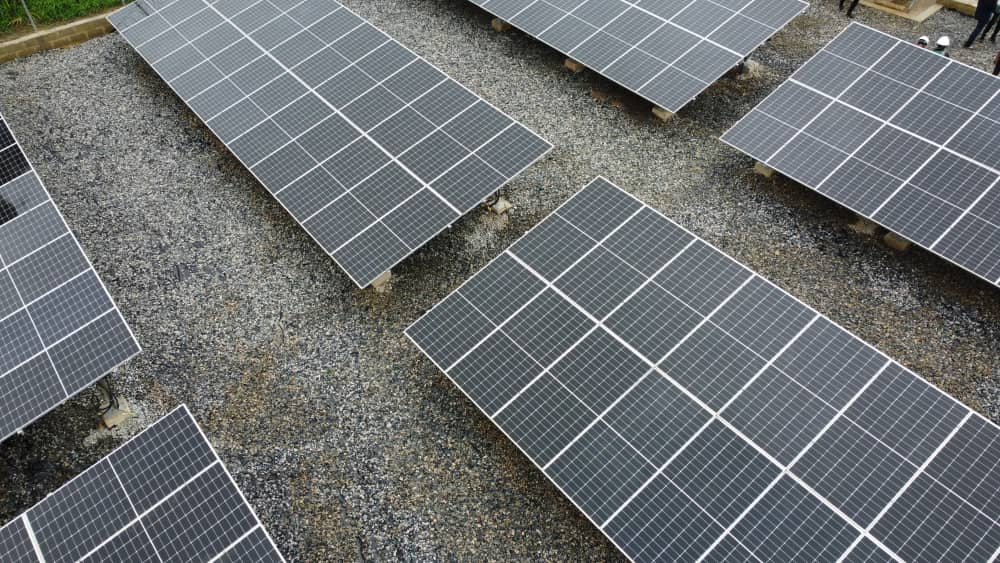
For years, every market day in Swali Market, Yenagoa, ended with a familiar dilemma for traders selling fish, tomatoes, vegetables and meat—sell at giveaway prices or watch their goods spoil before the next morning.
For many women whose livelihoods depend on the bustling waterfront market, food spoilage was more than an inconvenience; it was a daily loss of income and hope.
That narrative is beginning to change with the commissioning of a solar-powered ColdHub in Swali Market, a facility expected to preserve thousands of kilograms of perishable food while boosting traders’ earnings.
Speaking during the commissioning, chief executive officer of ColdHubs, Nnaemeka Ikegwuonu, said the project was designed to tackle one of the biggest challenges confronting traders in the state.
“The ColdHub will particularly address the problem of food spoilage in Swali Market. The market is the largest in Yenagoa, the capital of Bayelsa State, and this is really the headquarters of fresh food for Bayelsa households,” he said.
Ikegwuonu explained that the facility would enable traders to preserve fresh fruits, vegetables, fish, meat and other perishable produce while maintaining their nutritional quality at minimal cost.
“The solar-powered cold room is specially designed so that market women in Swali Market will bring their produce and store it at any time, and pick it up at any time while maintaining the quality and nutritional content of that food without any loss, at a very minimal fee,” he added.
For many traders, the impact of the facility is already evident. Mrs Florence Emmanuel, who trades in tomatoes and vegetables, said the cold room would save her from the frequent losses caused by unsold produce.
“This ColdHub will help me. When I sell my tomatoes, and some remain, I will bring them here and keep them so they will not spoil. The next morning, I will collect them, and they will still be fresh. Even if my vegetables are left out, I can keep them here, and they will still be fresh the next day. That is why I like this ColdHub,” she said.
Another trader, Lois Ikechukwu, believes the facility will directly improve the fortunes of market women.
“As a market person, I have benefited a lot because it creates more impact. It makes our business grow and prosper. Those selling fish will benefit even more because when they have fish left, they can store it here instead of allowing it to spoil,” she said.
Beyond preserving food, the project is also expected to improve food security by ensuring that households continue to have access to fresh produce while reducing post-harvest losses.
Executive Director of the Partnership Initiatives in the Niger Delta (PIND) Foundation, Sam Ogbemi Daibo, said the organisation supported the initiative because reliable energy remains a critical driver of rural livelihoods.
“Our interest in this project is because we believe that access to power, particularly at the community level, enables businesses, reduces post-harvest losses and helps farmers make more money while improving livelihoods,” he said.
According to him, PIND partnered with ColdHubs under its Access to Energy Programme to remove barriers limiting economic opportunities in communities across the Niger Delta.
Community leader, Elder Engineer Jimmy Agada, described the project as timely, saying it would complement ongoing efforts to restore peace and economic growth in Swali.
“This facility will particularly benefit market women, those who sell fruits, meat, fish and other perishable goods. With the electricity challenges we have today, this project will solve many of the problems facing traders in Swali Market,” he said.
We’ve got the edge. Get real-time reports, breaking scoops, and exclusive angles delivered straight to your phone. Don’t settle for stale news. Join LEADERSHIP NEWS on WhatsApp for 24/7 updates →
Join Our WhatsApp Channel