
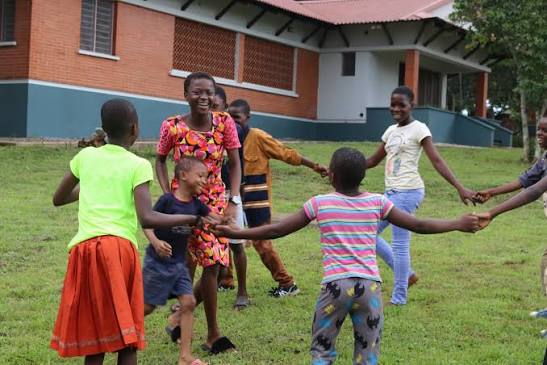
The national director of SOS Children’s Villages Nigeria, Eghosa Erhumwunse, has urged state governments to strengthen child protection systems and provide more support for families to prevent avoidable separation of children from their caregivers.
Erhumwunse made the call at the National Alternative Care Consultative Forum convened under the
“Strengthening Child Care and Protection Systems in Nigeria Project”.
The project is funded by the European Union (EU) and implemented in partnership with CISLAC and JDF.
She said the forum was aimed at consolidating lessons from states that had taken steps towards implementing alternative care standards, identifying gaps and securing commitments from states towards the adoption, domestication and implementation of the National Guidelines for the Alternative Care of Children in Nigeria and its Implementation Strategy.
Erhumwunse said Nigeria had made progress in establishing the legal and policy foundations for child protection through instruments, including the Child Rights Act and the National Guidelines for Alternative Care.
She said the guidelines provide that children should grow up in families wherever it is safe and possible, while residential care should only be used as a last resort and for the shortest possible period.
“By the end of 2025, five states had formally adopted the National Guidelines into state-level practice,” she said.
However, Erhumwunse said having policies in place was not the same as having a functioning child protection system, noting that many children still enter residential care because of poverty, displacement, disability, conflict, abuse, neglect and lack of support.
She also identified inconsistent gatekeeping, an overstretched social service workforce, fragmented data and inadequate financing as challenges affecting alternative care implementation.
According to her, reform should go beyond moving children out of residential institutions to building systems capable of preventing unnecessary separation in the first place.
“Alternative care reform is therefore not simply about moving children out of institutions. It is about building a system strong enough to prevent unnecessary separation in the first place, where families receive support before a crisis becomes separation, and where budgets reflect our policy commitments,” she said.
Erhumwunse also called for greater participation of children and young people in decisions affecting them, saying those with lived experience of care should have their voices reflected in policies and programmes.
She said the government must lead and resource implementation, while development partners, the private sector, civil society organisations and care providers should support the transition towards family-based care.
The forum brought together representatives of the Federal Ministry of Women Affairs, state governments, the European Union, UNICEF, civil society organisations, the judiciary, child protection organisations, children and young people.
Erhumwunse urged state delegations to treat the commitments expected from the forum as an accountability process rather than a ceremonial exercise.
“Our success will not be measured by the speeches delivered, but by what changes after we leave this room: from policy to implementation, from institutional responses to family-based solutions, and from making decisions for children to making decisions with children,” she said.
We’ve got the edge. Get real-time reports, breaking scoops, and exclusive angles delivered straight to your phone. Don’t settle for stale news. Join LEADERSHIP NEWS on WhatsApp for 24/7 updates →
Join Our WhatsApp Channel