
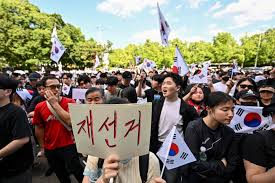
The Chairman of the National Election Commission (NEC) in South Korea, Roh Tae-ak, has resigned following widespread criticism over ballot paper shortages that disrupted voting in several districts during Wednesday’s local elections.
Roh announced his resignation on Friday, saying he was stepping down to take responsibility for what he described as an election management failure that undermined public confidence in the country’s democratic process.
According to Reuters, Roh acknowledged that there was “no excuse” for the shortcomings that prevented some voters from casting their ballots smoothly and raised concerns about the integrity of the electoral process.
The outgoing NEC chairman also disclosed that an independent panel of external experts would be set up to investigate the circumstances surrounding the disruption, adding that he would accept the outcome of the probe.
The crisis erupted after ballot papers ran out at about 50 polling stations across the country, forcing election officials to rush emergency supplies to affected centres. Voting was also delayed at 22 other polling stations due to logistical challenges in delivering election materials.
South Korea operates about 14,300 polling stations nationwide for its local elections.
The shortage triggered chaos at several voting centres, with some voters reportedly waiting for hours after official closing time at 6 p.m. on Wednesday.
One of the worst-hit locations was a polling station in Seoul’s Songpa district, where angry voters allegedly blocked officials from transporting ballot boxes after voting ended. The standoff, which continued through heavy rainfall, lasted into Friday morning before police intervention.
Police eventually deployed hundreds of officers to escort election officials and retrieve remaining ballot boxes, with vote counting concluding on Friday afternoon.
An NEC official explained that ballot papers were printed for only about 50 per cent of eligible voters on election day, based on expectations of high participation in early voting held the previous week.
The official added that total ballot papers printed for the three-day voting period covered only 73 per cent of eligible voters nationwide.
However, voter turnout eventually reached 63 per cent in the elections, which were held to choose mayors, provincial governors, county officials and local assembly members.
The incident has sparked widespread outrage across South Korea, with officials admitting that the failure amounted to a breach of citizens’ democratic right to vote.
The fallout has also taken a legal dimension, with police complaints reportedly filed against election officials over alleged abuse of authority and dereliction of duty.
Meanwhile, right-wing protesters attempted to storm a gymnasium where final ballots from Songpa district were being counted, demanding a full recount.
Reports also indicate that some citizens are seeking intervention from South Korea’s Constitutional Court, arguing that the shortage violated their constitutional right to vote.
The controversy has intensified scrutiny of the country’s electoral management system and raised fresh questions about preparedness in one of Asia’s most established democracies.
We’ve got the edge. Get real-time reports, breaking scoops, and exclusive angles delivered straight to your phone. Don’t settle for stale news. Join LEADERSHIP NEWS on WhatsApp for 24/7 updates →
Join Our WhatsApp Channel