By James Kwen, Samson Elijah, Olakunle Olasanmi, Olugbenga Soyele
Lawyers and some Civil Society Organisations (CSOs) have thrown their weight behind the Nigeria Labour Congress’s demand for urgent intervention from the federal government to cushion the effects of the recent spike in petrol prices and its call for a cost-of-living allowance, wage award for workers, and tax relief, among others.
The Nigeria Labour Congress (NLC) yesterday demanded urgent intervention from the federal government to cushion the effects of the recent spike in petrol prices, calling for a cost-of-living allowance, a wage award for workers, tax relief, and immediate steps to revive the country’s public refineries.
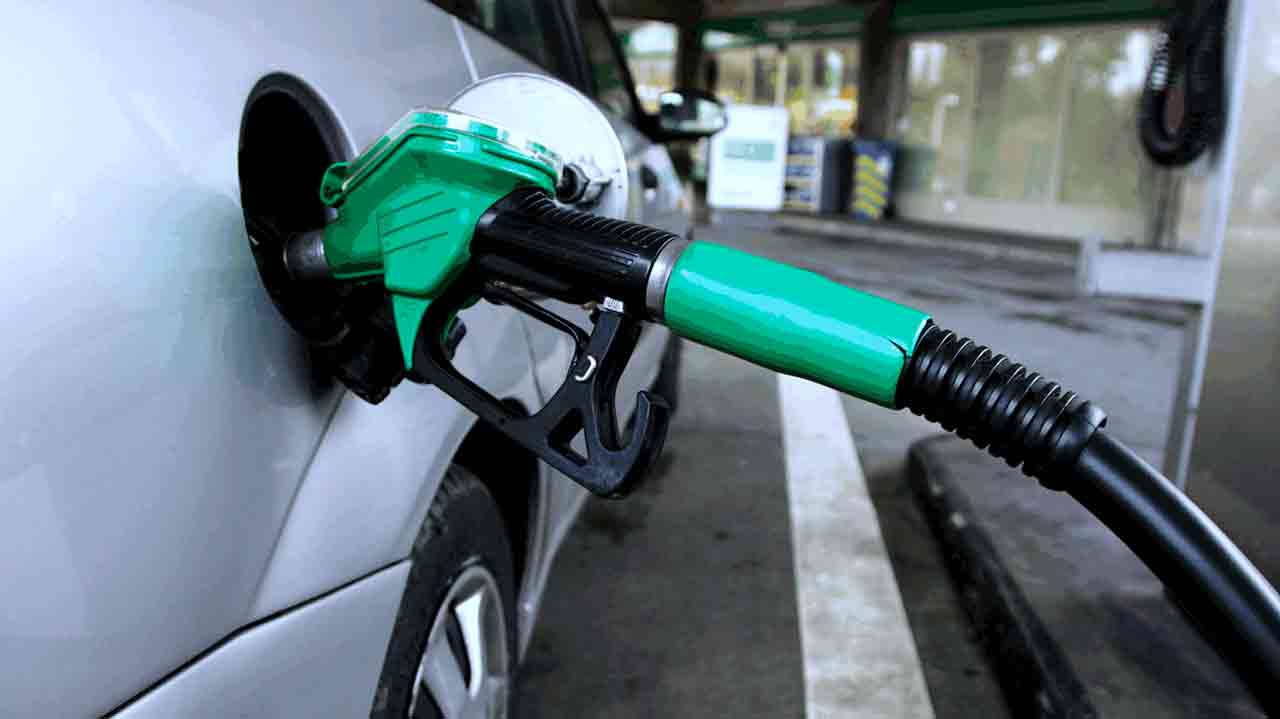
The labour body said the sharp rise in fuel prices—now selling between N1,170 and N1,300 per litre—has worsened the economic hardship facing Nigerian workers and citizens, warning that the nation risks severe social unrest if urgent measures are not taken.
The NLC also accused the government of leaving Nigerians at the mercy of volatile global oil prices triggered by the escalating Middle East crisis, noting that the situation has exposed the fragility of Nigeria’s downstream petroleum sector and deepened the suffering of workers and their families.
In a statement titled, “Save Nigerians From This Shock: An Urgent Relief Has Become Necessary,” signed by its president, Joe Ajaero, the Congress said, “NLC voices the collective anguish of millions of Nigerian workers who are bearing the brutal cost of a global capitalist crisis they did not create. The military escalation involving the United States, Israel, and Iran has sent shockwaves through global oil markets. As a result, petrol prices in Nigeria have skyrocketed to between N1,170 and N1,300 per litre.
“This is a direct assault on the Nigerian people. While imperialist rivalries play out abroad with bombs and military escalation, Nigeria’s working class is being bombarded with poverty and hunger because we have failed to ensure that our public refineries are operational.
“This crisis has brutally exposed the fragility of Nigeria’s downstream petroleum sector. It has stripped away the illusion that local refining alone would shield the country from global shocks. The Dangote Refinery has adjusted its prices in line with global volatility, passing the burden directly to the masses. This undermines the narrative that domestic production alone guarantees price stability.”
According to Ajaero, as long as Nigeria remains dependent on a market-driven pricing structure tied to global fluctuations and refuses to revive its public refineries, the country will remain hostage to international conflicts and market speculation.
However, the CSOs—Justice and Human Rights Reforms Initiatives (JHRRI), the Civil Society Legislative Advocacy Centre (CISLAC), Transparency International Nigeria, and others—said that beyond public service workers, other government agencies should also put in place measures to cushion the harsh economic realities faced by other vulnerable Nigerians who are not workers.
Leader of CISLAC and TI, Auwal Musa Rafsanjani, in an interview with LEADERSHIP, said Nigerian leaders appear to be more focused on the 2027 general election and not really bothered about putting measures in place to mitigate the escalation of the economic crisis caused by the war in the Middle East.
“Now, with regard to the NLC demand, I think broadly, if you look at many countries, they are actually making life easier for their citizens, subsidising things and providing provisions to mitigate the impact of this global crisis occasioned by this war.
“I think, in the case of Nigeria, Nigerian leaders appear to be more concentrated or more interested in the 2027 general election; they are not really bothered to put measures in place to mitigate the escalation of the economic crisis, which is also affecting Nigeria as a result of this war,” Rafsanjani said.
According to him, if Nigeria had leaders who care and are concerned about their citizens, a lot would have been done to at least mitigate the impact of this war on them.
“But as usual, Nigerian leaders of the contemporary period, their relationship with the people they govern is reduced to basically getting their votes and affirming whatever they are doing,” he said.
Rafsanjani said the government should look at how to improve the condition of citizens and protect them against internal and external harm.
“As is the case now, many countries are making efforts and developing plans to protect their citizens against the ongoing crisis hitting the whole world.
“So it is not just about the workers. It is also about the vulnerable. So my only amendment or addition to what NLC has put is to say that many Nigerians who are vulnerable—women, the disabled, and the elderly—the government should ameliorate their conditions and provide safety nets that will, at least, protect them or provide relief for them,” he added.
Rafsanjani said it shouldn’t be about taxes, adding that taxes are for people who are working.
“Millions of Nigerians have no jobs to even contribute taxes. The state and the government should create enabling conditions to generate job opportunities so that people can be productive and pay reasonable taxes needed for the government to continue providing services.”
In his reaction, the director of a Lagos-based CSO, Justice and Human Rights Reforms Initiatives (JHRRI), David Babajide, supported the position of the NLC.
Babajide recommended multi-stakeholder discussions with NLC, CSOs, and states to establish transparent relief measures such as subsidised farmer inputs and reduced transportation taxes.
He said, “Monitoring progress through human rights dashboards is essential to ensure equitable distribution, with particular attention to Lagos and the rural poor.”
He suggested that the government fund these initiatives with increased oil revenues to avoid debt dependence.
“With Nigeria’s poverty rate projected at 62 per cent, impacting over 140 million people, this crisis threatens to worsen human rights violations through increased hunger and unrest, requiring President Tinubu’s prompt action,” Babajide said.
For his part, human rights lawyer Emeka Okezie called on all levels of government in the country to quickly develop a response to the crisis that would balance economic urgency, constitutional responsibilities, and social protection.
He noted that the ongoing tension among the United States, Israel, and Iran is already impacting global energy markets.
“Since Nigeria’s economy heavily depends on petrol prices, which affect food, transportation, and essential services, the consequences could be devastating for millions of people living in poverty if the government fails to intervene,” he said.
Okezie urged President Bola Tinubu to treat the petrol price hike as a national socio-economic emergency and fulfil his constitutional duties.
He stressed that the government has a responsibility to promote citizens’ welfare and security, warning that allowing inflation to rise unchecked could breach that obligation.
Okezie said, “The government needs to engage in constructive dialogue with the Nigeria Labour Congress and other unions because any industrial unrest now would only worsen the current economic instability.”
A Senior Advocate of Nigeria (SAN), Abdul Balogun, backed the NLC, saying that if nothing is done in the next few days or weeks, the situation will deteriorate further.
“Already, Nigerians are feeling the heat, and the intervention of the government is needed at this point. The government cannot fold its arms and do nothing about the current situation; drastic action must be taken to give Nigerians a lifeline.
“Many families can no longer take care of their basic needs because of economic hardship, and we don’t have to sit down and pretend as if all is well; certainly, all is not well,” he said.
Barrister Paul Amiabo said the government should look into the plight of the majority of Nigerians.
According to him, Nigerians are suffering, and their suffering should not be ignored.
“Nigerians are suffering, and their suffering should not be ignored. Many Nigerians can barely feed themselves now. It is bad enough that not only are they buying fuel at a very high cost, but they also have no power to operate their businesses.
“I’m aware that there are protests in some parts of the country over the high cost of fuel and lack of electricity. All these are part of the hardship Nigerians are subjected to, so I agree with the NLC that something urgent and concrete should be done to bring the situation under control,” he said.
Also, former National Chairman of the Inter-Party Advisory Council (IPAC), Chief Peter Ameh, has expressed strong support for the Nigeria Labour Congress (NLC) in its call for urgent tax relief and a cost-of-living allowance for Nigerian workers, warning that the government’s failure to act promptly could trigger social unrest.
Speaking in an exclusive interview with LEADERSHIP on Sunday night in Abuja, Ameh described the NLC’s demands as both timely and justified, given the growing economic challenges facing Nigerians.
“The escalating war between the United States, Israel, and Iran has unleashed unprecedented turmoil on global energy markets. The ripple effects have hit Nigeria hard. Fuel prices have skyrocketed, inflation is surging, and the cost of basic goods and transportation has become unbearable for millions of hardworking families,” Ameh said.
Similarly, Dr Christian Okeke, a political science lecturer at Nnamdi Azikiwe University, urged Nigerians and the government to focus on structural economic reforms rather than short-term relief measures, following the Nigeria Labour Congress’s (NLC) call for tax relief and a cost-of-living allowance.
Dr Okeke said the NLC’s welfare demands are understandable given the escalating economic hardship caused by the ongoing United States/Israel-Iran conflict, which has disrupted global energy markets and led to rising fuel prices, inflation, and higher living costs in Nigeria.
“The escalating war between the United States, Israel, and Iran has unleashed unprecedented turmoil on global energy markets. The ripple effects have hit Nigeria hard. Fuel prices have skyrocketed, inflation is surging, and the cost of basic goods and transportation has become unbearable for millions of hardworking families,” he said.
As US-Israel-Iran war may linger for weeks
US Energy Secretary Chris Wright signalled that the war with Iran may last several more weeks, with oil and gasoline prices elevated as the US and Israel seek to destroy Iranian military capabilities.
In network television interviews Sunday, Wright defended the Trump administration’s argument that Americans are facing short-term pain at the pump in a midterm election year for the larger goal of eliminating Iran as a threat to the Middle East.
“I think that this conflict will certainly come to an end in the next few weeks — could be sooner than that — and we’ll see a rebound in supplies and a push down of prices after that,” Wright said Sunday on ABC’s This Week.
Oil closed at more than $103 per barrel on Friday as Iran retains a chokehold on the Strait of Hormuz, normally a conduit for a fifth of the world’s oil and a similar portion of liquefied natural gas.
President Donald Trump on Saturday called on other countries to send warships to keep the strait open, saying he hopes China, France, Japan, South Korea and the UK would take part. A senior official in Japan’s governing party said sending Japanese navy vessels to the Middle East to escort tankers would face “high hurdles.”
We’ve got the edge. Get real-time reports, breaking scoops, and exclusive angles delivered straight to your phone. Don’t settle for stale news. Join LEADERSHIP NEWS on WhatsApp for 24/7 updates →
Join Our WhatsApp Channel