Stakeholders in the health and security sectors have expressed concerns over increasing conflict between medical professionals and law enforcement agencies, warning that the trend is disrupting care, and exposing patients and practitioners to greater risks.
They stated this at the 2025 Homestretch Event of the Managed Care Unit (MCU) of the Federal Medical Centre (FMC), Abuja, where medical professionals, administrators, security officers and legal practitioners gathered to review recent developments in medical jurisprudence and conflict dynamics in healthcare.
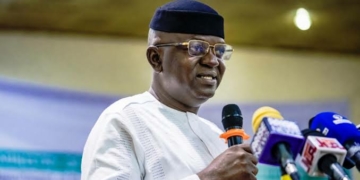
Delivering the keynote address, Assistant Inspector General of Police (AIG) Usaini Gumel said conflicts between medical workers and law enforcement officers are often the result of poor communication, misaligned expectations and weak institutional collaboration.
Speaking under the event theme, “Conflict (Resolution) in Healthcare: Whither the Confluence of the Medical Practitioner and the Law Enforcement Agent”, the AIG stressed that the two professions are united by the same mission; the protection of human life.
“The mandate of the medical community, the ethical conduct of legal practitioners, and the professional conduct of law enforcement all converge in the same environment. When these elements function in harmony, conflict becomes far less likely,” he said.
Gumel cited global data showing growing incidents of conflict in health institutions, with 3,633 reported cases and 36 deaths in 2021, while the World Health Organisation (WHO) recorded over 1,000 deaths linked to conflict situations involving medical personnel and facilities.
Describing many of these cases as avoidable, he recommended joint training, simulation exercises, and clearer communication channels to help both sectors understand each other’s roles and limitations.
Under Sub-theme I, “Recent Developments in Medical Jurisprudence and the Limit of the Enforcement Agent,” legal expert Bob James Esq. condemned the growing trend of police arresting medical personnel immediately after patient deaths or disputes.
He described the practice as unconstitutional, professionally harmful and psychologically damaging.
“The police have the power to arrest suspects, but not to treat doctors like roadside criminals,” he said, citing Section 34 of the 1999 Constitution on the dignity of the human person.
The lawyer highlighted several cases where consultants and nurses were detained due to misunderstandings about medical procedures. In one instance, three specialists and nine nurses were arrested in Abuja after a patient died during an ENT procedure, although officers on duty lacked the medical knowledge to interpret the records.
James insisted that the Medical and Dental Council of Nigeria (MDCN) Investigative Panel is the legally mandated body to conduct preliminary inquiries into allegations of professional negligence.
He also highlighted the importance of informed consent, referencing landmark court cases, including one involving a child whose finger was amputated without proper explanation to the guardian.
“Generalised consent is invalid, Doctors must explain the nature, risks and side effects of a procedure or risk liability for battery and negligence,” he emphasised.
While stressing the need for accountability, he insisted that due process must be followed: “Before arresting a health worker, there must be a prima facie basis. Not every death equals negligence.”
The convener and Sub-theme II speaker, Dr. Okoye Ephraim, Head of the Managed Care Unit at FMC Abuja, focused on proactive conflict prevention, warning that unresolved disputes come with heavy financial, emotional and clinical costs.
He noted that his presentation drew from “30 per cent academic and 70 per cent real fieldwork,” underscoring practical realities frequently overlooked in policy discussions.
Dr. Okoye described conflict as “a universal phenomenon” that can disrupt service delivery, derail patient care and weaken institutions if not proactively addressed.
The MCU head explained that conflicts in healthcare arise in multiple forms; internal, interpersonal, interprofessional, organisational, external, and patient-provider disputes.
“Conflict is inevitable in healthcare. How it is managed determines outcomes,” he said.
He outlined key causes including miscommunication, power struggles, unclear roles, certificate-based disputes, and competition for limited resources.
Dr. Okoye detailed the financial, clinical and emotional burden of unresolved disputes, noting that conflicts lead to legal costs and compensation payments, operational delays, especially in critical areas like operating theatres, staff turnover and recruitment waste, burnout, moral injury and declining morale.
The MCU head contrasted Nigeria’s internal disputes, such as the controversy over whether medical doctors can become university vice-chancellors, with rapid technological advancements in other countries.
Dr. Okoye said the major objective of the presentation was to demonstrate that conflict can be prevented proactively, not just in healthcare but across sectors.
He called for systems that prevent conflict before escalation, strengthened communication systems within facilities, regular conflict-resolution and emotional intelligence training, clear protocols and transparency in decision-making, structures that reward teamwork over rivalry and improved collaboration with security agencies.
We’ve got the edge. Get real-time reports, breaking scoops, and exclusive angles delivered straight to your phone. Don’t settle for stale news. Join LEADERSHIP NEWS on WhatsApp for 24/7 updates →
Join Our WhatsApp Channel