Stakeholders in Nigeria’s fisheries and aquaculture industry have agreed on a series of strategic interventions to attract investment, reduce production costs and strengthen the value chain.
The commitments, reached at a national partnership dialogue in Abuja, cover the development of an investment readiness framework for fish farmers, introduction of a specialised aquaculture loan product, research into alternative feed inputs and increased support for investment in the blue economy.
The dialogue was themed,“Building Partnerships to Unlock Investment Opportunities in the Fisheries and Aquaculture Value Chain”, with interventions designed to address structural constraints affecting the industry, including high fish feed costs, limited access to finance, weak enforcement of quality standards, inadequate sector data and poor coordination among value-chain operators.
According to a communique issued after the event, the One Health and Development Initiative (OHDI) has commenced work on the finance and investment readiness framework in collaboration with relevant stakeholders, while other participating organisations are expected to advance their respective commitments.
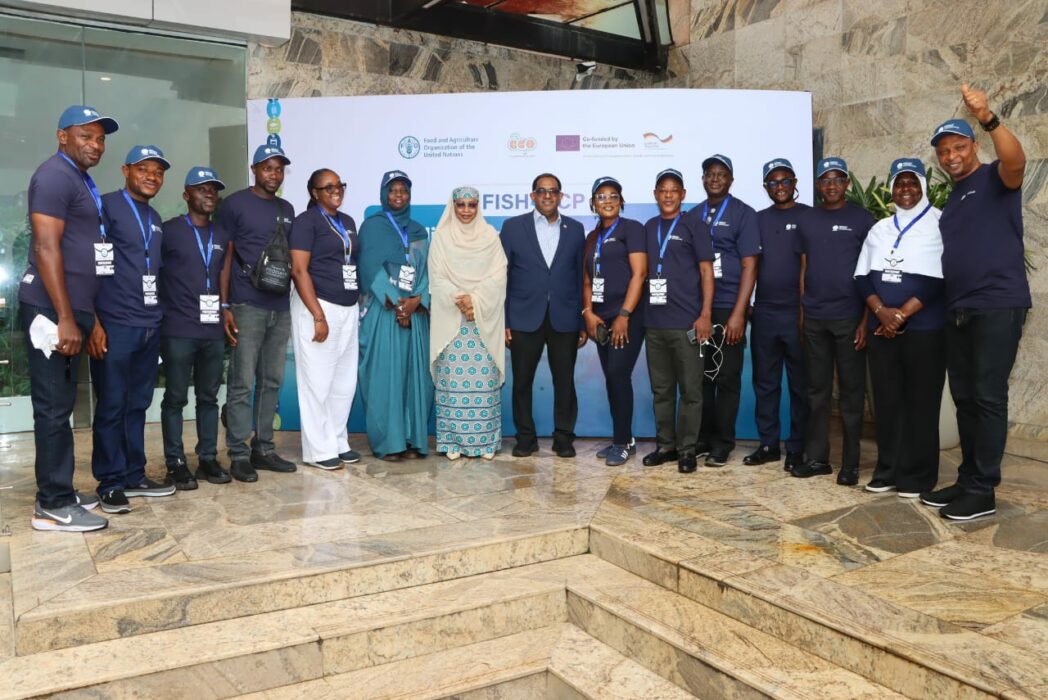
The dialogue was convened by the Fisheries and Aquaculture Multi Stakeholder Platform, with support from the Food and Agriculture Organisation of the United Nations (FAO) through its FISH4ACP programme and facilitation by Sahel Consulting Agriculture and Nutrition Ltd.
Participants identified five priority areas for intervention: feed and inputs; seed, health and biosecurity; processing, markets and trade; finance and investment; and data, standards and knowledge management.
Under feed and input development, Usmanu Danfodiyo University and the Agricultural Research Council of Nigeria were assigned responsibilities for promoting clupeid production, while the Federal University of Agriculture, Zuru, and the University of Abuja will support Black Soldier Fly production.
Flourishing Center Fish and Agro Farm and MYRA Farms were also identified to promote aquatic plant production as part of efforts to diversify feed inputs and reduce production costs.
The Federal Ministry of Livestock Development is also expected to provide aquatic veterinary services and collaborate with the Federal Ministry of Marine and Blue Economy to establish standard biosecurity protocols.
To improve product quality and market competitiveness, NAFDAC, the Standards Organisation of Nigeria, Nigerian Export Promotion Council, Nigerian Investment Promotion Commission, NICERT and the Federal Department of Fisheries were identified to support the harmonisation of industry standards.
Farmers’ groups and AWFishnet will work on improved post-harvest management, while the Federal Department of Fisheries and Aquaculture and the National Information Technology Development Agency will strengthen sector data systems.
Access to affordable financing emerged as a major investment priority, with stakeholders proposing mechanisms to improve farmers’ bankability and attract private capital into aquaculture businesses.
OHDI committed to developing a finance and investment readiness framework with relevant stakeholders, including the Federal Ministry of Marine and Blue Economy, to help farmers meet investment requirements and access funding opportunities.
Sterling Bank Plc pledged to develop and introduce a specialised financing product tailored to aquaculture businesses, while Blue Economy Research and Investment Limited, with support from NIRSAL, was identified to facilitate the establishment of an Aquaculture Development Fund.
On the other hands, Usmanu Danfodiyo University and the University of Abuja also committed to conducting a baseline survey of producer capacity and assessing the production potential of Black Soldier Fly and Azolla to guide targeted investments.
The World Aquaculture Society pledged support for OHDI, Sterling Bank and Blue Economy Research and Development (BERD) to strengthen collaboration in research, development and investment opportunities within the blue economy.
The communique further urged relevant government institutions to upgrade feed millers’ facilities, harmonise existing standards, establish a national broodstock bank and strengthen data management within 90 days.
The Federal Department of Fisheries and Aquaculture was also requested to disseminate the finance and investment readiness framework to farmers within six months.
We’ve got the edge. Get real-time reports, breaking scoops, and exclusive angles delivered straight to your phone. Don’t settle for stale news. Join LEADERSHIP NEWS on WhatsApp for 24/7 updates →
Join Our WhatsApp Channel