
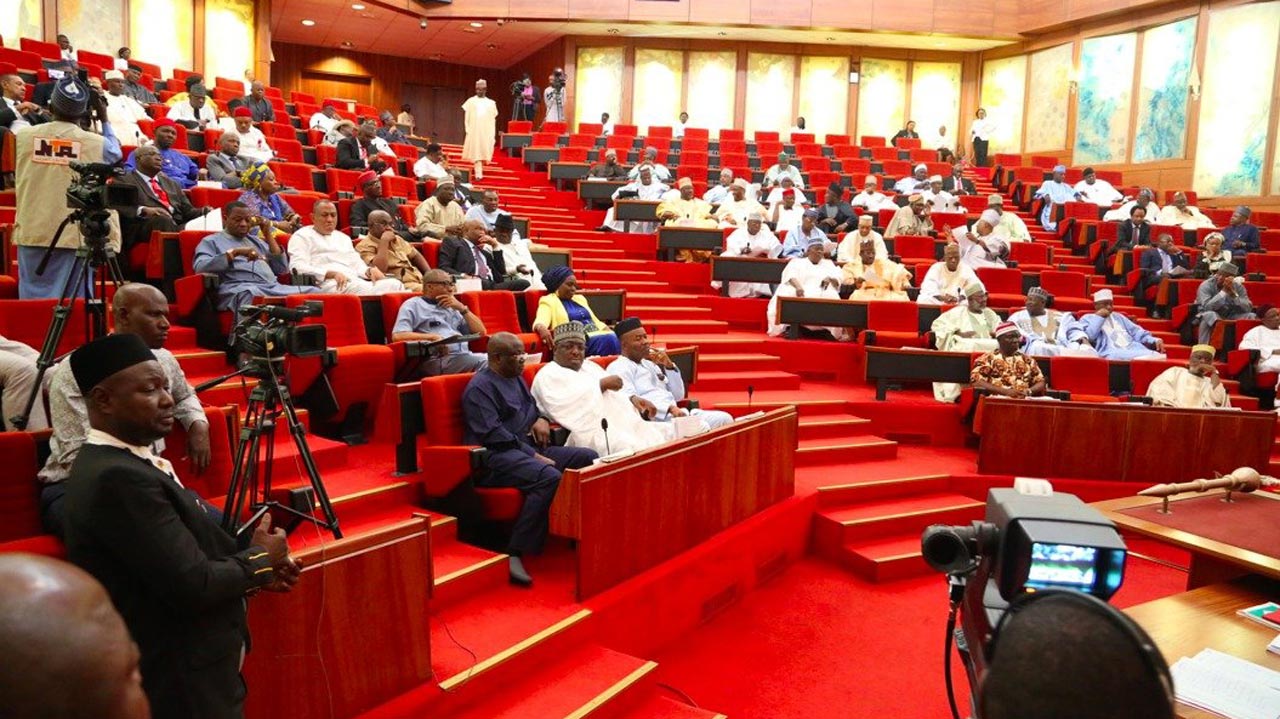
The move by the Senate to establish the Chartered Institute of Revenue and Fiscal Management suffered a setback on Thursday as critical stakeholders in the taxation, revenue generation, collection, and regulatory sector opposed the proposed legislation.
Strong resistance to the bill came to the fore during a public hearing organised by the Joint Committee on Finance, Establishment, and Public Service on the proposed law.
The bill titled “Chartered Institute of Revenue and Fiscal Management of Nigeria (Establishment) Bill, 2025” faced immediate rejection from key stakeholders who argued that it was unnecessary and potentially disruptive.
First to kick against the bill was the Auditor-General of the Federation, Shaakaa Kenyitor Chira, who urged the Senate to strengthen existing professional bodies rather than create new ones.
“Emphasis should be on strengthening existing institutes and not establishing new ones to avoid institutional duplication,” he said.
Similarly, the President-Elect of the Institute of Chartered Accountants of Nigeria (ICAN), Queensley Sofuratu Seghosime, warned that the proposed institute could lead to institutional rivalry and regulatory fragmentation.
Institute of Chartered Accountants of Nigeria “has gone through the proposed legislation and strongly considers it unnecessary because the proliferation of professional bodies weakens standardisation,” she said.
The Chartered Institute of Treasury Management (CITM) also opposed the bill. Its representative, Titilayo Fowokan, urged the Senate to halt the legislative process entirely.
“Having gone through the draft copy of the proposed legislation and discovered inherent lapses in it, CITM urges the Senate not to proceed to the third reading stage,” she said.
Dr Yemi Sani of the Network of Tax Practitioners of Nigeria also called on the Senate to step down the bill, warning that its passage could lead to policy inconsistency in the sector.
However, some stakeholders, including the Institute of Revenue Management and Research (IRMR) and the Fiscal Responsibility Commission (FRC), expressed support for the proposed legislation.
Earlier in his address, the President of the Senate, Godswill Akpabio—represented by the Senate Minority Whip, Tony Nwoye—said the bill was aimed at institutionalising professionalism, strengthening ethical standards, promoting continuous capacity development, and providing policy advisory support in the revenue and fiscal sector.
In his opening remarks, the Chairman of the Joint Committee, Senator Sani Musa, represented by Senator Adamu Aliero, explained that the bill seeks to establish a professional body responsible for regulating, promoting, and advancing standards in revenue and fiscal management practice across Nigeria.
The public hearing ended with divided opinions, as stakeholders remained split between the need for institutional reform and concerns about regulatory body duplication.
We’ve got the edge. Get real-time reports, breaking scoops, and exclusive angles delivered straight to your phone. Don’t settle for stale news. Join LEADERSHIP NEWS on WhatsApp for 24/7 updates →
Join Our WhatsApp Channel