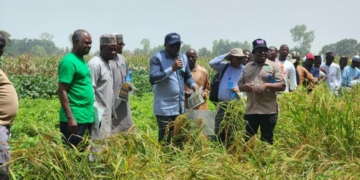
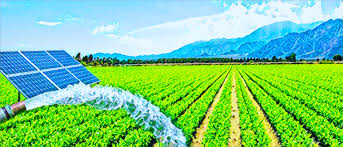
Agricultural and irrigation stakeholders in Nigeria convened in Abuja to discuss strategies for expanding solar-powered irrigation, aiming to increase agricultural productivity and strengthen national food security.
The workshop, titled: “Scaling Climate-Resilient Irrigation: Partnership Alignment, Coordinated Pathways and Learning in Nigeria,” took place on Tuesday and was coordinated by the International Water Management Institute and the International Food Policy Research Institute, in collaboration with the Consortium of International Agricultural Research Centres.
Adebayo Oke, Senior Regional Researcher at IWMI, said the workshop focused on reducing energy costs for irrigation. “Given high fuel prices and abundant solar energy in Nigeria, there is a huge opportunity to power smallholder irrigation sustainably,” he said.
Oke explained that while solar technology is available, farmers’ access to finance remains a key challenge. “Many technologies exist and farmers are interested, but initial costs can be a barrier. Financial institutions, banks, and risk-mitigating agencies such as NIRSAL must support adoption,” he noted.
He also emphasised the importance of technical training, stating that empowering farmers goes beyond providing equipment. “They need skills and operational knowledge to maximise the benefits of solar irrigation. Building local capacity ensures solutions are sustainable and effective over time,” Oke said.
Highlighting the role of collaboration, Oke stressed that scaling agriculture across a vast country like Nigeria requires collective effort from government, private sector, development partners, and farmers. Partnerships, he said, foster shared ownership, clearly defined roles, and better coordination, which increase the likelihood of successful interventions.
Mrs Esther Oluniyi, Director of the Irrigation and Drainage Department at the Federal Ministry of Water Resources and Sanitation, said the ministry is working with IWMI and private partners to improve access to clean water for agriculture. She noted that high diesel and petrol costs make solar-powered systems a cost-effective alternative.
Oluniyi also highlighted efforts to ensure both urban and rural communities have access to safe water, with technical and development partners providing training to help farmers adapt to climate challenges such as floods and droughts.
Olawumi Ayodele, Director of Extension Services at the Federal Ministry of Agriculture and Food Security, said the current administration, under Bola Tinubu’s Renewed Hope agenda, prioritises the expansion of irrigation and agricultural development. He noted that Ministries of Agriculture and Water Resources are working together to ensure year-round water availability for farms.
Ayodele explained that pilot interventions will be implemented in four states to demonstrate improved irrigation practices. He emphasised that climate-resilient irrigation can significantly enhance food security, especially in areas where farmers lack infrastructure to fully utilise water resources.
He added that proven technologies introduced through the initiative will improve yields, boost productivity, and support livelihoods. Farmer-led interventions promoted by IWMI and IFPRI are designed to ensure technologies are directly adopted and applied by farmers, strengthening engagement and capacity building.
The programme forms part of the Scaling for Impact (S4I) programme under the 2026–2028 implementation plan, aimed at scaling practical innovations for sustainable agricultural development in Nigeria.
We’ve got the edge. Get real-time reports, breaking scoops, and exclusive angles delivered straight to your phone. Don’t settle for stale news. Join LEADERSHIP NEWS on WhatsApp for 24/7 updates →
Join Our WhatsApp Channel