By now, discerning citizens should have got accustomed to President Bola Ahmed Tinubu’s style of administration. Rightly or wrongly, his leadership approach has been likened to that of Lee Kuan Yew, the former Prime Minister of Singapore, regarding vision and the willingness to make tough decisions. It can not be safely argued, though, that he has the passion to fight corruption as Yew had. While his style has garnered tremendous praise, it has also faced equally matched criticism for being overly focused on consolidating power with a sinister intent.
But every student of power knows power is a double-edged sword.
Its positive connotation suggests that great power must also come with great responsibility. Looking at power from another perspective, it is argued that the greater the power, the more dangerous the abuse.
Interestingly, both have their places in history.
Since we know him as President,
Tinubu has been able to consolidate power in a way that no previous President ever did. Not even the two Generals who were also ex-heads of state, Olusegun Obasanjo and Muhammadu Buhari, had anything near Tinubu’s swagger as President.
Fools tread where angels fear. Tinubu did and appears to be winning. We have seen him remove fuel subsidies and push for harsh economic reforms, which, expectedly, sparked debates about the balance between progress and citizen welfare.
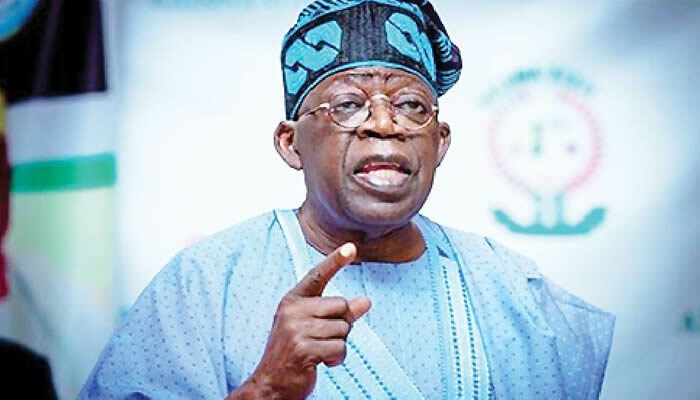
It is on the strength of this leadership style that I am tempted to take the President seriously on his commitment to create a state policing system for the country. “I am reviewing all the aspects of security; I have to create a state police. We are looking at that holistically. We will defeat insecurity. We must protect our children, people, livelihood, places of worship, and recreational spaces. They can’t intimidate us,” he said.
Tinubu is right. As Nigeria grapples with the complexities of modern security challenges, it has become increasingly clear that a one-size-fits-all approach to law enforcement is no longer tenable. The nation’s security landscape, marred by terrorism, banditry, and kidnapping, demands a more nuanced and effective response. One potential solution lies in the creation of state police forces, tailored to the unique needs and dynamics of each state.
Since terrorism emerged around 2002-2003 in Bornu State with the formation of Boko Haram, other forms of violent crimes, especially kidnapping have come to define our daily life. Nigeria ranks poorly in the Global Peace Index (147th out of 163) and Global Terrorism Index (8th globally in 2024). Indeed, criminals have intimidated us enough.
Unfortunately, every national challenge that demands critical thinking, rational decision making and pragmatic policy implementation ends up on the butcher table of parochial politics. Sometimes I marvel at Nigeria’s thinking and approach in solving existential problems and resolving the crisis of modernisation. That exactly has been the fate of the state police idea. Will President Tinubu break the jinx? I am ready to make a bet on him.
As many advocates, including this writer, have argued ceaselessly since the Obasanjo years, decentralising policing in Nigeria would allow state police forces to develop a deeper understanding of local security challenges and cultural nuances. This, in turn, would enable them to build trust with communities, respond more effectively to emergencies, and gather intelligence more efficiently. By empowering state governments to take ownership of their security, Nigeria can foster a sense of accountability and transparency in policing practices.
Theoretically and practically, this is just the sensible thing to do for a federal and large country like Nigeria. Countries with federal systems, such as the United States, Germany, Canada, India, and Brazil, have successfully implemented multiple police forces. These nations have recognised the value of decentralised policing in addressing unique security challenges and promoting effective law enforcement.
For instance, the US Federal Bureau of Investigation (FBI) works in tandem with state-level police departments to tackle crimes that transcend state borders. Similarly, Germany’s state police forces (Landespolizei) collaborate with federal agencies to maintain law and order.
State police forces would be better equipped to respond to local security threats, build trust with communities, and provide critical support to national security efforts. Today, there are 17,985 police agencies in the United States, 48police forces in the United Kingdom, which is a unitary state. India, as fragmented and diverse as Nigeria, offers an incredible lesson in effective policing. The Indian Constitution establishes a legislative and executive division between the centre and the states.
First, the police are a subject under the state government, according to the 7th schedule of the Constitution. As a result, each of India’s 28 states has established its police force. Second, police forces in states are primarily responsible for local issues such as crime prevention and investigation and maintaining law and order. Strikingly, they also provide the first response in more severe internal security challenges, such as terrorist incidents or insurgency-related violence.
Third, the central government’s seven police forces and several other police organisations are to assist states in maintaining law and order, especially in specialised tasks such as intelligence gathering, investigation, research, record-keeping, and training. There are enough templates to learn from.
No doubt, several challenges must be addressed. Nigeria’s constitution would need to be reviewed and amended to accommodate state police forces. The tendency of its abuse by state governors can be clinically considered in the Constitution. Additionally, state police forces would require significant funding and resources, potentially straining state budgets. This will also require a revenue allocation formula review. In all, the fears and reservations of the doubting Thomases appear negligible in the face of horrendous crimes that assail our sensibility daily.
By embracing decentralised policing, Nigeria can promote a culture of transparency, build trust with communities, and enhance its response to security challenges. As the nation continues to grapple with the complexities of modern security, it is clear that a new approach is needed – one that prioritises local solutions, community engagement, and effective collaboration between state and federal agencies.
President Tinubu can pull it through as the opposition to the creation of state police has significantly reduced, especially in the North. It would mark a significant shift towards more effective and accountable security governance, a robust economic revival and a productive federal system. This is one public policy where the President can use great power with great responsibility. And history will be kind to him.
–A former PUNCH Editorial Board Chairman, Adediran wrote via olusegunadediran@gmail. com
We’ve got the edge. Get real-time reports, breaking scoops, and exclusive angles delivered straight to your phone. Don’t settle for stale news. Join LEADERSHIP NEWS on WhatsApp for 24/7 updates →
Join Our WhatsApp Channel