In July, this year, President Bola Ahmed Tinubu signed the minimum wage bill into law after the National Assembly (NASS) passed the amendment to the Minimum Wage Act 2019, which increased the monthly salary of the least-paid Nigerian worker from N30,000 to N70,000.
This did not come on a platter. The journey was arduous, characterised by protracted negotiations, protests and threats of nationwide strike by the Nigeria Labour Congress (NLC). A presidential intervention when no serious progres was made by the Tripartite Minimum Wage Negotiating Committee led to the arrived at N70,000.
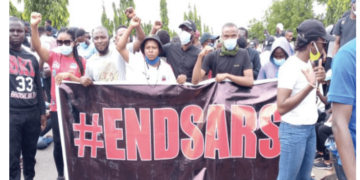
The negotiations commenced in April 2024, with organised labour demanding a wage increase it believed would assuage workers’ difficulties. The argument was that the federal government’s withdrawal of the fuel subsidy and other perceived harsh economic policies made the N30,000 minimum wage unacceptable. They insisted that the national cost of living had become a crisis as the price of food, transportation, and electricity, among others, had overtaken the N30,000 minimum wage. However, the government offered a disturbing N62,000, which was a far cry from the N494,000 that Labour asked for.
After a series of meetings, horse trading, bargaining, and shifting of grounds, the government increased it to N70,000, which was still less than the N250,000 labour eventually came down to.
Labour made a serious concession and accepted the N70,000, as President Tinubu reportedly threatened to increase the fuel price if the workers insisted on a N250,000 minimum wage.
Soon after Labour accepted the president’s offer, the government went ahead to hike the pump price of fuel, which has continued its upward swing till date. Labour complained that it felt betrayed by that action
From the federal level, the battle shifted to the states, where the governors claimed to be awaiting the consequential adjustment guidelines from the federal government.
So far, 21 states have agreed to pay the new wage to their workers, and some have begun payment. Interestingly, some states have increased the minimum wage above the N70,000 benchmark.
However, 15 states have yet to comply, dampening the enthusiasm among the workforce that greeted the new pay even with the arbitrary increases in the prices of goods and services.
As a newspaper, we are appalled by the slow pace at which the states are handling this issue, which is at the core of the welfare of workers.
Initially, the excuse was the non-release of the consequential adjustments guidelines. Even when the federal government removed this perceived obstacle, some states continued to dither.
Although it is accepted that the guidelines were necessary in the implementation process, the negotiating committees set up by the affected states on the guidelines are not approaching the matter with the urgency it deserves. We dare say that they are adopting delay tactics, which we consider not to be in anyone’s interest as the workers in those states may soon become restless.
Sadly, the workers have continued to bear the brunt of these delays amidst spiralling inflation, food scarcity, and high transport fares, which have exacerbated their hardship. Some of the federal government’s economic policies have also worsened the plight of the people whose anxieties have virtually been ignored.
Nearly five months after the minimum wage became law, the states are still sleeping on its implementation. We are compelled to appeal that in the interest of labour harmony and concern for the suffering workers, the affected state governments must take the necessary and expedite action on the policy, accelerate the negotiation process, and implement the new wage without further delay.
The federal government has done its part; the states must follow suit. In the face of the new economic realities, the N70,000 minimum wage will not bring any serious succour to the Nigerian workers but the workers need it regardless.
Therefore, we urge the government to accompany this wage with more worker-friendly economic policies that will, hopefully, address the welfare of workers, including those in the private sector who have continued to bear pains that are becoming excruciating.
It is pertinent to emphasise that, without being told, the state governments should make it an important point to prioritise workers’ welfare while the consequential adjustment negotiating committees should make haste to conclude their work and ensure prompt implementation of the policy.
The Nigerian worker deserves a better deal. The N70,000 minimum wage, as paltry and beggarly as it is, maybe a positive step forward and a basis for further future negotiations. We believe that the anticipated impact hinges on its prompt implementation.
The states owe the workers a duty to act expeditiously and in a manner that will alleviate the burden workers bear in the face of the not-too-people-friendly policies and programmes of the government at all levels.
We’ve got the edge. Get real-time reports, breaking scoops, and exclusive angles delivered straight to your phone. Don’t settle for stale news. Join LEADERSHIP NEWS on WhatsApp for 24/7 updates →
Join Our WhatsApp Channel