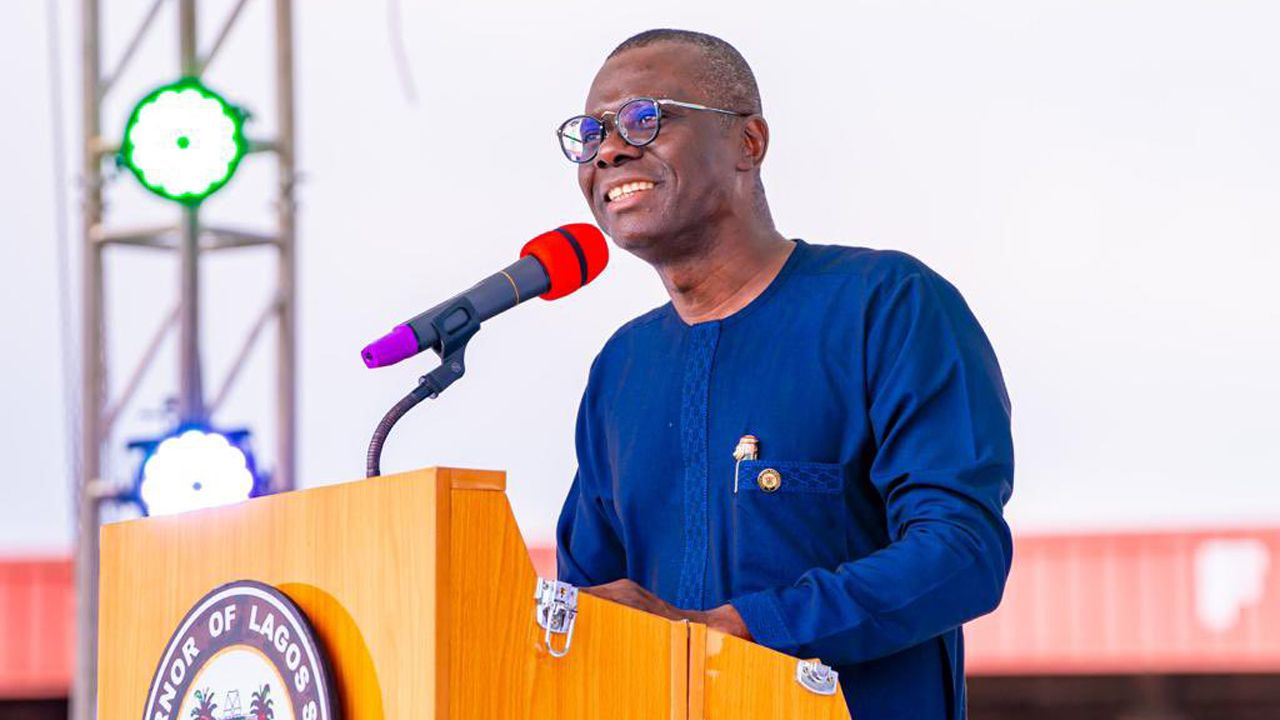
The report that the combined debt profile of Nigeria’s 36 states has climbed to N4.002 trillion, with Lagos accounting for 26 per cent of the total, is not merely another economic statistic. It is a structural signal that demands sober reflection on how state governors are managing resources at the second tier of our federal system.
Beneath the headline lies a deeper question about the health of Nigeria’s federation — its fiscal architecture, the discipline of subnational governance, and the long-term sustainability of our development model.
Many experts have argued that our federal system, whose primary objective was to maintain security by curbing regional and ethnic dominance, has not sufficiently fostered development. Despite receiving roughly half of national revenue — about N7.5 trillion between January and July 2025 — state governments continue to struggle to provide the services that could materially improve the lives of Nigerians.
There is also a deeper structural issue at play: Nigeria’s fiscal federalism framework. States possess constitutional autonomy to borrow, yet they rely heavily on centrally distributed oil revenues. This creates a subtle moral hazard. When revenue flows are largely external and politically mediated, the incentive for rigorous local revenue mobilization weakens. Borrowing then becomes a convenient bridge between short-term political expectations and limited fiscal discipline.
History shows that bailout cycles often follow such patterns. When states become unable to meet salary obligations or service debts, pressure mounts on the federal government to intervene. This dynamic undermines fiscal responsibility and reinforces dependence. A federation cannot be politically decentralized but fiscally fragile at its subnational levels without facing long-term consequences.
Debt in itself is not a crime. No modern economy grows without borrowing. Governments across the world deploy debt as a lever for infrastructure expansion, industrial stimulation, and long-term productivity gains. The crucial distinction is not whether states borrow, but why they borrow and what follows afterward.
The defining question is this: are Nigerian states borrowing to expand productive capacity, or are they borrowing simply to survive?
If borrowing finances transport systems, power projects, industrial hubs, technology parks, irrigation networks, and education reforms that generate future revenue streams, then debt becomes an investment instrument. But if borrowing is primarily used to finance recurrent expenditure — salaries, political overheads, and short-term obligations — then debt becomes a deferred crisis.
According to BudgIT’s 2025 data, 28 states remain structurally dependent on federal allocations. Internally generated revenue (IGR) in many states is weak, narrow-based, and vulnerable to economic shocks. Compounding this challenge is the troubling reality that, in some states, IGR has reportedly become a tool for corruption, with revenues diverted for personal enrichment. Transparency is lacking, as are clear lines of fiscal responsibility.
Many state governments fail to publish audited accounts for years, leaving little room for public scrutiny of how revenues are earned and spent. It is widely alleged that some governors attain power through questionable electoral processes and subsequently dominate state assemblies, weakening oversight and accountability.
In such an environment, rising debt levels pose serious sustainability concerns. When debt servicing begins to consume a growing share of monthly allocations — and when IGR becomes vulnerable to abuse — capital expenditure inevitably suffers. The use of private consultants and informal street-level collectors often creates leakages, while questionable land transactions sometimes morph into private fortunes. In these circumstances, social services decline, hospitals deteriorate, roads remain in disrepair, and infrastructure development stalls.
This is why transparency is non-negotiable. Citizens deserve clarity on the composition of state debts: domestic versus external exposure, interest rates, repayment timelines, and clear project linkages. State assemblies, constitutionally empowered to approve borrowing, must elevate their scrutiny beyond routine endorsement. Public debate must move beyond raw numbers to the quality and purpose of fiscal decisions.
First, states must broaden their IGR base through technology-driven tax systems and improved compliance frameworks. Revenue autonomy, anchored on transparency, strengthens borrowing credibility.
Second, borrowing must be tied to clearly measurable economic returns. Every major debt-financed project should carry transparent performance benchmarks accessible to the public.
Third, debt sustainability metrics should be standardized and published periodically — not merely aggregate figures, but debt-service-to-revenue ratios and capital efficiency indicators.
Finally, fiscal federalism itself requires reform. States must be incentivized to produce, innovate, and generate wealth locally rather than rely predominantly on allocation flows.
The N4.002 trillion figure should not induce panic. But neither should it be dismissed as routine. It is a reminder that development financed by debt must be matched by discipline, transparency, and productivity. Without these, today’s borrowing becomes tomorrow’s constraint.
We’ve got the edge. Get real-time reports, breaking scoops, and exclusive angles delivered straight to your phone. Don’t settle for stale news. Join LEADERSHIP NEWS on WhatsApp for 24/7 updates →
Join Our WhatsApp Channel