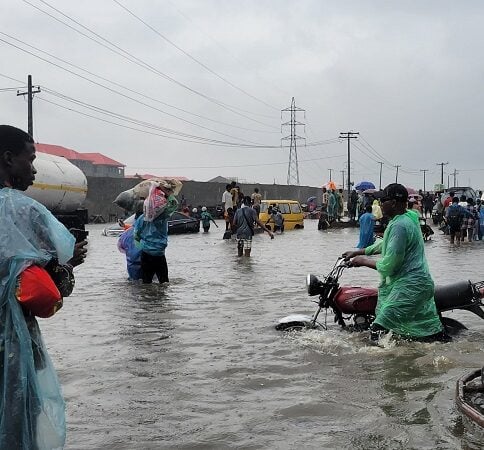
As the rainy season gathers momentum across Nigeria, flooding has once again become a defining feature of public concern. In a recent statement on the flooding in Lagos, the Special Assistant to the President on Climate Change Matters, Yussuf Kelani, observed that “Climate change has altered the frequency, duration and intensity of rainfall across many regions of the country. Instead of moderate rainfall spread over several days, communities increasingly experience short-duration but extremely heavy downpours that overwhelm drainage infrastructure, flood rivers, destroy roads and displace entire communities.”
While national attention often shifts to Lagos and other southern states whenever floodwaters rise, Northern Nigeria remains one of the country’s most exposed and repeatedly affected regions. From the floodplains of the Rivers Niger and Benue to rapidly expanding urban centres such as Kano, Kaduna, Maiduguri, Sokoto, Gombe and Jos, the scale and frequency of flooding have become both predictable and deeply alarming.
What is most disturbing, however, is not simply the existence of flood risks but the recurring cycle of unpreparedness that accompanies them. According to the United Nations Office for the Coordination of Humanitarian Affairs (OCHA), the UN agency responsible for coordinating humanitarian responses to emergencies and disasters, floods in 2024 displaced about 1.2 million people, destroyed more than 116,000 homes and critical infrastructure, and devastated 1.4 million hectares of farmland in Nigeria. The agricultural losses were estimated at 1.1 million metric tonnes of produce valued at about $1 billion—enough food to feed approximately 13 million people.
Northern Nigeria is especially vulnerable because of both natural and human-induced factors. Geographically, many communities lie along major river basins, making them susceptible to seasonal overflows. States such as Niger, Kebbi, Benue, Adamawa and Taraba regularly experience riverine flooding whenever water bodies exceed their carrying capacity. At the same time, Kano, Katsina, Jigawa, Bauchi, Zamfara and Kaduna increasingly contend with severe flash floods triggered by short but intense rainfall, inadequate drainage systems and rapid, poorly planned urban expansion. OCHA reported that floods affected 34 of Nigeria’s 36 states in 2024, with Borno emerging as the worst-hit state. Nearly three million people were affected, close to 700 lives were lost, and about 896,000 people were displaced.
The trend has continued into 2025. During the first quarter of the rainy season, the National Emergency Management Agency (NEMA) reported that floods had already affected 23 states and 65 local government areas. More than 200 lives were lost, over 15,000 houses were damaged, and approximately 15,454 farmlands were affected, disrupting the livelihoods of more than 10,000 people.
The Nigerian Meteorological Agency (NiMet) and other hydrological agencies have consistently issued early warnings identifying flood-prone areas ahead of peak rainfall periods. Unfortunately, these warnings are too often treated as routine announcements rather than urgent policy signals requiring immediate and coordinated action by state and local governments. The consequence is a familiar pattern of avoidable destruction and loss.
Beyond the visible damage to homes and infrastructure, flooding imposes enormous socio-economic costs. As the country’s agricultural hub, Northern Nigeria produces a substantial proportion of Nigeria’s rice, maize, millet, sorghum, beans and livestock. When floods destroy farmlands, the consequences extend well beyond the affected communities. Food supply chains are disrupted, harvests decline and prices rise nationwide. Flooding in Northern Nigeria, therefore, is not merely a regional challenge; it constitutes a serious threat to national food security and economic stability.
Urban flooding presents an equally troubling dimension. Cities that were once relatively small are expanding rapidly as a result of population growth and rural-to-urban migration. Unfortunately, this expansion has not been matched by adequate physical planning or investment in infrastructure. Drainage channels are routinely blocked by indiscriminate waste disposal, wetlands continue to be encroached upon, and buildings are erected on natural waterways. Consequently, cities such as Kano, Kaduna, Jos and Maiduguri frequently experience flash floods after heavy rainfall, disrupting transportation, damaging property and increasing the risk of waterborne diseases.
These urban flooding challenges are not merely environmental; they are fundamentally failures of governance. The devastating Mokwa flood of last year is a painful reminder of this reality. Official reports indicated that the disaster displaced about 3,000 people, injured more than 213 others and claimed 208 lives. The tragedy was attributed largely to weak enforcement of physical planning regulations, inadequate drainage infrastructure and poor waste management practices.
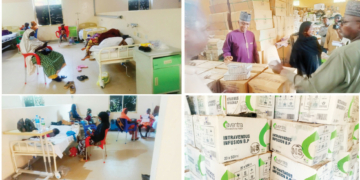
The situation is often even more severe in rural communities. Entire settlements can become isolated for weeks as damaged roads and bridges cut off access to healthcare, education and markets. Recurrent flooding also heightens the risk of cholera and other waterborne diseases, placing additional pressure on already overstretched healthcare systems.
Despite these recurring disasters, Nigeria’s response remains largely reactive. Emergency agencies mobilise only after floods have occurred, relief materials are distributed and temporary shelters established. While these interventions are necessary and commendable, they address only the consequences rather than the underlying causes. What remains absent is a sustained commitment to prevention, long-term planning and resilience.
If Nigeria, particularly the states of Northern Nigeria, is to reduce its vulnerability to flooding, it must shift from emergency response to structural preparedness.
First, early warning systems must be strengthened and linked directly to enforceable action plans at both state and local government levels. Flood alerts should automatically trigger clearly defined preparedness measures instead of remaining mere advisory notices.
Second, physical planning regulations must be enforced without compromise. Encroachment on floodplains, wetlands and drainage channels must be halted through stronger political will and greater institutional independence for planning authorities.
Third, governments must prioritise investment in drainage infrastructure. Many urban centres across Northern Nigeria still depend on outdated or poorly maintained drainage systems that are incapable of coping with today’s rainfall intensity. Modern stormwater management infrastructure—including retention ponds, expanded drainage networks and regular maintenance—should become standard features of urban development.
Fourth, agricultural adaptation strategies require significant expansion. Farmers in flood-prone communities need greater access to climate-resilient seed varieties, improved irrigation systems and timely weather information. In areas facing persistent flood risks, seasonal farming adjustments and, where necessary, carefully planned relocation should be considered to minimise recurring losses.
Fifth, coordination among disaster management agencies, water resources authorities, environmental regulators and local governments must improve substantially. Fragmented institutional responsibilities often result in delayed, duplicated or ineffective responses.
Finally, public awareness and community participation must form an integral part of flood management. Citizens should be educated on proper waste disposal, flood preparedness and emergency response measures. Local communities should also be actively involved in flood monitoring, early warning dissemination and mitigation efforts.
Flooding is no longer an isolated seasonal occurrence; it has become a recurring national challenge with profound humanitarian, economic and environmental implications. The warning signs are clear, the scientific forecasts are available and the consequences of inaction are well documented. What remains uncertain is whether governments at all levels will muster the political will to act before the next disaster strikes. Structural preparedness—not emergency reaction—must become Nigeria’s new approach to managing flood risks.
We’ve got the edge. Get real-time reports, breaking scoops, and exclusive angles delivered straight to your phone. Don’t settle for stale news. Join LEADERSHIP NEWS on WhatsApp for 24/7 updates →
Join Our WhatsApp Channel