By Iyi-Ife Victor Adegbulugbe
The ongoing civil war in Sudan, which has escalated dramatically since April 2023, has grown to become one of the most consequential conflicts in contemporary Africa.
The war can no longer be classified as just a domestic power struggle; it is now a conflict with far-reaching implications for not just the people of Sudan, but also for the neighbouring nations and the wider continent.
Background
The war is primarily between the Sudanese Armed Forces (SAF), led by General Abdel Fattah al-Burhan, and the paramilitary Rapid Support Forces (RSF), commanded by Mohamed Hamdan Dagalo (commonly known as the warlord Hemedti).
Tensions between these factions grew after the collapse of a fragile civilian–military transition that followed the 2019 overthrow of Omar al-Bashir. Disagreements over integrating the RSF into the national army and over control of political power triggered open conflict, throwing the entire country into chaos.
Unlike traditional civil wars, the Sudan conflict is heavily urbanised, particularly in the capital, Khartoum, which has seen some of the heaviest fighting. The control of cities, supply routes, and other important infrastructure, such as airports, dams, and mines, has become central to both sides’ strategies.
Not as planned
Contrary to early predictions of a swift SAF victory with minimal destruction limited to the capital region, the war has expanded into resource-rich, strategically vital regions such as Darfur and Kordofan.
In these areas, the conflict has increasingly taken on additional ethnic and economic dimensions, with the various factions fighting over land, gold, and trade routes as the country becomes increasingly fragmented and a decisive military victory becomes more unlikely. The nation of Sudan is effectively breaking into zones of control headed by rival authorities, which vastly increases the likelihood of creating a failed state or even multiple de facto states within its borders.
Chaos on steroids
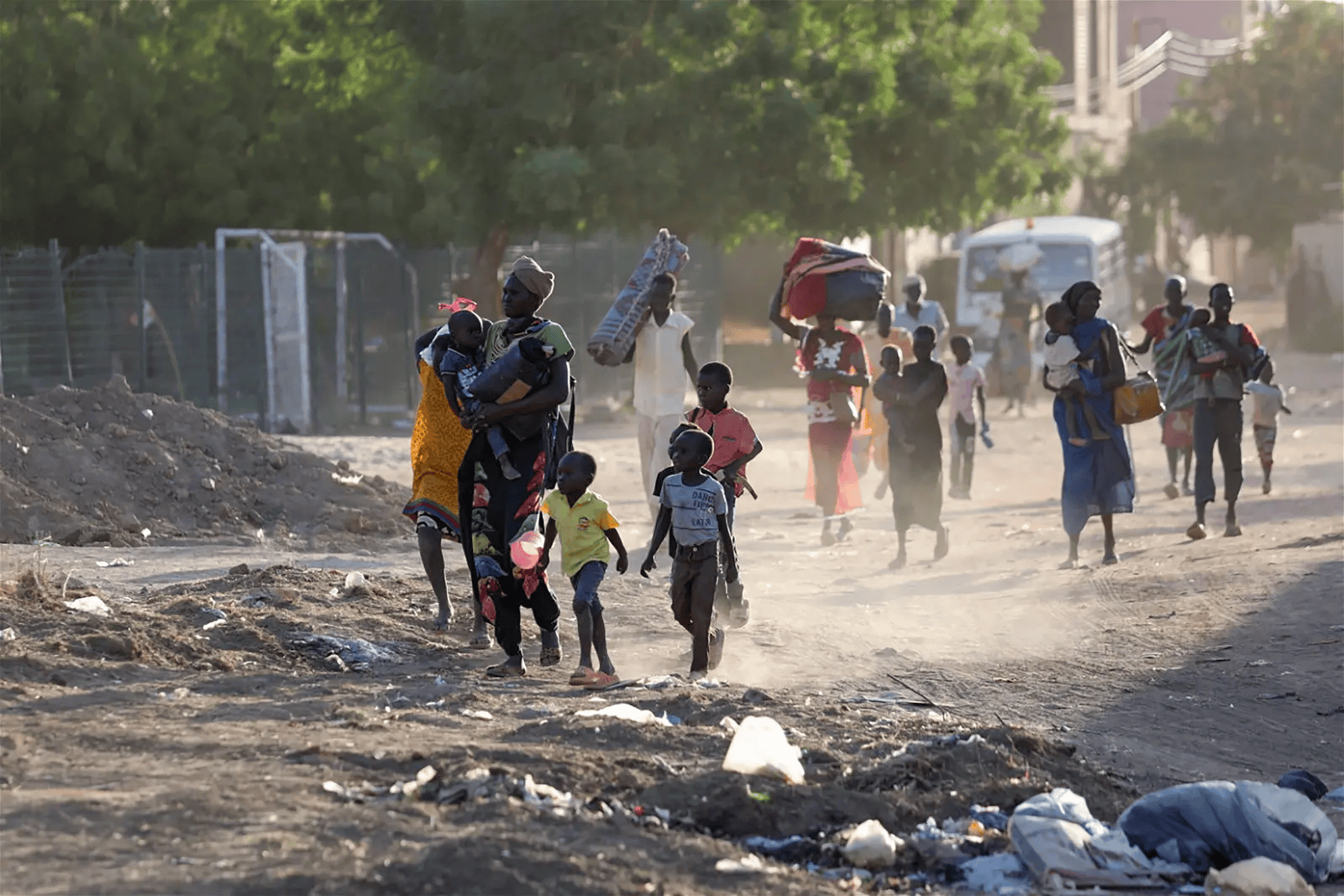
Sudan is now widely regarded as the site of the worst humanitarian disasters in the world, with the responsibility for displacing millions of people and basic services such as healthcare, drinking water and food either becoming scarce or are basically non-existent.
The destruction of vital infrastructure has pushed large parts of the population into extreme vulnerability. In many cases, civilians are caught between warring factions, facing violence, starvation, and displacement. It has been noted in several cases that both sides are guilty of committing various war crimes, especially the RSF, which has been documented to have conducted ethnic genocide against the non-Arab populations within their controlled borders, where they have conducted wholesale massacres of hundreds of thousands and the weaponisation of sexual violence and hunger to their advantage. This humanitarian crisis is not only a moral but also a political crisis, as it undermines the possibility of stable governance in the near term.
More than a war
According to various analysts, one of the major problems with the Sudan civil war is the fact that, in all but name, it can no longer be described as just a civil war; it’s now a low-grade regional conflict involving several nations taking potshots at each other. On one side, we have RSF supported by Ethiopia, South Sudan, and Chad; Uganda supports South Sudan itself.
What all countries have in common is that their main foreign backer is the UAE, which is competing with Saudi Arabia for influence on the African continent. The Saudis support the Sudanese army alongside Egypt, Somalia, the Tigray rebels of Ethiopia, Turkey, and Eritrea.
If care is not taken, the entirety of East and Central Africa, and parts of North Africa, could be embroiled in war.
Left to its fate
Despite the scale of the conflict, Sudan has received less international attention than other conflicts.
This is a result of external covertly pursuing strategic interests in the country. Sudan’s location on the Red Sea coast and its vast natural resources make it a valuable geopolitical prize.
Rather than a united international effort to resolve the conflict, competing interests undermine peace initiatives.
By all outward indications, it is likely to be a prolonged affair, as neither side appears capable of achieving a decisive victory. The situation makes it harder to conduct peace negotiations.
The risk is that Sudan could follow the path of countries like Libya and Syria, where they become entrenched in cycles of violence, humanitarian crises and political instability.
As for the continent, the outcome of the war will not only determine the future of Sudan but will also shape regional security dynamics and test the effectiveness of continental institutions.
– Adegbulugbe, the author, is a graduate of Political Science and International Relations from Nile University, Abuja, with an interest in global politics and security.
We’ve got the edge. Get real-time reports, breaking scoops, and exclusive angles delivered straight to your phone. Don’t settle for stale news. Join LEADERSHIP NEWS on WhatsApp for 24/7 updates →
Join Our WhatsApp Channel