• Aper Aku’s Industrial Dream And The Burden Of Proof
There are institutions whose ruins speak more eloquently than political speeches. Taraku Mills is one of them.
For more than four decades, the factory has stood at the intersection of memory and failure, agriculture and industry, political promise and economic reality. Today, Benue is once again being told that Taraku Mills is returning to life. I sincerely hope so. But history demands more than hope. It demands evidence.
The Benue Investment and Property Company, BIPC, has announced that the first phase of rehabilitation of Taraku Mills is more than 80 per cent complete and that three truckloads of soybeans have been procured in preparation for production. These developments are welcome. But they do not, by themselves, prove that Taraku Mills has been sustainably revived.
I write on Taraku not as a distant commentator looking backwards into Benue history. I belonged to that political generation.
During the Second Republic, I was a member of the National Party of Nigeria, NPN, the ruling party at the federal level under President Shehu Shagari and the political platform on which Governor Aper Aku governed Benue State. In 1983, I was elected Senator representing Benue North-East and served as Deputy Chief Whip of the Senate until the military coup of December 31, 1983 terminated that democratic era.
Aper Aku was not merely a governor whose name I later encountered in history books. He was my friend, teacher and mentor. I understood something of the developmental philosophy that informed his government.
Taraku Mills Emerged From That Philosophy.
Aper Aku understood that an agricultural people could not become prosperous merely by producing raw crops. Soybeans, maize, rice, yams and other agricultural commodities had to be connected to processing, industry, employment and markets.
That is the economic logic behind Taraku.
The tragedy of Benue agriculture has never simply been our inability to produce. It is what happens after production. When a state exports raw agricultural commodities and buys back finished products, it exports jobs, industrial knowledge, profit and wealth. Taraku was conceived as an answer to that problem. Its industrial system was designed to process soybeans, maize and animal feed on a substantial scale. It represented an integrated vision in which farmers supplied raw materials, factories created value, workers earned incomes and finished products entered markets.
But after the Aku era, Taraku began a long and painful cycle.
Governments came and went. Revival promises were made. Investors arrived. Lease agreements were announced. Inspection visits took place. Machinery was repaired. Production was promised. And repeatedly, Taraku returned to silence.
Under different administrations, attempts were made to revive or lease the factory. During the Samuel Ortom administration, another pledge to restore the mill was made, while management identified water, electricity and finance as major obstacles.
Today, another government is confronting the same historical challenge. This is why the present administration should understand that public scepticism is not hostility. It is the product of memory.
There is also an immediate question of timelines.
In July 2026, officials publicly indicated that production would begin in August. By September, the official position was that the first phase of rehabilitation had crossed 80 per cent and that soybeans were being procured for preparatory operations.
Industrial rehabilitation can experience legitimate delays. But accountable government should explain them. What happened to the August target? What exactly does “80 per cent ready” mean? Does it refer only to mechanical rehabilitation, or does it include electricity, water, staffing, raw-material supply, packaging, distribution and working capital?
A percentage without clear parameters tells the public very little. The announcement that three truckloads of soybeans have been procured raises similar questions. How many tonnes do those trucks contain? How much soybean will Taraku require every day at commercial capacity? How many farmers have been integrated into the supply chain? How many hectares of soybeans must Benue cultivate annually to keep the mill operating? Where are the aggregation centres and storage facilities?
What off-take arrangements will guarantee farmers a market? These questions matter because three truckloads can test machinery. They cannot sustain an industry.
Then there is electricity.
An industrial facility cannot be judged merely by whether its machines can be switched on. The fundamental question is whether those machines can operate continuously and competitively.
What is Taraku’s total power requirement? Is there dependable grid supply? What generating capacity exists as backup? What will the energy cost per tonne of output be? At current energy prices, an industrial operation that depends substantially on diesel could face serious cost pressures.
Water presents another question. Historically, inadequate water supply was one of Taraku’s major problems. Improvements to the Otobi Water Works are encouraging, but the relevant question is whether Taraku now has a dependable industrial water connection capable of supporting continuous production.
Technical Sustainability Is Equally Important.
After decades of interrupted operations, machinery requires more than repairs. Taraku needs an effective maintenance regime, reliable spare-parts supply, qualified engineers, modern operating systems and a clear technology-transfer arrangement. The government can answer most of these questions very simply. Publish the numbers. Tell Benue how much has been spent on rehabilitation. Publish the restored production capacity. State the daily water and electricity requirements. Publish the raw-material requirement per day, month and year. State how many workers will be employed.
Identify the technical and commercial partners and define their responsibilities. Explain the farmer off-take programme. Give the public a realistic commencement date for sustained commercial production.
And when production begins, publish credible accounts. Numbers will build public confidence more than political publicity.
For me, Taraku is deeply personal because it represents something larger than a factory.
It represents the ambition of a generation that believed government should build productive institutions. Aper Aku understood that agriculture had to connect with industry; that rural production had to connect with markets; and that public investment should create institutions capable of outliving the politicians who established them.
That is why Taraku’s prolonged failure should trouble every Benue citizen. Think of the farmers who could have enjoyed a dependable market. Think of the engineers, technicians, transporters and factory workers who could have built careers around it. Think of the industries that could have emerged around packaging, distribution and agricultural processing.
The greatest cost of a failed factory is not the rust on its machines. It is the prosperity that never happened. The present administration therefore has an opportunity to end this cycle. If Taraku has truly been revived, the evidence will eventually become impossible to hide.
Let Benue farmers supply its soybeans. Let Golden Oil leave its gates in commercial quantities.
Let animal feed enter markets across Nigeria. Let young people work there. Let workers receive salaries. Let farmers receive payment. Let production continue after the television cameras have departed. Let Taraku survive elections, administrations and political parties. Then nobody will need to tell the people of Benue that Taraku Mills is alive.
We will hear the machines. We will see the workers. We will meet the farmers. We will buy the products.
And we will see the accounts.
After four decades of promises and attempted revivals, Taraku Mills deserves a standard greater than ceremony.
The burden of proof is production
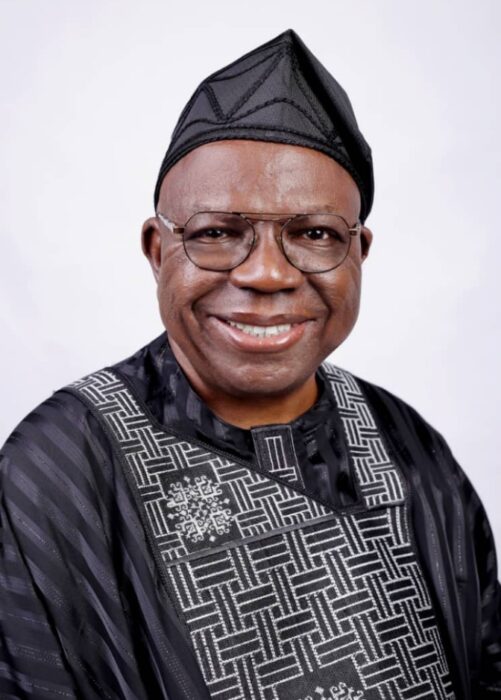
Senator Amb. Professor Iyorwuese Hagher, OON
President, Leadership Institute, Nigeria
We’ve got the edge. Get real-time reports, breaking scoops, and exclusive angles delivered straight to your phone. Don’t settle for stale news. Join LEADERSHIP NEWS on WhatsApp for 24/7 updates →
Join Our WhatsApp Channel