
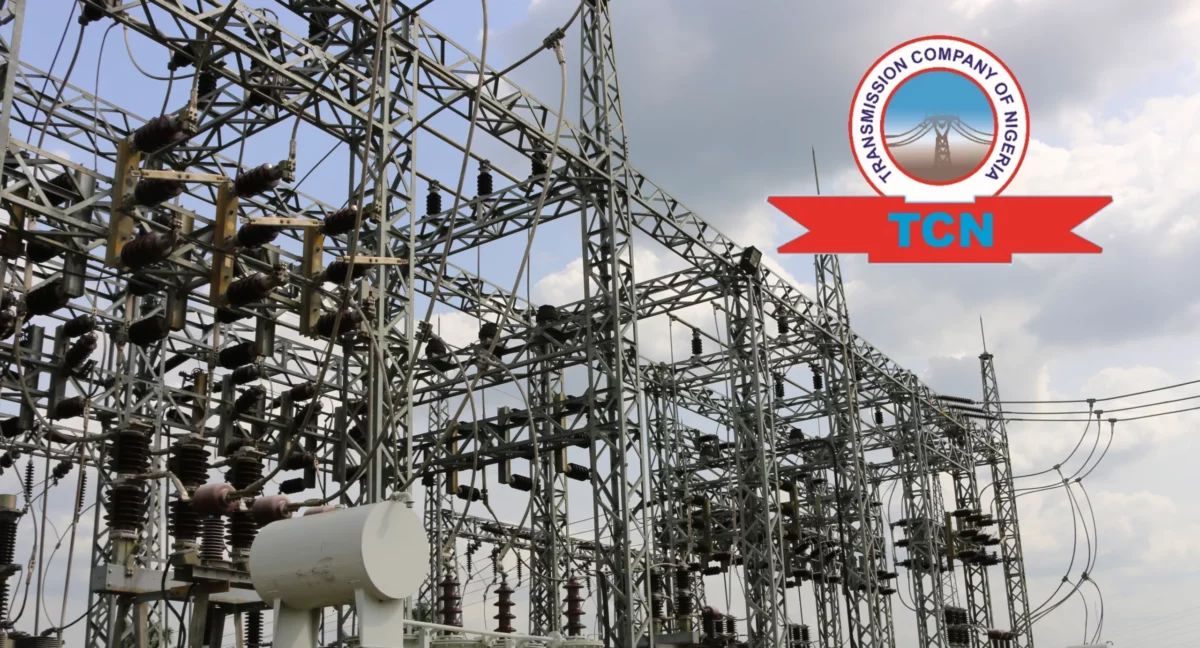
The Transmission Company of Nigeria (TCN) has rejected claims by the Association of Power Generation Companies (APGC) that transmission constraints are the main cause of Nigeria’s persistent electricity shortfall, saying official data from the Nigerian Electricity Regulatory Commission (NERC) points to generation shortfalls instead.
The dispute followed a media report that quoted APGC as saying more than 2,500 megawatts (MW) generated daily were “stranded” because the grid could wheeled only about 4,500MW despite an alleged installed capacity of more than 15,500MW.
In a detailed statement, TCN said NERC’s First Quarter 2026 report shows average generation declared available by plants during the quarter was 4,457.96MW—almost identical to the 4,500MW figure cited by APGC. TCN argued this shows the limitation was in generation availability, not transmission capacity.
TCN also disputed APGC’s installed-capacity figure, saying NERC lists installed capacity for the 28 grid-connected plants at 13,625MW—not 15,500MW.
On wheeling capacity, TCN said the transmission network currently has a verified capacity of 8,700MW, well above the 4,500MW figure. It pointed to a grid-record peak of 5,801.84MW on March 4, 2025, and other peaks above 5,500MW as evidence the network can evacuate higher output.
The company said investments between January 2024 and November 2025 increased transmission capacity, including commissioning 82 new power transformers that added about 8,500 MVA, and new 330kV lines on the Ihovbor–Benin and Ihovbor–Ajaokuta corridors that added more than 600MW of wheeling capacity to the Benin corridor.
TCN cited NERC’s Plant Availability Factor (PAF) data showing average plant availability was just 32.72 per cent in Q1 2026, meaning roughly two-thirds of installed generation was unavailable for dispatch mostly because of gas shortages, maintenance and mechanical faults. Several thermal plants—Alaoji, Rivers, Ibom Power, Sapele Steam, Trans Amadi and Omotosho—recorded very low availability, the statement said.
On stranded power, TCN said NERC’s reported grid load factor of 92.26 per cent indicates almost all available generation was evacuated during the quarter, estimating only about 345MW of declared available capacity remained undispatched—far below APGC’s 2,500–4,000MW figure.
TCN also disputed claims of very high transmission losses, noting NERC’s audited Transmission Loss Factor for Q1 2026 was 7.96 per cent, equivalent to about 327MW, not the 1,200–1,300MW reportedly cited elsewhere. It added that some referenced financial penalties relate to market settlement mechanisms rather than physical line losses.
On system collapses earlier this year, TCN said NERC’s preliminary finding for the partial collapse of January 27, 2026, attributed the event to inadequate reactive power support (voltage stability), not a transmission infrastructure failure.
TCN accepted responsibility for a separate total collapse on January 23, 2026, caused by a busbar separation at Sapele Transmission Station and said investigations have been completed.
The transmission company also linked the reported N2.28 trillion capacity payment shortfall more to poor collections and remittances by distribution companies than to transmission constraints, citing aggregate technical, commercial and collection (ATC&C) losses of 37.44 per cent recorded by distribution companies in Q1—well above regulatory targets.
While acknowledging ongoing operational challenges across the power sector, TCN urged stakeholders to rely on official regulatory data and called for closer collaboration among the Nigerian Independent System Operator (NISO), NERC, generating companies and distribution companies to improve the reliability and sustainability of the electricity supply
We’ve got the edge. Get real-time reports, breaking scoops, and exclusive angles delivered straight to your phone. Don’t settle for stale news. Join LEADERSHIP NEWS on WhatsApp for 24/7 updates →
Join Our WhatsApp Channel