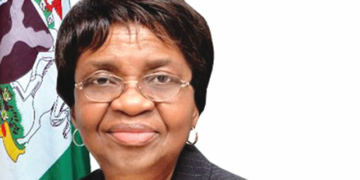

The Nigerian Communications Commission (NCC) has disclosed that telecommunications operators have compensated 75 million unique mobile subscribers for poor quality of service, following the commission’s efforts to hold service providers accountable.
Executive vice chairman of the NCC, Dr Aminu Maida, disclosed this at the Abuja roundtable on Promise to Proof: The Renewed Hope Conversation, organised by the All Progressives Congress (APC) and the Progressive Strategy Roundtable.
The engagement focused on finance, training and market access for small businesses and traders, as well as achievements recorded by government agencies under President Bola Tinubu’s Renewed Hope Agenda.
Maida said the compensation was part of the commission’s efforts to protect telecommunications consumers and ensure that operators provided services that met the required quality standards.
He explained that subscribers affected by poor network services had received airtime credits from their respective operators as compensation.
“This year alone, which is the first for the NCC, we have held operators accountable and they have given compensation to 75 million unique mobile subscribers,” he said.
The NCC boss added that the commission had also introduced a framework, in collaboration with the Central Bank of Nigeria (CBN), to ensure prompt refunds for failed airtime recharge transactions.
He disclosed that more than three million consumers had benefited from the framework.
“In addition, working with the CBN, we have put in place a framework for prompt refund of recharge of failed recharge attempts. And again, I think we’ve seen over three million people, consumers benefiting from that framework,” Maida said.
On investments in the telecommunications sector, the NCC executive vice chairman disclosed that the industry had witnessed a significant return of investments after a period when operators were largely focused on maintaining existing infrastructure.
He said telecommunications operators invested more than $1 billion in their networks in 2025, while one of the major mobile network operators had committed to investing more than $1 billion in 2026.
According to him, the operator was also undertaking the upgrade of approximately 13,000 network sites, including the deployment of faster technologies such as 4G and 5G and the replacement of obsolete equipment.
Maida explained that continuous investment was necessary to meet the growing demand for telecommunications services, particularly as data consumption had increased by more than 50 per cent in the past year.
He said the sector, like other capital-intensive industries, required sustained investment to maintain and expand its infrastructure.
“A sector like ours, and sectors like power and other sectors that are capital intensive, you cannot afford to take a break in investing. You have to continuously be investing,” he said.
He attributed the return of investments partly to the Federal Government’s macroeconomic reforms, improved foreign exchange stability and the removal of fuel subsidy, which he said had helped make the business environment more attractive to investors.
The NCC boss, however, acknowledged that telecommunications services had yet to reach the level of quality desired by the commission, citing external challenges such as vandalism of telecommunications infrastructure.
He said the commission would continue to hold service providers accountable while encouraging investments that would improve network coverage and service delivery.
Maida also highlighted the NCC’s efforts to promote transparency through the publication of telecommunications coverage maps based on independently crowdsourced data from actual subscribers.
He explained that the platform allows consumers to check network availability in their locations and compare the performance of different operators before deciding which service provider to use.
“Now, as a consumer, you can go to our website. We publish coverage maps using data which is independently crowdsourced from real subscribers,” he said.
He added that Nigerians no longer needed to depend solely on recommendations from friends and acquaintances to determine which network offered better services in their areas.
“You can come to the NCC website. There’s a public coverage map. You enter your location anywhere in Nigeria. It will tell you which networks are available and how do they compare against each other,” he said.
Maida urged telecommunications consumers to take advantage of the platform to make informed decisions about network services.
He said the commission remained committed to improving consumer protection, promoting transparency and attracting the investments required to strengthen Nigeria’s telecommunications infrastructure.
We’ve got the edge. Get real-time reports, breaking scoops, and exclusive angles delivered straight to your phone. Don’t settle for stale news. Join LEADERSHIP NEWS on WhatsApp for 24/7 updates →
Join Our WhatsApp Channel