Nigeria’s universities have long grappled with a shortage of high-quality, locally authored academic textbooks that truly reflect the country’s realities.
Across campuses, students and lecturers continue to rely heavily on foreign publications which, although useful, often fail to capture Nigeria’s socio-economic context and intellectual traditions.
This dependence has not only constrained the growth of indigenous scholarship but has also imposed financial strain on institutions compelled to import costly learning materials.
Addressing this persistent gap, the Tertiary Education Trust Fund (TETFund) has stepped up efforts to revitalise local academic publishing through its Higher Education Book Development Intervention Project.
By supporting the creation and distribution of textbooks authored by Nigerian scholars, the initiative is steadily reshaping the intellectual environment within tertiary institutions.
Momentum around this intervention was recently underscored during the public presentation of 72 newly produced academic textbooks sponsored by TETFund, alongside 10 additional titles acquired for institutional use.
The ceremony, held at the Fund’s auditorium in Abuja, highlighted the central role of indigenous scholarship in driving national development, innovation and academic excellence.
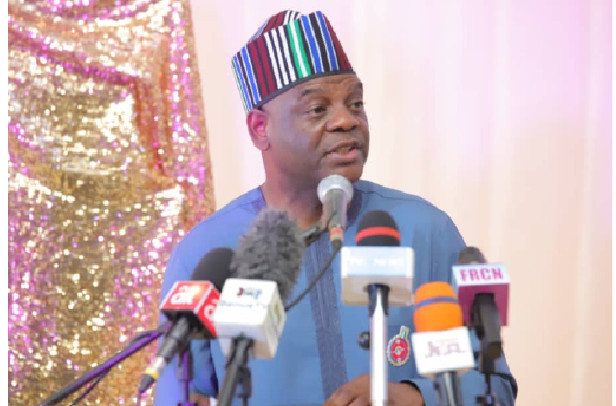
At the event organised recenty, the Executive Secretary of TETFund, Arch Sonny Echono, described the unveiling of the books as a significant milestone in repositioning Nigeria’s higher education system through homegrown knowledge.
He noted that the volumes showcased the intellectual capacity of Nigerian academics and reflected the Fund’s sustained investment in knowledge production.
Echono explained that the newly presented works form only part of a broader pool of resources generated under the programme. Beyond the 72 titles produced through direct intervention, an additional 10 textbooks authored by reputable Nigerian scholars were secured for use in tertiary institutions, bringing the total number presented to 82.
He further observed that the initiative was conceived to tackle longstanding deficiencies in the nation’s tertiary education system, particularly the scarcity of quality textbooks that has hampered teaching, learning and research in universities, polytechnics and colleges of education.
According to him, both the quantity and quality of academic materials had remained areas of concern for years.
To confront these challenges, TETFund established the Higher Education Book Development Intervention Project, aimed at encouraging credible publishing and motivating Nigerian scholars to take a more active role in knowledge creation. Ensuring quality control has remained a priority, leading to the creation of a Technical Advisory Group (TAG) by the Fund’s Board of Trustees in 2009.
The TAG comprises distinguished academics drawn from the six geopolitical zones, alongside representatives of key academic unions and regulatory agencies, including ASUU, ASUP, COAESU, the NUC, NBTE and NCCE.
This broad-based composition, Echono noted, has strengthened the peer review process and ensured strict adherence to academic standards in evaluating manuscripts.
Despite its ambitious objectives, the programme initially recorded slow progress. Only 20 textbooks were produced in 2014, with no significant output for several years thereafter. However, a turning point came following reforms introduced after Echono assumed office in 2022.
He explained that the manuscript evaluation process was reviewed and refocused, while a new Technical Advisory Committee was constituted with a defined two-year tenure.
The impact of these reforms was immediate, with 10 titles produced in August 2022 and another 50 in January 2023.
By March 2025, the number had risen further with the unveiling of an additional 50 textbooks, significantly expanding the pool of indigenous academic resources. Less than a year later, that figure has been surpassed with the latest presentation of 72 new titles.
Echono added that, in line with efforts to improve students’ learning experience, 10 additional textbooks by established authors were also approved and procured by the Fund.
With these latest contributions, TETFund has now produced a total of 202 academic textbooks under the initiative, while several others remain under review.
Distribution has also commenced on a large scale, with more than 400,000 copies of the books being supplied to beneficiary institutions across the country.
To enhance efficiency and accountability, the Fund has introduced a revised policy on author compensation.
Under the new arrangement, authors will receive monetary honoraria based on the content and length of their publications, alongside 20 complimentary copies, replacing the previous system that provided 1,000 copies per author.
Echono attributed the programme’s growing success to the support of the Minister of Education, Tunji Alausa, whose leadership, he said, has reinforced policies that promote academic excellence and knowledge production.
Offering further perspective, Chairman of the Technical Advisory Group, Albert Ayorinde Abegunde, described the occasion as a celebration of scholarship and intellectual advancement.
He noted that for decades, Nigerian universities depended heavily on imported textbooks that did not adequately reflect national realities or aspirations.
According to Abegunde, the TETFund initiative marks a decisive step towards intellectual self-reliance.
The newly presented textbooks span a wide range of disciplines, including medicine, pharmacy, law, engineering, agriculture, environmental studies, economics, management sciences, tourism, entrepreneurship and research methodology.
He explained that these works are designed to enrich teaching, deepen research, strengthen policy engagement and enhance learning outcomes across tertiary institutions.
Among the publications, Perspectives on Environmental Management stands out as the largest, exceeding 1,200 pages.
Abegunde also revealed that interest among Nigerian scholars continues to grow, with over 40 manuscripts already approved for publication, more than 60 undergoing peer review, and about 65 new submissions awaiting consideration at the next TAG meeting.
Looking ahead, the group plans to introduce an Open Access platform to make TETFund-supported publications accessible globally, a move expected to boost the visibility and impact of Nigerian research.
Beyond textbook development, the initiative is also positioned to address the challenge of brain drain by fostering collaboration with Nigerian scholars in the diaspora, effectively transforming it into brain gain for national development.
In his remarks, Minister of Education Tunji Alausa reaffirmed the Federal Government’s commitment to strengthening academic standards in the higher education sector.
He said the textbook initiative reflects deliberate efforts to reduce reliance on foreign publications and promote locally relevant learning materials.
The minister noted that dependence on imported textbooks has placed pressure on foreign exchange while discouraging indigenous authorship.
Encouraging Nigerian academics to produce quality materials, he added, would ensure wider access to relevant resources, particularly in critical fields such as science, technology and engineering.
He further highlighted that the Book Development Intervention extends beyond textbook production to include support for academic journals and the establishment of publishing centres. Commending all stakeholders involved, Alausa said their contributions are helping to enhance Nigeria’s global academic standing.
He also acknowledged the backing of President Bola Tinubu for ongoing reforms in the education sector, expressing confidence that the newly published textbooks would bridge gaps in local academic publishing and improve access to relevant materials across the nation’s universities and colleges.
We’ve got the edge. Get real-time reports, breaking scoops, and exclusive angles delivered straight to your phone. Don’t settle for stale news. Join LEADERSHIP NEWS on WhatsApp for 24/7 updates →
Join Our WhatsApp Channel