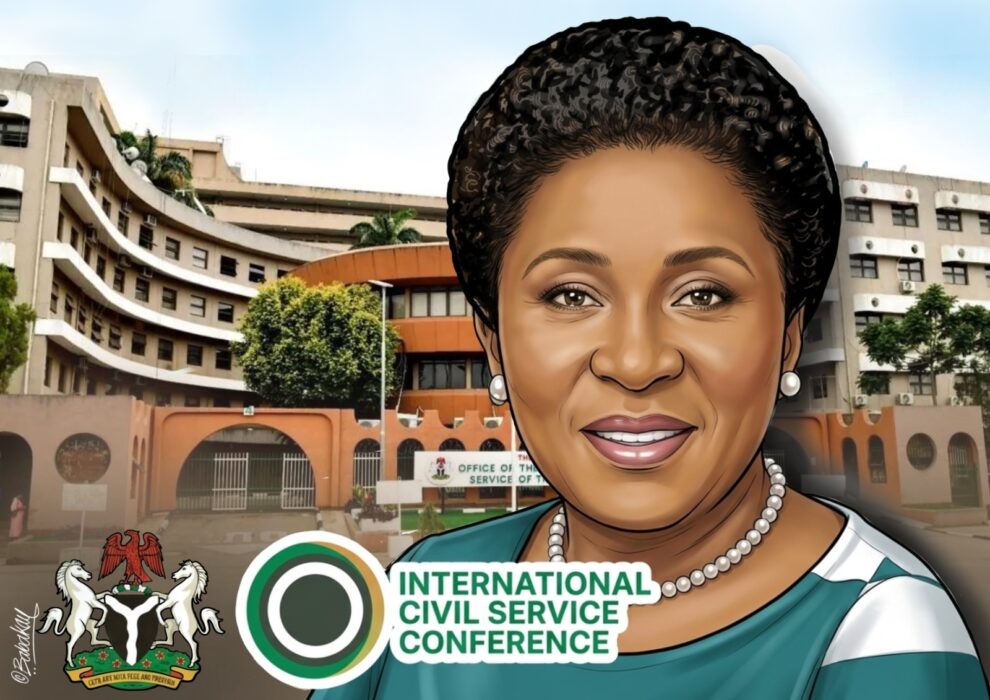
From May 20 to 21, Abuja will host one of the most consequential gatherings in contemporary public administration — the 2026 International Civil Service Conference (ICSC). Convened by the Office of the Head of the Civil Service of the Federation, the conference is expected to attract thousands of participants including policymakers, reformers, scholars, development partners and public servants from across Nigeria and around the world.
The choice of theme — “Reforms, Resilience and Results” — is therefore timely and strategic. Public institutions today are under pressure to do more with less, respond faster to crises, embrace digital transformation and rebuild public trust. Citizens no longer judge governments merely by policy pronouncements; they judge them by outcomes. They want services that work, institutions that are accountable and leadership that is responsive.
This is why the conference matters. It is not just another gathering of officials and development partners. It is an opportunity to interrogate what modern governance should look like in the 21st century and how the civil service can remain relevant in a rapidly changing world.
The significance of the conference is also reflected in the participation expected from countries across Africa, Europe, Asia and North America. Delegates from the United States, the United Kingdom, Singapore, Switzerland, Ghana, The Gambia, Zimbabwe, Zambia, Algeria, Indonesia, Iran, Colombia and more are expected in Abuja. That diversity underscores a simple truth: no nation has a monopoly of ideas when it comes to public sector reform and Nigeria is setting the pace.
Reform Is No Longer Optional
For decades, reform conversations in many countries, including Nigeria, focused on structures, procedures and bureaucracy. Today, the conversation has shifted. Reform is fundamentally about capability and impact: can the civil service anticipate challenges, innovate, and deliver measurable improvements in citizens’ lives? These are difficult but necessary questions.
Nigeria’s public service has undergone several reform waves aimed at professionalising operations, improving transparency and strengthening service delivery. From digitisation initiatives to performance management systems, procurement reforms and competency-based human resource management, the direction has been toward a more efficient, professional and citizen-centred service.
The 2021 Public Service Rules reflected this shift by incorporating emerging governance issues such as performance management, talent sourcing, virtual engagements and post-pandemic realities, recognising that institutions cannot rely on outdated assumptions while society evolves rapidly.
Equally important are reforms strengthening accountability and transparency. The Freedom of Information Act, procurement regulations and revised financial rules point to a governance culture demanding greater openness and responsibility.
Yet reform is never a one-time event. Institutions must continually adapt as technology reshapes governance. Artificial intelligence, data systems and digital platforms are transforming administrative processes globally, while citizens increasingly expect real-time, transparent and responsive services.
This is why the ICSC’s emphasis on practical solutions is timely. Its plenaries, roundtables and discussions on digital transformation, leadership, workforce development, accountability and innovation are central pillars of effective governance while the Deals Room seeks to engage partners for support.
Resilience in an Age of Uncertainty
If the COVID-19 pandemic taught governments anything, it is that resilience is no longer optional. Institutions must function effectively under pressure, adapt quickly to disruptions and maintain continuity during crises. Resilience in governance is the capacity of institutions to absorb shocks, recover quickly and continue delivering essential services without losing public confidence.
In recent years, countries across the world have confronted pandemics, economic volatility, climate emergencies, insecurity and technological upheaval. These challenges have tested public institutions in unprecedented ways. For the civil service, resilience increasingly depends on competent personnel, adaptive systems and ethical leadership.
Competence matters because governance problems are becoming more complex. Public servants now require not only technical expertise, but also strategic thinking, digital literacy and collaboration. Nigeria’s Comprehensive Competency Framework for the Federal Civil Service reflects this reality, emphasising vision, people management, execution, expertise and ethics.
Adaptive systems matter because rigid bureaucracies struggle during rapid change. Governments that responded most effectively during recent crises were those with flexible administrative structures and digital capabilities.
Ethical leadership matters because resilience without integrity produces more sophisticated inefficiency. Public trust remains central to governance, and citizens are more likely to cooperate with institutions they perceive as fair and accountable. Leadership within the civil service is therefore critical. Senior public servants are expected to serve as reform drivers, innovation champions and institutional stabilisers.
The Head of the Civil Service of the Federation, Mrs Didi Esther Walson-Jack, OON, mni, has consistently framed reform within agility, accountability and citizen-centred governance. Her description of the conference as a platform for strengthening reform momentum reflects the need for continuous engagement and shared learning. Her paperless policy is already transforming how public service works.
Delivering Results That Citizens Can Feel
Ultimately, reforms and resilience mean little if they do not translate into tangible outcomes for citizens. Governments are judged not by policy documents, but by improvements in everyday life.
Do roads get built? Are hospitals functioning? Can businesses obtain approvals efficiently? Are salaries and pensions processed on time? Are public resources managed transparently? These questions define results.
A common criticism of public sector reform globally is that it can become overly process-driven without sufficient focus on outcomes. Institutions may become excellent at compliance while remaining weak on delivery. The challenge is to align reform efforts with measurable service outcomes.
This is why performance management is becoming central to modern public administration. Governments are shifting from activity-based administration to results-based governance. Ministries, departments and agencies are increasingly assessed not only by what they do, but by what they achieve.
Nigeria has also moved in this direction. The emphasis on service delivery, institutional performance and accountability has become more pronounced. The objective is to ensure governance produces visible benefits rather than sustaining administrative routines.
The presence of international delegates at the conference offers opportunities for comparative learning. Countries such as Singapore have built reputations for efficient public administration through long-term investments in meritocracy, training and institutional discipline. Others also bring valuable reform experiences.
However, international best practices must be adapted to local realities. Reform models cannot be imported wholesale. Nigeria’s governance environment is unique in scale and complexity, so solutions must be contextual, practical and sustainable.
Beyond the Conference Hall
The true test of conferences such as the ICSC is not the quality of speeches delivered at plenary sessions, but the quality of actions taken afterwards.
Will conversations translate into institutional reforms? Will partnerships lead to practical innovations? Will lessons shared become policies implemented? These are the questions that will determine the conference’s long-term significance.
Nevertheless, the very convening of the conference sends an important message. It signals that governance reform remains a national priority and that the civil service continues to occupy a central place in Nigeria’s development aspirations.
Public institutions may not always attract headlines like politics or elections, but they remain the machinery through which national goals are pursued. Policies succeed or fail largely because of the capacity of institutions responsible for implementing them.
As Abuja hosts this important gathering, there is reason for cautious optimism. Around the world, governments are rethinking old assumptions about administration, leadership and service delivery. Nigeria is part of that global conversation.
The task ahead is demanding, but the direction is clear. Public services must become more adaptive, more accountable and more focused on results. Reform must become continuous rather than episodic. Resilience must be institutional rather than rhetorical. And governance must consistently deliver outcomes that citizens can see and trust.
We’ve got the edge. Get real-time reports, breaking scoops, and exclusive angles delivered straight to your phone. Don’t settle for stale news. Join LEADERSHIP NEWS on WhatsApp for 24/7 updates →
Join Our WhatsApp Channel