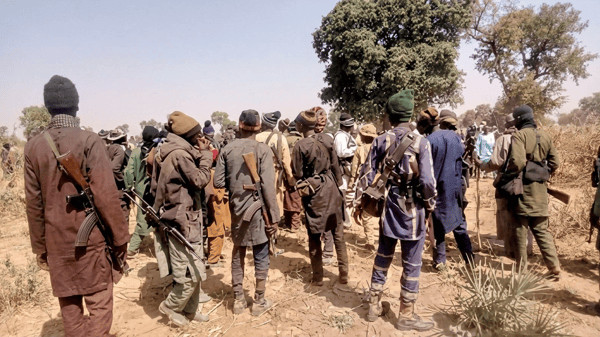
The Nigerian Financial Intelligence Unit’s 2025 Annual Report, released this week, contains a disclosure that deserves more public attention than it has received. Terrorist groups operating in and around Nigeria are no longer financing themselves exclusively through extortion at gunpoint in ungoverned forests. They are now doing so through Instagram, Telegram, PayPal, and international remittance platforms — and some of the Nigerians helping them move the money do not know they are doing it.
The NFIU’s findings describe a system of considerable operational sophistication. Foreign-based facilitators solicit donations on social media platforms, presenting their appeals as requests for humanitarian relief or educational support. Sympathisers — some knowing, many probably not — make contributions ranging from fifty to five hundred US dollars through payment pages and conventional bank accounts. The amounts are deliberately kept small to avoid triggering reporting thresholds. Once pooled in a master account, the funds are fragmented again into dozens of sub-threshold payments and routed through international money transfer operators and remittance applications to a network of money mules inside Nigeria: students, small-business owners, relatives. These individuals purchase motorcycles, fuel, food, and logistics supplies before passing them on to field operatives. To conceal the trail further, the networks use the SIM cards and bank accounts of deceased persons, accounts opened in women’s names, and phone numbers not registered to the actual holders. The funds are then converted into cash or supplies before reaching logistics coordinators in the field.
This is not a primitive system. It is a layered, digitally enabled, deliberately calibrated supply chain for violence. The architecture it exploits — social media’s capacity for mass appeal, remittance platforms’ speed and reach, and Nigeria’s persistent gaps in death record integration with financial identity databases — is the same infrastructure that millions of ordinary Nigerians use every day for entirely legitimate purposes. That is precisely what makes it difficult to interrupt and urgent to address. Cutting the financial lifeline of a terrorist network, as analysts have long argued, can inflict more operational damage than chasing its foot soldiers through the forest.
The Kwara State incidents of the past two weeks make the digital dimension of this threat visible and close. Babatunde Fasilat, a 23-year-old woman abducted from Wande community on 15 July 2026, remained in captivity while her abductors used her own TikTok account to communicate with her family and post ransom demands publicly. Twenty million naira was the price set for her release. When gunmen abducted Oba Moses Omotayo, the Onigbesi of Igbesi, along with two other residents of Igbesi community in Isin Local Government Area on the night of 22 August, the pattern was already established. The monarch was subsequently rescued by the Kwara State Police Command in an operation in the Elerin/Ijomu-Oro axis. Fasilat, as of this writing, remains in captivity. All of this occurred shortly after a Nigerian Army battalion was newly deployed to Omu-Aran in neighbouring Irepodun Local Government Area. Military deployment does not reach into a TikTok account.
Security analyst Dr Bulama Bukarti, commenting on the NFIU findings on national television, identified several structural failures the data reveals. BVN integration with SIM cards remains incomplete. Death records are not adequately linked to financial identity systems, allowing deceased persons’ accounts to remain active and exploitable. Money mule networks — built from family and neighbourhood bonds — are difficult to detect precisely because they resemble ordinary financial behaviour. GIABA, the Inter-Governmental Action Group against Money Laundering in West Africa, has previously noted that Nigeria’s use of financial controls to combat terrorism remains closer to the minimum required than the maximum available. The NFIU has done its duty in documenting these vulnerabilities. The harder question is why the documented vulnerabilities persist.
This newspaper calls on the Federal Government and the relevant agencies to act on several fronts without delay. The Central Bank and the NFIU must mandate social media platforms operating in Nigeria to cooperate with financial intelligence requests and flag accounts soliciting donations that match known terrorist financing patterns. The NCC must accelerate the SIM-BVN integration that remains incomplete. The National Population Commission and the NIMC must establish a live, automated interface between death records and financial identity databases, so that deceased persons’ accounts are promptly deactivated. The EFCC and the NFIU must jointly invest in cyber-intelligence capacity commensurate with the sophistication of the networks they are tracking. And the question of ransom — whether payment is tacitly permitted and what effect that tolerance has on the economics of kidnapping — must be addressed as deliberate policy, not deferred as a private family decision.
A practical word also belongs in this editorial, addressed to every Nigerian who uses social media and makes online donations. The answer to this threat is not to stop supporting legitimate humanitarian causes. It is to verify them. Know the organisation you are donating to. Confirm its registration. Resist the impulse to send money to personal accounts on the strength of an emotional appeal you cannot audit. The person posting may be a mule who does not know they are being used. But the money will find its destination regardless.
A state that cannot trace how its enemies are paid cannot defeat them. The NFIU has given Nigeria the map. The task now is to close the roads it shows.
We’ve got the edge. Get real-time reports, breaking scoops, and exclusive angles delivered straight to your phone. Don’t settle for stale news. Join LEADERSHIP NEWS on WhatsApp for 24/7 updates →
Join Our WhatsApp Channel