There is something almost deceptively ordinary about a notebook.
It is paper. A surface for writing. It may sit on a desk, in a drawer, beside a bed or, under less ordinary circumstances, in a prison cell.
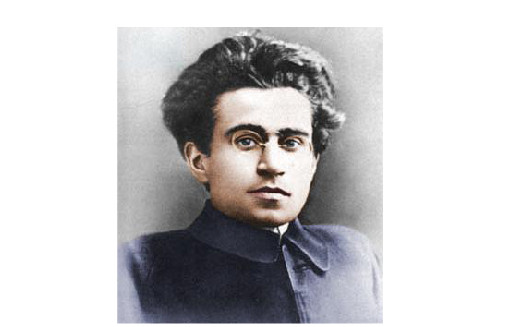
Antonio Gramsci’s Prison Notebooks are one of the great reminders that the physical circumstances in which an idea begins do not determine the distance it can travel. Written during his imprisonment between 1929 and 1935, they entered the intellectual archive of the twentieth century.
The lesson is not that every notebook becomes the Prison Notebooks. It is simpler than that.
An idea has to begin somewhere.
Sometimes in a university. Sometimes in a laboratory. Sometimes in a newsroom. And sometimes, quite simply, at a desk.
This is where what I call the 4 Enoughs of the Sundiata Post Model begins.
The desk is enough to begin.
The institution is enough to sustain.
The archive is enough to preserve.
The world is enough to test.
The 4 Enoughs is the philosophy of knowledge creation, transmission, continuity, preservation and testing that underpins the Sundiata Post Model. It describes the journey by which an idea moves from individual initiative to institutional continuity, from continuity to archival preservation, and from preservation to engagement with the wider world.
They emerged from the Sundiata Post Model, but they are not confined to it.
The Model Behind the Philosophy
The Sundiata Post Model began with a practical question: can an independent newsroom become more than a producer and distributor of news? Can it systematically integrate journalism, original research, conceptual innovation and scholarly dissemination to become a knowledge-producing institution?
The Model’s answer is architectural: the Media Operations and Knowledge Operations engines; the Realm of the Long Term; the Seven Pillars of institutional endurance; and the Triple Institutional Architecture connecting Sundiata Post Media, the Sundiata Post Intelligence Unit and a foundation for wider civic impact.
The 4 Enoughs is a philosophical distillation of that architecture.
The word ‘enough’ is deliberate. It does not claim each stage is sufficient for the whole life of knowledge. It claims each provides what is necessary for the stage it represents.
The desk is the point of departure. The institution is continuity. The archive is memory. The world is the arena in which the idea is examined, challenged, adopted or rejected.
The Desk Is Enough to Begin
We associate knowledge with institutions — universities, laboratories, publishers, think tanks. These matter. They provide resources, standards, legitimacy.
But they are not where every important question begins.
A question may occur to someone sitting alone. A pattern may become visible to a journalist. A writer may decide that a reality deserves to be represented differently.
The first act is often private before it becomes public. The desk is not a symbol of isolation; it is a symbol of intellectual agency. It says: begin.
This matters to the Sundiata Post Model because the Model did not begin as abstract theory. It emerged from a newsroom, and from the recognition that a newsroom could become a site of systematic knowledge production.
The desk is where an observation becomes an argument, where journalism moves toward research, where a recurring pattern becomes a concept, and where a concept becomes a framework.
The four constructs developed through this process — The Insecurity Triad, the Trinity of Sovereignty Decay, the Decoupling Sovereignty Index, and the Sundiata Post Model itself — illustrate that progression.
The desk did not guarantee their significance. It made their beginning possible.
The Institution Is Enough to Sustain
Beginning is not enduring. A manuscript can be completed and never read. A discovery can remain in someone’s papers. A journalist can develop an important body of analysis that disappears when the journalist leaves the profession.
Creation needs continuity. That is where the institution enters.
The institution is not necessarily the creator of the idea. It is what gives the idea a chance to outlive the moment of its creation.
This is central to the Sundiata Post Model. A knowledge-producing newsroom cannot depend indefinitely on individual inspiration. It needs an architecture capable of carrying intellectual work beyond its initial circumstances.
The Seven Pillars — Financial Sustainability, Human Capital and Leadership, Knowledge Stewardship, Governance, Innovation and Adaptation, Trust and Reputation, and Mission Continuity — are the conditions through which an institution sustains what the desk began.
The institution does not guarantee immortality. It creates the possibility of endurance.
The Archive Is Enough to Preserve
But institutions change.
People die.
Editors retire.
Companies disappear.
Generations move on.
What remains?
The archive.
An archive is more than storage. It is institutional memory — the mechanism by which the work of one period remains available to another.
This is why notebooks matter. Why manuscripts matter. Why books matter. Why repositories, databases and scholarly archives matter.
Gramsci’s notebooks became part of an archive far larger than the prison that produced them. Achebe’s Things Fall Apart entered the literary archive far beyond its first publication.
The archive interrupts disappearance. It says: this existed. This was thought. This can still be examined.
Within the Model, this connects to Knowledge Stewardship. A knowledge institution must think not only about what it produces today but about what someone else will be able to find tomorrow.
It is why the SPM places importance on documentation, publication, repositories and durable records. Knowledge production does not end when an article is published. It must be made retrievable.
The World Is Enough to Test
We’ve got the edge. Get real-time reports, breaking scoops, and exclusive angles delivered straight to your phone. Don’t settle for stale news. Join LEADERSHIP NEWS on WhatsApp for 24/7 updates →
Join Our WhatsApp Channel