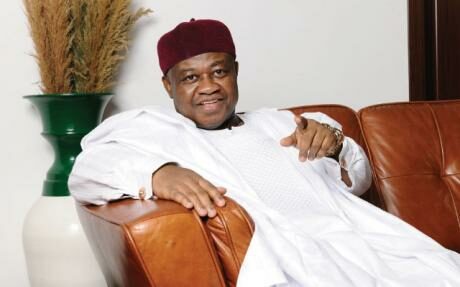
(Tribute To Sam Nda-Isaiah, 1 May 1962 – 11 December 2020)
Five years after Sam Nda-Isaiah slipped away, his presence still sits with us like a verdict. His voice—booming, impatient, unmistakable – lingers at the edge of memory, summoning dread and inspiration in equal measure. Sam didn’t enter rooms; he arrived. He filled space with conviction, urgency, and a muscular impatience that banished lazy thinking. When he left, he left a silence yet to be filled, a seat waiting for his interruption, a nation missing the trumpet he loved to blow.
To work with him was to live in a whirlwind: gentle and volcanic, cerebral and impulsive, generous and exacting. He could fire you at noon and send you a book by dusk; he could rebuke a sloppy sentence and then pay your cab fare. He decided policy in a heartbeat and debated the philosophy behind it for days. He was the kind of boss who made you want to quit – and then return. I did, again and again, because LEADERSHIP, the newspaper he founded, was more than a newsroom. It was a crucible, and Sam was the fire.
He saw something in people, especially restless minds. He doubled my salary before I edited a single page of LEADERSHIPEDGE. He bought me books on every trip and challenged me to think harder, write sharper, and dream bigger. He was a man in a hurry – racing against his beginnings, against mediocrity, against time itself. He wanted to build an empire of ideas, a nation of thinkers. In one of his columns he wrote, ‘Nations are not built by slogans but by ideas, pursued with courage and consistency.’ That was his creed – and he lived it.
Sam’s management style was unconventional, chaotic even. He could elevate a novice one day and reverse the decision the next. Yet he believed in second chances. He believed in people, even when they failed him. He was no saint – erratic in staffing, sentimental in judgement – but never petty, never cruel. His generosity was legendary. He would pay school fees for staff members’ children, sponsor weddings, and support colleagues in distress. Yet he demanded excellence, often pushing people beyond their comfort zones. He once told me, ‘If you are not offending mediocrity, you are not doing journalism.’
He was never just a publisher. As a serial entrepreneur, he built ventures to house his philosophy of ideas. Banana Republic, his hospitality outfit, was not merely a restaurant; it was a salon where conversation flowed with the wine and ideas were incubated among thinkers, politicians, and dreamers. He believed leisure could be purposeful, hospitality a bridge, and well-designed spaces a crucible for creativity. He also started Allan Wood for human capital development and strategic thinking. His agri-business was to nurture a healthy population and give food security a practical meaning. His business instincts ranged beyond Nigeria, true to his view that enterprise is both local duty and global opportunity. For him, institutions – newspapers or restaurants – should not be merely functional; they should be transformative.
He learned the rigours of corporate governance at the feet of masters like General T.Y. Danjuma and in political governace, Lee Kwan Yew was his idol. From these two great men he internalised discipline, negotiation, patience in turbulence and in season of anomie. Those lessons steadied his ventures and gave him the confidence to sit where capital, policy, and vision meet. He felt at home in boardrooms because ideas deserve structure; in newsrooms because structure deserves ideas. From that vantage – entrepreneur, publisher, strategist – he entered what he called the ‘perilous mine’ of politics. He knew the risks – reputational, financial, personal – but stepped in regardless.
His foray into politics strained his business. Salaries faltered; staff scattered. Yet Sam remained defiant – still dreaming, still building. He was fearless: challenging Obasanjo, confronting Yar’Adua, even his erstwhile boss Buhari – speaking truth to power when it mattered most. He believed politics was too important to be left to career politicians. He wanted thinkers, builders, and dreamers to shape Nigeria’s destiny. As he wrote elsewhere, ‘Leadership is not about occupying office; it is about offering vision. Without vision, power is an empty chair.’
He had reservations too. He worried about sending underage children to school abroad: would distance dilute guidance; would cosmopolitan polish cost rootedness? It was a rare vulnerability in a man armoured with confidence. He was also a notorious micromanager – not from distrust of talent but from fear of failure. The masthead bore his name; if anything collapsed, the mockery would be his. So he hovered, corrected, intervened – guarding vision like a flame in a storm. It was his strength and his weakness.
His celebrated ‘Nigeria: Full Disclosure’ – a collection of his columns – carried a refrain: ‘For God and country, we must tell ourselves the truth, no matter how bitter.’ Patriotism, he argued, is honesty. ‘We cannot continue to deceive ourselves; nations are built on truth, not lies.’
He raged against the tyranny of small minds. Nigeria, he said, is too important for the dictatorship of tiny imaginations. Our poverty was not of resources but of ambition – small men in oversized agbadas, small ideas wrapped in national slogans. He did not hate politicians; he hated the smallness politics often rewards. Nations, he insisted, are built on substance, not slogans.
He wrote about corruption with moral and mathematical anger. Every naira stolen was not just theft from a vault but from a future. ‘Every naira stolen is a child’s school denied, a hospital unbuilt, a road left in dust. Corruption is not just stealing; it is stealing tomorrow.’ He despised euphemism – ‘misappropriation’ for looting, ‘brief illness’ for truths the public deserves. A nation that whispers when it should speak, he warned, risks forgetting its name.
He died at a moment that demanded trumpet blasts for truth, and the irony still stings. Had he written his own obituary, he would have named the enemy and demanded lessons from COVID-19. His passing was not the end of an argument; it was the silencing of a trumpet. We are poorer – unless we refuse to let the silence stand.
What would he say now, two and a half years into the Tinubu presidency, with inflation as theology and hope as contraband? He would separate loyalists from patriots and insist on substance over slogan. He would call for competence over camaraderie, policy that survives applause and passes the audit of results. He would remind us that feedback is not insult, criticism not sabotage; that the press must speak without fear and the state must learn without defensiveness. He would say the nation is haemorrhaging not only naira but hope, and that the first duty of leadership is to stop the bleeding.
At home – his immediate, makeshift nation – the work continues with a quiet stubbornness he would have loved. Zainab, his soulmate and wife, has guided LEADERSHIP as Chairman with dignified steadiness: love as public duty; continuity without mimicry. To lead in the shadow of such a figure is to balance humility with firmness; she has chosen resilience over despair. The children carry his name and, more importantly, his courage. Emerson said an institution is the lengthened shadow of one person; shadows should not eclipse the living but guide them. Let them build their own lights – tempering his impatience into their healthier pace while retaining his allergy to mediocrity.
To his brothers – Abraham, Jonathan, and Solomon – who laboured with me in the newsroom’s holy chaos: you know the crucible he created, the fire that singed and refined. The scaffolding has shaken and stood. Achebe warned that integrity’s true test is refusal to be compromised. When fatigue tempts compromise, choose ache. Choose integrity. Keep the voice loud enough to make enemies and clear enough to make them reconsider. Consider Sam’s love for you, his siblings and clothe his children, wife and business with the same regalia.
His maxims remain usable truths. Leadership begins at the mirror. Nations are moral communities; institutions reflect their builders. Patriotism is practical – measured not by anthems but by lawful behaviour. The citizen’s duty is as essential as the president’s; a culture of shortcuts leads nowhere. He distrusted the theatre of reform that changes signage and salaries but leaves rot intact. He argued for full disclosure – of budgets, deals, public health – because sunlight is not just disinfectant; it is architecture, building rooms with transparent walls where accountability becomes habit.
He urged leaders to read their own policies as literature: test the logic, hear the false notes, force coherence, excise rhetoric that cannot survive reality. He believed in constructive risk: launch the paper others say won’t work; publish the uncomfortable story; run the serious campaign; hire hunger; offer second chances where bad mentorship wrecked first ones. If you go under, let it be for refusing to lie, not for refusing to think.
Five years on, we must ask: Are we telling ourselves the truth? Building institutions or merely inhabiting them? Setting standards that outlast us? Educating citizens to interrogate policy rather than worship personality? Choosing the dull pain of reform over the sweet narcotic of flourish?
LEADERSHIP – the paper and the virtue – still has a story to tell. Newsroom seasons thin and thicken, but the mandate endures: fearless reporting, honest analysis, comfort the informed, discomfort the powerful. Publish truth, elevate standards, teach for mastery, hire for talent, cultivate editors brave in judgement and reporters who love facts more than access or virality.
To readers, practitioners, and citizens who miss that trumpet: honour him by practice, not cult. Read carefully. Write honestly. Build arguments like bridges that bear weight. Demand accountability without smugness; hope without naïvety. Reject cynicism – the cheap wisdom of the unambitious – and choose the harder hope that holds leaders and citizens to standards.
To policymakers, the faithful memorial is reform that survives you. If your agenda requires your presence, it is performance, not architecture. Engineer transparency into procurement; open budgets in formats any citizen can read; improve data until bad policy becomes mathematically embarrassing; train civil servants like athletes; replace loyalty tests with competence audits; banish press releases bloated with adjectives and empty of numerators and denominators.
Sam loved wit because it reveals the skeleton of argument. He teased slogans until they confessed their emptiness. In the newsroom he demanded a disciplinary humour: if you couldn’t explain a story in one sentence to an intelligent uncle, it needed more reporting. Words, he insisted, are tools of construction, not anaesthesia. He preferred hard verbs, clean nouns, ruthless adjectives.
He expected mistakes and respected those who corrected them quickly. He tolerated argument but punished laziness. He prized insolence in intellect and humility in habit; he distrusted vanity that arrived before the work. He nurtured restless minds like dangerous seeds – wanting forests, not reception ornaments.
A soft hymn would betray him. The proper ending is an assignment. The baton is in our hands – Zainab’s steady leadership, the children’s emerging ambitions, the brothers’ stewardship, the staff’s daily graft, the readers’ discrimination, the citizens’ discipline and associates living true to his virtues and shunning the vices he detested. Do not let the trumpet rust. Let his shadow be signal, not shelter: run further, think harder, insist on truth, refuse mediocrity, and demand courage.
He kept a line from T.S. Eliot like a talisman: ‘the end is where we start from’. The abrupt end of his life is no excuse for nostalgia; it is a beginning we must hate to waste. Emerson’s shadow is a challenge: let it lengthen with shape, not merely size. Achebe’s counsel on integrity – refuse compromise – must be our daily oath. Marcus Aurelius – ‘the soul is dyed by its thoughts’ – should colour our newsroom and our nation: think cleanly, act explicitly, build courageously.
Rest well, Sam, man of big ideas. You ran against mediocrity, complacency, and time – making sentences work harder than their syllables and the press louder than power preferred. You taught us that running is the point: the restless, purposeful motion that turns rooms into workshops, meetings into laboratories, and a good nation into a better one. Your trumpet is silent, but the music persists among those you taught to breathe truth and blow courage. We will keep sounding it – without sentimentality, without cowardice, without pause, Chairman!
We’ve got the edge. Get real-time reports, breaking scoops, and exclusive angles delivered straight to your phone. Don’t settle for stale news. Join LEADERSHIP NEWS on WhatsApp for 24/7 updates →
Join Our WhatsApp Channel