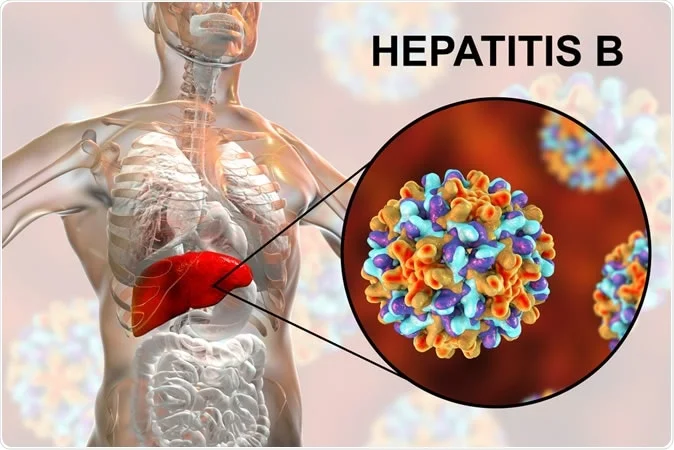
Nigeria marks World Hepatitis Day under the theme “Hepatitis: Let’s break it down,” a slogan chosen to push countries toward the global target of eliminating viral hepatitis as a public health threat by 2030. Somewhere in the gap between that slogan and that target sits a number worth sitting with for a moment: an estimated 12.2 million Nigerians are living with chronic Hepatitis B.
That is roughly the population of a mid-sized country, carrying a virus that can progress silently to cirrhosis and liver cancer, inside a health system that still treats hepatitis largely as an awareness problem rather than the infrastructure problem it actually is.
The global figures behind this year’s commemoration make the scale of neglect difficult to dismiss as a uniquely Nigerian failing, even if Nigeria’s share of the burden is disproportionately large. Worldwide, only one in four people living with Hepatitis B has been diagnosed, and only one in five of those diagnosed is receiving treatment.
For Hepatitis C, only half of those infected know it, and just one in six who do has been cured, despite the existence of oral medicines that can clear the virus in a matter of weeks. These are not diseases without a solution. Hepatitis B has a vaccine that has existed since the 1980s and antiviral therapy that can control it for life. Hepatitis C, unlike HIV, can now be cured outright with a short course of tablets. The obstacle was never medical. It has always been access, cost and the stigma that keeps people from getting tested in the first place.
Nigeria’s First Lady, Senator Oluremi Tinubu, marked the day by calling for stronger commitment to eliminating hepatitis by 2030, urging Nigerians to work together to reduce stigma, promote early diagnosis and expand access to prevention, testing, treatment and care. We do not doubt the sincerity of the message, and a First Lady’s platform is not nothing when it comes to shifting public attitudes toward a disease many Nigerians still associate with shame rather than illness.
Sadly, Nigeria has now marked enough World Hepatitis Days with statements of commitment that the country’s 12.2 million Hepatitis B carriers are entitled to ask what those commitments have actually purchased for them.
Some of the practical work is happening, and credit is due where it belongs. Some Non governmental organisations ( NGO)have organised free diagnostic screening to mark the occasion, while the Society for Family Health Nigeria has scaled up localised testing and counselling aimed at vulnerable populations as part of an integrated prevention effort. These interventions matter, and they reach people a national campaign built around a single commemorative day cannot.
But a handful of NGO-run screening drives, however well organised, cannot substitute for a national testing and treatment infrastructure capable of reaching 12.2 million people, most of whom do not know their status and will never encounter a foundation’s outreach van in their community.
We have said on this page before, in the context of the National Health Insurance Scheme, that Nigeria’s central healthcare failure is not a shortage of policy documents but a shortage of financial protection reaching ordinary citizens where they actually get sick.
Hepatitis is a precise test case for that argument. Testing for Hepatitis B and C is inexpensive relative to most chronic disease diagnostics, and generic antiviral treatment for Hepatitis B costs a fraction of what many Nigerians already pay out of pocket for other chronic conditions. Yet without hepatitis screening and treatment built into the benefit package of a functioning national or state health insurance scheme, most Nigerians living with the virus will keep discovering their status only after the disease has already progressed to liver damage that is far more expensive, and far less treatable, than the infection would have been at diagnosis.
There is a specific and solvable failure hiding inside the general one, and it involves the country’s newborns. Hepatitis B transmits efficiently from mother to child at birth, and a timely birth-dose vaccine, given within 24 hours of delivery, is one of the most effective public health interventions available anywhere in medicine. Nigeria’s birth-dose coverage remains inconsistent across states, particularly where deliveries happen outside formal health facilities without immediate access to a vaccine that needs to be administered almost immediately to work. Every year that coverage gap persists, another cohort of Nigerian children enters the world carrying a preventable lifelong infection, and the 12.2 million figure the country marks today will have more company.
Stigma deserves equal attention alongside the clinical gaps, because it is the reason many Nigerians who could access testing choose not to. Hepatitis carries an unearned association with promiscuity or poor hygiene that has little basis in how the virus actually spreads, largely through mother-to-child transmission, unsterilised medical equipment, and unscreened blood, none of which have anything to do with a person’s character. Public health messaging that treats hepatitis with the same matter-of-fact tone applied to malaria or tuberculosis would do more to move Nigerians toward testing than another commemorative slogan asking the country to “break it down.”
None of this diminishes the value of a First Lady’s advocacy or a foundation’s free screening drive. Awareness campaigns and community outreach are necessary parts of any elimination strategy, and Nigeria should keep running them. But 2030 is now four years away, and a country carrying one of the world’s largest hepatitis B populations will not close that gap through goodwill alone.
What closes it is routine testing built into primary healthcare, birth-dose vaccination that reaches every delivery regardless of where it happens, and treatment costs low enough that a diagnosis no longer feels like a second illness layered on top of the first. Until that infrastructure exists, Nigeria will keep marking World Hepatitis Day with the same statistics, and the same statements, year after year.
We’ve got the edge. Get real-time reports, breaking scoops, and exclusive angles delivered straight to your phone. Don’t settle for stale news. Join LEADERSHIP NEWS on WhatsApp for 24/7 updates →
Join Our WhatsApp Channel