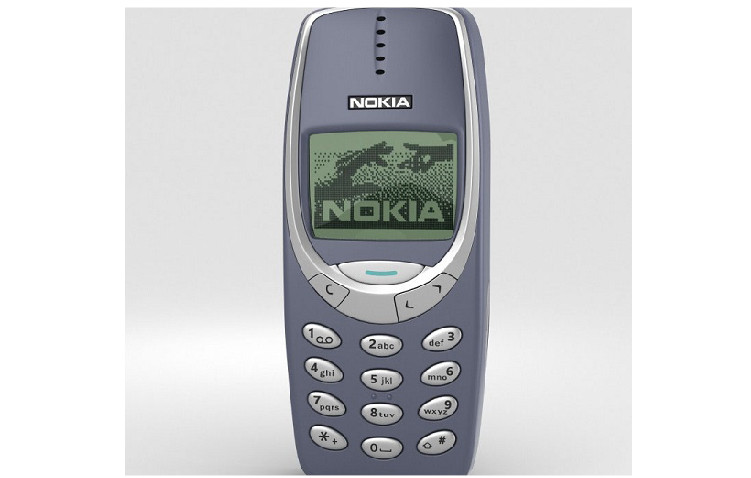
In its heyday, the Nokia 3310, a rugged and sturdy handset, ruled the Global System for Mobile Communications (GSM) waves as Nigeria opened its telecommunications industry to private-sector operators.
It was released in 2000 by Nokia and quickly gained acceptance among Nigerians at all levels. Its unique ringtone was a common sound in banks, offices, schools, markets and homes.
Overnight, the Nokia 3310 became more than just a communication tool, taking over shelves in shops and becoming a status symbol.
In the early 2000s, when mobile phones were still classified as a luxury, Nokia 3310 came to the rescue of most Nigerians. It was affordable, durable and reliable.
It is often described as hastening the GSM revolution, which was driven by MTN Nigeria and Econet Wireless Nigeria. At that time, SIM cards were more expensive and per-second billing was not in vogue. Those who could afford to own a mobile phone opted for Nokia 3310.
Nokia 3310 survived conditions that today’s smartphones cannot endure. It could go through multiple falls and still work. Its long-lasting battery life was equally legendary, often lasting days without needing a recharge—an invaluable feature in a country still grappling with erratic electricity supply.
In rural areas with very poor network coverage, many residents climbed trees and mountains with a Nokia 3310 in hand to get reception.
Beyond its physical resilience, the Nokia 3310 introduced Nigerians to mobile entertainment in its simplest form.
The pre-installed game, Snake II, became a pastime for many citizens as they spent idle moments chasing high scores, turning the monochrome screen into a source of endless fascination.
It also allowed users to compose and share text messages with relative ease, leading to the growth of a culture of communication through short message service (SMS).
Perhaps one of the most memorable features of the Nokia 3310 was its customizable ringtones and message alerts. Nigerians embraced this with creativity, using composer tools to recreate popular tunes or personalise tones for family and friends. The iconic “Nokia tune” became a familiar sound in buses, offices and social gatherings, often cutting through the noise of daily life.
However, its dominance waned in the mid-to-late 2000s, as the arrival of more advanced phones with colour screens, cameras and internet connectivity took over the market.
We’ve got the edge. Get real-time reports, breaking scoops, and exclusive angles delivered straight to your phone. Don’t settle for stale news. Join LEADERSHIP NEWS on WhatsApp for 24/7 updates →
Join Our WhatsApp Channel