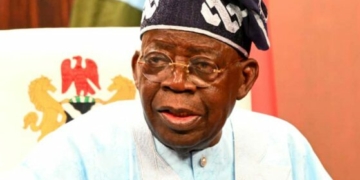
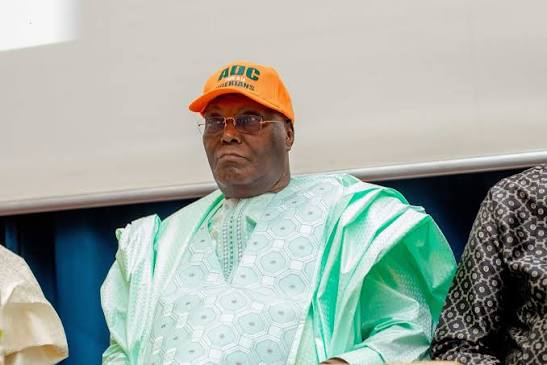
Former Vice President Atiku Abubakar has accused President Bola Tinubu of failing to fulfil his campaign promise to provide Nigerians with constant electricity, insisting that government policies, legislation and financial interventions cannot replace reliable power supply.
Atiku made the remarks in a statement issued on Sunday, November 1, 2026, by Phrank Shaibu, Director of Strategic Communication of the African Democratic Congress (ADC) Presidential Campaign Council.
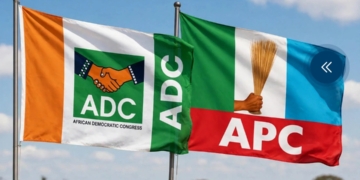
The statement was a response to comments by the All Progressives Congress (APC) Presidential Campaign Council on the Tinubu administration’s efforts to address challenges in Nigeria’s electricity sector.
Atiku accused the ruling party of attempting to divert attention from the persistent power supply crisis by highlighting laws, committees, bond programmes and ongoing projects instead of addressing the experiences of electricity consumers.
He said Nigerian households and businesses continued to struggle with unreliable electricity despite the promises made by Tinubu during the 2022 presidential campaign.
According to him, families are spending scarce resources on alternative sources of power, while traders and small business owners are finding it increasingly difficult to sustain their businesses amid rising energy costs.
“The APC should spare Nigerians the spectacle of celebrating paperwork while homes and businesses remain in darkness,” Atiku said.
He also criticised the electricity tariff structure, which places consumers in Bands A, B, C, D and E, arguing that customers across the different categories continue to experience unreliable supply despite paying varying rates.
Atiku specifically noted that some Band A customers pay approximately ₦209.50 per kilowatt-hour before Value Added Tax (VAT), while maintaining that electricity consumers should not be made to pay more for power they cannot reliably access.
He argued that the situation had placed additional pressure on households and businesses already struggling with the cost of living.
The former vice president also questioned the Federal Government’s plan to discontinue electricity subsidies from 2027, demanding clarification on how the proposed policy would affect consumers’ electricity bills.
He said Nigerians deserved to know what would happen to electricity tariffs when the subsidies were eventually withdrawn, despite government assurances that there would be no immediate tariff increase.
Atiku promised to work with state governments and relevant regulators, within the provisions of the law, to abolish the existing electricity band system and introduce what he described as a fairer, transparent and affordable framework.
He said such a framework would protect households and ensure that electricity distribution companies were held accountable for the quality and quantity of power delivered to consumers.
Recalling Tinubu’s campaign promise ahead of the 2023 presidential election, Atiku quoted the President as saying: “If I don’t give you constant electricity for four years, when I come back for a second term, don’t vote for me.”
Atiku argued that Nigerians had now lived through the period covered by that promise and should judge the administration based on its performance.
He further claimed that the Tinubu administration had not constructed any new generation infrastructure of its own to significantly increase Nigeria’s electricity generation capacity.
The former vice president also questioned the administration’s multitrillion-naira bond programme designed to settle outstanding debts owed to power generation companies.
According to him, settling legacy debts is different from investing in new electricity generation infrastructure, adding that Nigerians deserve evidence that the financial intervention is translating into improved power supply.
“Paying old debts is not the same as building new power infrastructure. Bonds cannot be presented as a substitute for power in people’s homes,” he said.
Atiku also raised concerns over the application of VAT on electricity and the proposed five per cent surcharge on certain fossil fuels, including petrol and diesel, under the Nigeria Tax Act.
He noted that the government had maintained that the surcharge had not been activated and would require a ministerial order, but argued that Nigerians needed clarity on the possibility of additional energy-related charges.
In a direct response to the APC’s defence of the administration’s electricity policies, Atiku maintained that legislative approvals, financial arrangements and project announcements should not be mistaken for actual improvements in electricity supply.
“Dele Alake’s statement cannot light a home. Signing a law is not electricity. Raising a bond is not electricity. Approving a project is not power delivered,” he said.
He added that Nigerians needed dependable electricity to cook, study, work and operate businesses, rather than repeated government announcements about plans and interventions.
Atiku said reliable and affordable electricity should be a national priority, insisting that President Tinubu must answer for the commitment he made to Nigerians during his presidential campaign.
We’ve got the edge. Get real-time reports, breaking scoops, and exclusive angles delivered straight to your phone. Don’t settle for stale news. Join LEADERSHIP NEWS on WhatsApp for 24/7 updates →
Join Our WhatsApp Channel