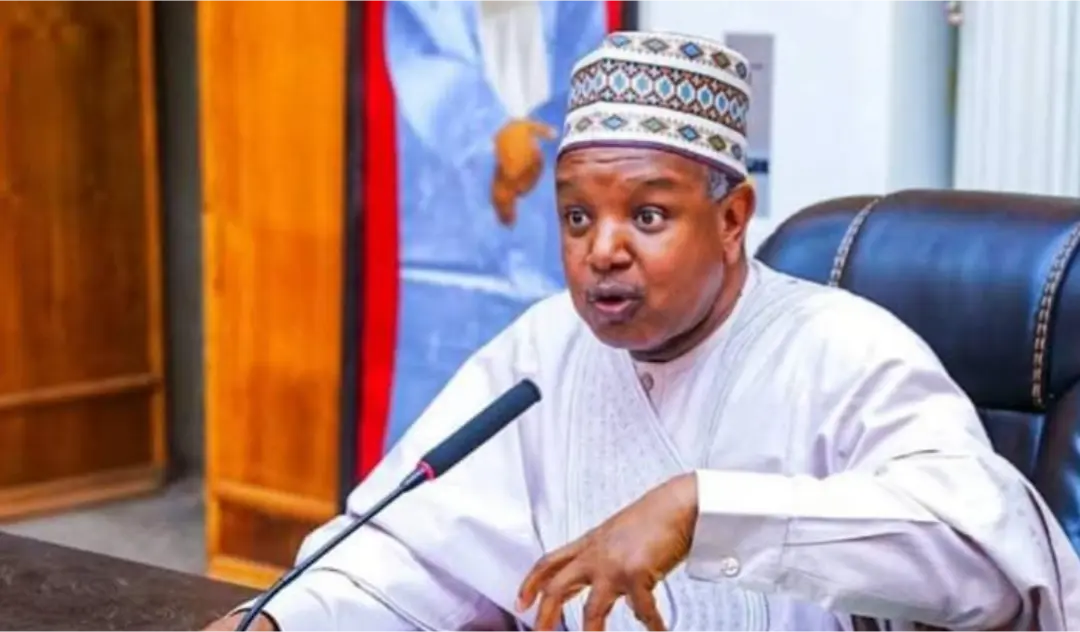
Minister of Budget and Economic Planning, Senator Abubakar Atiku Bagudu, has said the tough economic decisions taken by President Bola Ahmed Tinubu are producing positive results, with increased revenue flowing to states and improved fiscal stability.
Bagudu spoke in Abuja yesterday as the guest of honour at the maiden annual lecture of the Nathaniel Atebije Foundation, themed “The Renewed Hope Agenda: The Physical Planning Perspective.”
He said the President had remained resolute in tackling Nigeria’s challenges without apportioning blame to past administrations.
“Mr President made it clear from day one that he will not play games and will not blame the past,” Bagudu said.
“He told Nigerians that we are not where we want to be, and that difficult choices must be made.”
The minister noted that the administration’s “Renewed Hope” agenda was anchored on taking both pleasant and painful decisions to reposition the country for sustainable growth.
According to him, the impact of the reforms is already being felt across the federation.
“Today, we are seeing more revenue to all the states. There was a time when about 27 states could not pay salaries and pensions, even when oil prices were as high as $130 per barrel.
That is no longer the case,” he said.
Bagudu explained that the Federal Government had shifted from centralising excess revenues to empowering sub-national governments with more funds.
“We used to centralise excess revenues, but now the focus is to give states and local governments the funds they need to function effectively. This is encouraging innovation and transformational programmes at sub-national levels,” he added.
He stressed that the reforms were designed to secure a better future for younger generations rather than short-term gains.
“These policies are not for us alone but for our children and grandchildren, so they can inherit a country that works,” he said.
On national development, the minister underscored the importance of physical planning as a driver of inclusive growth.
“Physical planning is an essential part of national development. It is about ensuring that everyone is included—those who need housing, jobs, or opportunities in farming, fishing, and other sectors,” he said.
Earlier, the founder of the foundation, Nathaniel Momodu Atebije, warned that Abuja’s environmental sustainability is under threat due to the unchecked conversion of green areas.
“Abuja, the Federal Capital City, was designed as a garden city, with approximately 33 per cent of its land designated for green and open spaces,” he said.
“Today, we are witnessing rampant conversion of green areas to residential and commercial uses, encroachment on parks and recreational spaces, and development on floodplains and wetlands.”
He said the trend was eroding the city’s ecological balance and original vision.
Atebije called on governments, developers and stakeholders to enforce master plans, strengthen development control and protect planning institutions from political interference.
We’ve got the edge. Get real-time reports, breaking scoops, and exclusive angles delivered straight to your phone. Don’t settle for stale news. Join LEADERSHIP NEWS on WhatsApp for 24/7 updates →
Join Our WhatsApp Channel