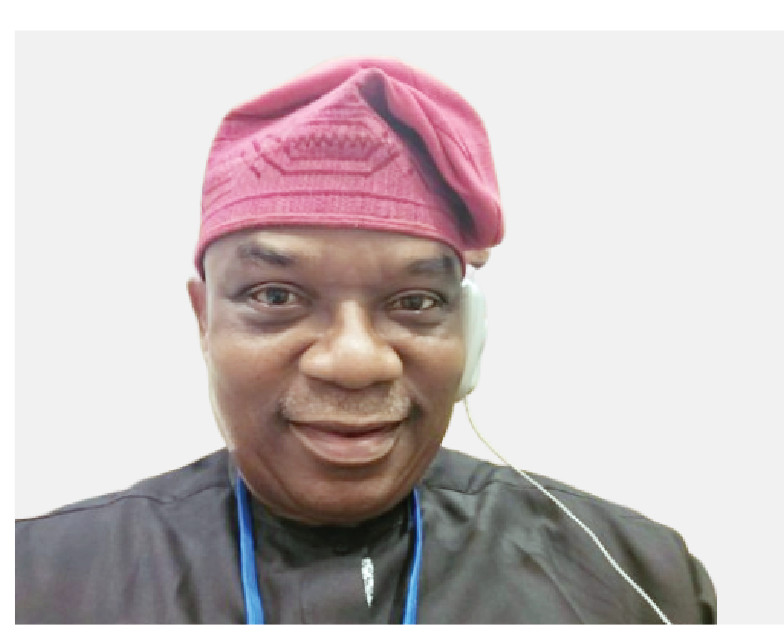
By Ambassador ‘Sola Enikanolaiye
Introduction
Over time, it has been observed that diplomatic terms and practices are largely misused and misunderstood in Nigeria. There are publications in the media and commentators who, in their public discourses, make glaring errors, blunders, goofs, and sometimes misinterpret diplomatic terms in the context of Nigeria’s diplomatic practices.
Although diplomatic practice is universal in line with the provisions of Vienna Convention on Diplomatic Relations (1961) and the Vienna Convention on Consular Relations (1963), some national peculiarities, local customs and traditions are usually respected by States in their interaction with one another. Failure to adhere to time-honoured diplomatic practices and traditions can give offence and create needless irritants in otherwise excellent, mutually beneficial relations between and among sovereign States in the international system. For Nigeria, the two Conventions are supplemented by the Foreign Service Regulations annexed to the Public Service Rules of the Federal Government and Internal Administrative and Policy Circulars and instructions issued by the Ministry of Foreign Affairs from time to time.
In the complex arena of international relations, the precision of language and the adherence to established protocols serve as the bedrock of successful engagements. For Nigeria, a nation whose foreign policy is central to its identity as a regional leader and to its national security and development, accurate application of diplomatic terms is not merely a matter of academic interest but also a requirement for national prestige, seamless conduct of diplomatic relations and effective governance.
Unfortunately, contemporary Nigerian landscape is increasingly characterized by a disconcerting spate of misuse and misunderstanding regarding diplomatic terms and practices. From the misinterpretation of diplomatic immunity by public officials to the blurred distinctions between career and political envoys in public discourse, these inaccuracies have frequently led to administrative frictions and a distorted public understanding of diplomacy. Consequently, there is the need to bridge the gap between official, protocol, usage and public awareness.
This short intervention derives from personal experience, is aimed at addressing this deficit by clarifying often-misused diplomatic terminologies within the Nigerian context, evaluating the practical application of these concepts in the country’s Foreign Service, and ultimately, fostering a more informed national dialogue on diplomacy and its practice in Nigeria.
May I also add that some of the materials for this piece have been taken from Satow’s Guide to Diplomatic Practice, RG Feltham’s Diplomatic Handbook and the Review Manual for Promotion Examinations in the Nigerian Civil Service for the Ministry of Foreign Affairs, compiled by the author and two of his colleagues in the Ministry, Ambassadors Yemi Dipeolu and Audu Kadiri..
MISUSED TERMS, CONCEPTS AND NIGERIA’S PRACTICE EXPLAINED
This section would attempt to examine a list of terms often misused in discourse on diplomacy in Nigeria. I must state that this is not an exhaustive list.
- Embassy
This is the permanent delegation or mission of one country physically resident in another. An Embassy is the highest level of diplomatic representation. Unlike a Consulate (which handles specific matters like trade and consular issues), the Embassy handles the entire gamut of relationship between two nations. Common Error: People often call the building an “Embassy,” but the Embassy is actually the group of people. The building itself is the Chancery.
- High Commission
A diplomatic mission exchanged between Commonwealth countries; Commonwealth being association of countries that were members of the British Empire. (e.g. Nigeria’s mission in London). It is functionally the same as an Embassy but reflects historical ties of the nations to the British Colonial Government. It usually sounds odd when, in public discourses, a High Commission is referred to as an Embassy as it happens all the time.
iii. Consulate General
A subordinate diplomatic mission located in a major city usually other than the capital (e.g., the U.S. Consulate General in Lagos, whereas the Embassy is in Abuja). Strictly speaking, the Head of a Consulate is not a Head of Mission. It focuses on trade and citizen services (visas/passports).
- Chancery
The actual office building where the Ambassador and staff work.
- Head of Chancery
A diplomatic agent in an Embassy usually sufficiently senior to handle administrative and financial matters including coordination of the Mission’s activities. He is the Chief Operations Officer of the Embassy. He is the officer in charge of the Head of Mission.
- Residence
The official home of the Ambassador or High Commissioner. In Nigeria, the “Embassy” (Chancery) and the “Residence” are often in different parts of Abuja just as Nigerian Chanceries and Residences are located in the capitals of the various countries abroad, usually in separate parts of the cities.
vii. Chancellery
This is the department or administrative office within an embassy, or in some countries, the Ministry of Foreign Affairs itself. It is often confused with “Chancery” (the building).
viii. Ambassador
The highest-ranking diplomat representing a Head of State in a non-Commonwealth country. They are “Extraordinary and Plenipotentiary.” Being Extra-ordinary and Plenipotentiary simply means an Ambassador with full powers – to speak authoritatively in the name and on behalf of his sending Head of State and in the old traditions, negotiate and conclude agreements, treaties and conventions on behalf of the Head of State without recourse to his capital.
- High Commissioner
The highest-ranking diplomat sent from one Commonwealth country to another as an Ambassador.
- Chief of Mission
This is another term for Head of Mission, Ambassadors or High Commissioner. He is assisted in some cases by a Deputy Chief of Mission. In the Nigerian practice, such Deputies are usually the next ranking officer to the Head of Mission or most times, so officially designated by the Ministry of Foreign Affairs among senior diplomats posted to the missions concerned.
We’ve got the edge. Get real-time reports, breaking scoops, and exclusive angles delivered straight to your phone. Don’t settle for stale news. Join LEADERSHIP NEWS on WhatsApp for 24/7 updates →
Join Our WhatsApp Channel