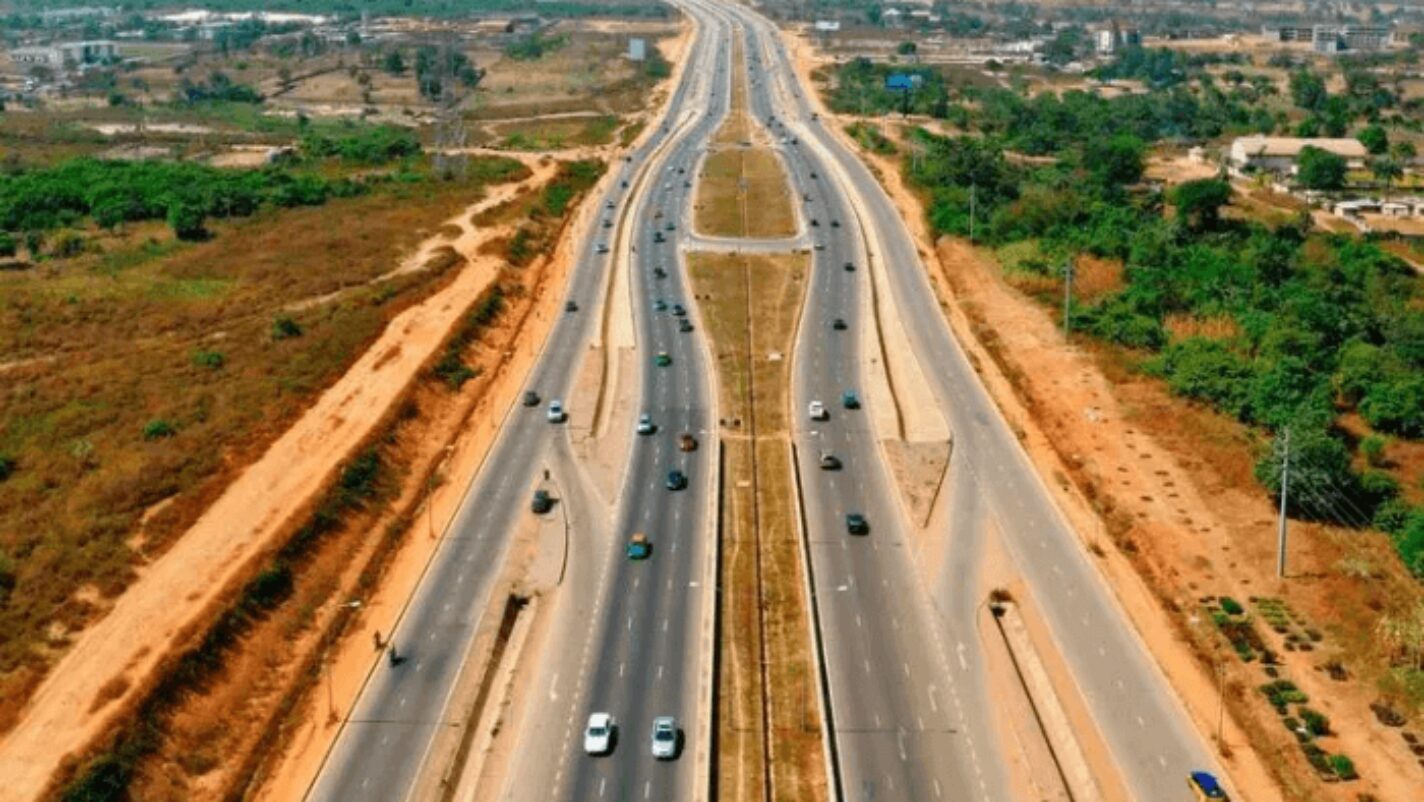
The federal government on Sunday directed the opening of the carriageway of the ambitious Lagos-Calabar coastal highway project from chainage Zero to chainage 47km, while reinforcing the need to unlock economic corridors, tackle the problem of traffic congestion, and reposition the country’s economic roadmap for industrial and economic growth.
Speaking to journalists in Lagos with the Controller of Works and Senior Contractors of Hi-Tech at chainage 33km of the ongoing coastal highway project, the Minister of Works, David Umahi, said the opening of the first section of the Lagos-Calabar coastal highway will reduce man-hours lost, strengthen economic corridors and unlock the infrastructure drive of the nation’s economy.
Umahi noted that the completed part of Section 1, when fully commissioned in December, will be open for commerce, including for motorists, commuters, and business activities, as he stated that President Bola Ahmed Tinubu had directed the Ministry to open all completed sections of the coastal highway for economic use.
“We will start to toll the sections of the Lagos-Calabar coastal highway project in December for the recoupment of funds as directed by the president.
The minister, while reviewing the outstanding works on the 47.7km section one of the Lagos-Calabar Coastal Highway, said that over 80 per cent of section one was nearing completion, while applauding Hi-tech Construction Company for its commitment to work and bold reforms in road infrastructure.
He said President Bola Ahmed Tinubu represents the architect of legacy road projects in Nigeria and, in his magnanimity, has urged the Ministry to open all the roads to connect the economic corridors.
The minister commended the ongoing 750km Lagos-Calabar coastal road project, handled by Hi-tech Construction Company, while stating that it is a milestone accomplishment for industrial growth and a revolution for trans-Saharan African roads, which will reposition the country’s road infrastructure.
He stated that the ministry, while embarking on the coastal highway project, examined settlement procedures, sand filling, and clearance for tax credit roads along the evacuation corridors of Lekki Deep Sea Ports, Free Trade Zones, and the Dangote refinery.
He highlighted that Deutsche Bank, one of the leading lenders to the coastal highway project, had stated that the actual cost and financing of the project were undervalued.
He recalled that Deutsche Bank of Africa, one of the leading lenders to the Lagos-Calabar coastal highway project, had oversubscribed the project by over $100 million, while stressing that Deutsche Bank believed in the infrastructure drive of the coastal highway project to attract foreign direct investment to the Nigerian economy.