
As global donor support tightens and traditional funding streams contract, Nigeria finds itself in a defining moment in the fight against tuberculosis (TB). The country, which bears one of the world’s heaviest TB burdens, is moving decisively to prevent looming drug shortages, an outcome Stakeholders warn could reverse a decade of progress and put thousands of lives at risk.
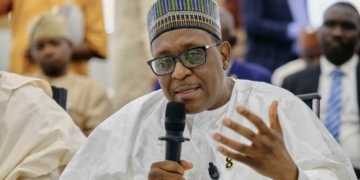
At a pre-World TB Day press briefing in Abuja, the Director of Public Health, Federal Ministry of Health, Dr. Charles Nzelu, said with key donors reducing their contributions and the Global Fund no longer covering some essential medications, the government is now scrambling to protect the national drug pipeline.
“You may be aware that last year, the government made an announcement that they are giving $200 million sector-wide money so that we can cover the gap created by the withdrawal of the U.S. government funding. Currently we are running around, because of course, we do creative planning. We are already forecasting that from what we have, there are some medications that the global fund are not providing for the country,” he explained.
To avert the crisis, he said the ministry is activating a portion of the $200 million sector-wide allocation announced in 2025. The new plan channels significant funds into the procurement of TB drugs, with a long-term commitment of roughly $54 million specifically reserved for this purpose.
Nzelu noted that he had been shuttling between high-level meetings to fast-track procurement processes.
Nigeria’s TB response is already stretched thin. According to global estimates, the country faces more than half a million cases every year, including tens of thousands among children. Though case detection has improved from 106,533 cases in 2018 to over 400,000 in 2024, an estimated 175,000 people still go undiagnosed annually.
Each undetected case can infect up to 12 to 15 people in a year.
Drug-resistant TB remains another ticking time bomb. When patients interrupt treatment because drugs are unavailable, strains of the bacteria adapt, becoming harder and more expensive to treat.
World TB Day is commemorated globally every year on the 24th of March to raise awareness of the devastating health, social, and economic consequences of tuberculosis and to galvanize stronger efforts to end the disease. The day also reminds people of the historic discovery of the TB bacillus in 1882, which paved the way for modern diagnosis and treatment.
Speaking at the briefing, the Board Chair of Stop TB Partnership Nigeria, Dr. Queen Ogbuji-Ladipo, said the theme for World TB Day 2026 : “Yes! We Can End TB”, with the slogan “Led by the Federal Ministry of Health, Powered by the Communities.” underscores a fundamental truth: ending TB requires strong leadership from government, while communities remain the driving force for awareness, prevention, treatment adherence, and accountability.
She global health financing landscape is changing, and donor support is becoming increasingly constrained.
This reality makes domestic resource mobilisation for TB more important than ever before. “Sustainable financing from government budgets, private sector contributions, and innovative financing mechanisms will be critical to sustaining TB programs and ensuring that no Nigerian is left behind in accessing TB prevention, diagnosis, and treatment services,” she stressed.
According to her, communities remain central to the TB response, especially as the country rolls out new technologies like portable molecular testing devices, which will be deployed in more than a thousand locations to boost diagnosis in rural and hard-to-reach areas.
The World Health Organisation Representative to Nigeria, Dr. Pavel Ursu, offered a global perspective that underscored both the urgency and the possibility of progress.
Globally, TB remains one of the top infectious disease killers, claiming more than 3,300 lives every day. But since 2000, an estimated 83 million lives have been saved through improved detection and treatment.
Nigeria, Ursu said, has shown encouraging growth, with stronger community engagement, better data systems, and increasing political visibility for TB. Yet he warned that “gains can only be sustained if drug availability is guaranteed,” adding that WHO is committed to helping Nigeria mainstream new diagnostic innovations, strengthen health worker capacity, and develop its next national TB strategy.
For people living with TB, treatment is often the difference between life and death. Yet beyond the medical challenge lies a financial one. TB pushes about 71 per cent of Nigerian families affected by the disease into catastrophic costs, lost income, transportation, feeding, and the social cost of stigma.
As the world prepares for World TB Day on March 24, the message from Nigeria’s TB community is loud and clear. Ending TB will not be achieved by donors alone. It requires a Nigeria prepared to protect its most vulnerable citizens, even when external support fluctuates.
We’ve got the edge. Get real-time reports, breaking scoops, and exclusive angles delivered straight to your phone. Don’t settle for stale news. Join LEADERSHIP NEWS on WhatsApp for 24/7 updates →
Join Our WhatsApp Channel