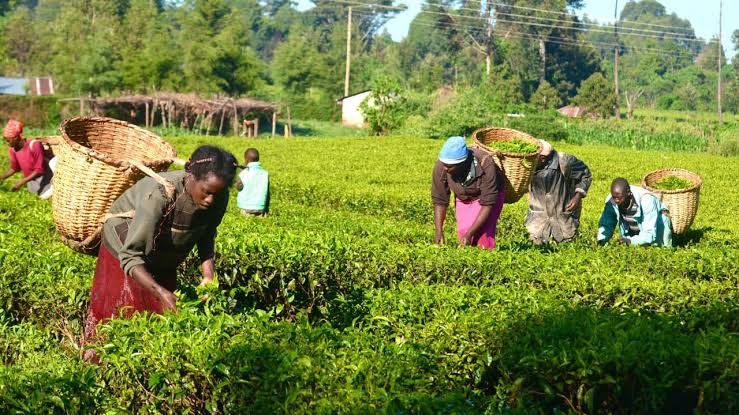
The United Nations has called for increased investment in women farmers, describing them as critical to Nigeria’s food security, economic transformation and sustainable agricultural development.
The UN made the call on Monday in Abuja at a press conference to commemorate the International Year of the Woman Farmer 2026.
Speaking at the event, the Country Director, UN Women Nigeria and ECOWAS, Ms Beatrice Eyong, said the year, proclaimed by the United Nations General Assembly through Resolution A/RES/78/279, provided an opportunity to recognise the critical contributions of women farmers to food security, nutrition, poverty reduction and sustainable agrifood systems.
Eyong said women across Nigeria played multiple roles as farmers, processors, traders, entrepreneurs, cooperative members and innovators, while also serving as custodians of household food and nutrition security.
She, however, noted that women farmers continued to face significant barriers to access to land, finance, technology, mechanisation, climate information, extension services, productive assets, markets, and decision-making opportunities.
According to her, UN interventions in Nigeria have reached more than 100,000 women, with about $47m allocated to investments with targeted inclusion thresholds, including 48 to 50 per cent women beneficiaries, 30 per cent youth and five per cent persons with disabilities.
She disclosed that more than 221 market, processing and storage facilities were constructed or rehabilitated in 2025 across supported states, while over 4,500 smart technology and clean-energy equipment were provided to improve agricultural productivity, processing, value addition and competitiveness.
Eyong added that more than 87,888 women were members of supported rural producer organisations, while 82 women state apex leaders across 16 states had received leadership training to strengthen their participation in cooperative and community decision-making.
The UN also highlighted progress in digital agriculture, noting that 23,624 participants had been trained in Information and Communication Technology for Development to strengthen their use of agricultural information systems for marketing and informed decision-making.
Similarly, the Country Director, International Fund for Agricultural Development, Ms Dede Ekoue, said efforts to strengthen land access and climate resilience had resulted in 21,015 hectares being rehabilitated and brought under climate-resilient practices.
She said that about 6,500 hectares had been allocated to women and young people.
Ekoue further disclosed that about N465m in savings had been mobilised among 21,498 active savers, with women processors receiving support through improved crop varieties, climate-smart infrastructure, microfinance channels and direct market access.
She added that clean-energy interventions had provided low-cost biodigesters and related equipment to more than 780 rural women’s households across six states, helping beneficiaries save up to 12 hours of work every week.
The UN stressed that recognising women farmers must go beyond rhetoric and translate into concrete investments in land, finance, productive assets, mechanisation, climate-smart technologies, extension services, digital solutions, infrastructure and markets.
It also called for greater access to financing for women-led agribusinesses, saying rural women needed financial products and climate-finance mechanisms that reflected the realities of smallholder production and women-owned enterprises.
The organisation urged stakeholders to ensure that women’s participation in agriculture translated into leadership and influence in farmer organisations, cooperatives, commodity platforms, policy processes and agricultural decision-making structures.
It called on the Federal and state governments to strengthen gender-responsive agricultural policies and improve women’s access to land, extension services, infrastructure, technology, productive assets, climate services and decision-making opportunities.
The UN also urged the private sector and financial institutions to regard women farmers as customers, suppliers, entrepreneurs and investment partners by expanding access to affordable finance, insurance, agricultural inputs, mechanisation, digital technologies and markets.
As part of Nigeria’s activities for the International Year of the Woman Farmer, the UN said a national sensitisation walk would be held on September 14, 2026, followed by a national celebration on September 15.
We’ve got the edge. Get real-time reports, breaking scoops, and exclusive angles delivered straight to your phone. Don’t settle for stale news. Join LEADERSHIP NEWS on WhatsApp for 24/7 updates →
Join Our WhatsApp Channel