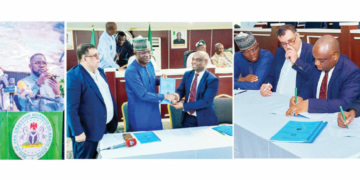
In the unfolding days of this holy month of Ramadan, Governor Ahmadu Umaru Fintiri has elevated the tradition of Iftar beyond ritual hospitality into a deliberate architecture of leadership. On different evenings, in carefully convened gatherings, he has broken fast with government officials, political actors, technocrats, traditional figures, and various segments of society. The faces may differ, the halls may change, the conversations may take distinct turns – but the core message remains unwavering: unity, peace-building, and integration.
Repetition, in politics, is rarely accidental. When a leader returns again and again to the same theme, it is because he understands that societies fracture not in dramatic explosions but in gradual silences – in the absence of consistent moral reminders. By echoing the call for unity in different variations, the Governor is not merely speaking; he is cultivating a political culture.
Ramadan is a month of discipline, restraint, introspection, and compassion. It teaches the powerful humility and reminds the privileged of collective responsibility. In that sacred atmosphere, the Governor’s Iftar meetings become more than social engagements; they become symbolic classrooms of governance. Around the shared meal, hierarchy softens. Political rivalry pauses. Ideological differences are tempered by a common spiritual rhythm. The act of breaking fast together subtly communicates that, beyond partisan lines and institutional titles, there exists a shared destiny.
For government officials, the message carries administrative weight. Unity within the machinery of governance is not optional; it is foundational. Fragmented leadership breeds policy inconsistency and weakens public trust. By gathering officials under the spiritual canopy of Ramadan, the Governor reinforces cohesion within the state apparatus itself – reminding them that service to the people must supersede personal or departmental silos.
For politicians, especially in a climate where electoral cycles are never far from consciousness, the gatherings serve as a gentle recalibration. Competition is intrinsic to democracy, but hostility is not. The Governor’s repeated emphasis on peace-building suggests a mature political philosophy: that sustainable development thrives in environments where disagreements are negotiated, not weaponized.
For community leaders and diverse groups, the message assumes even broader significance. Adamawa is a mosaic of ethnicities, faiths, and historical narratives. Integration, therefore, is not a decorative word; it is a structural necessity. In states with plural identities, unity must be cultivated deliberately. By convening these varied constituencies, the Governor demonstrates that integration is an ongoing process – one that requires presence, dialogue, and reassurance.
There is also a deeper strategic layer to this Ramadan diplomacy. In regions where security challenges and social anxieties sometimes test communal bonds, leadership must continuously lower the temperature of public discourse. Peace-building is not achieved through declarations alone; it is sustained through visible, repetitive gestures of inclusivity. Each Iftar becomes a micro-investment in social stability – a quiet but persistent reaffirmation that the state belongs to all.
Importantly, these gatherings project a leadership style that values accessibility. Governance can easily become distant, shielded by protocol and bureaucracy. But sitting at the same table, sharing dates and water at sunset, humanizes power. It bridges psychological distance between the state and its citizens.
What is taking shape, therefore, is a model of governance that treats symbolism as substance. The message of unity is not confined to speeches; it is embedded in structured engagement. Peace-building is not outsourced to rhetoric; it is practiced through sustained interaction. Integration is not an abstract aspiration; it is performed through deliberate inclusion.
As Ramadan progresses, the continuity of this message strengthens its impact. In different tones and contexts, the Governor reiterates that the future of Adamawa depends less on individual triumphs and more on collective coherence. Development cannot flourish where suspicion thrives. Progress cannot accelerate where communities retreat into enclaves. The call to unity is thus not sentimental – it is developmental.
Ultimately, these Iftar gatherings reveal a leadership philosophy grounded in the understanding that societies are held together as much by shared experiences as by shared policies. By transforming the breaking of fast into an instrument of cohesion, Governor Fintiri underscores a simple but profound truth: unity is not seasonal, and peace is not accidental. They must be nurtured – patiently, consistently, and deliberately.
In this season of reflection, Adamawa is witnessing governance expressed not only through projects and policies, but through presence and persuasion. And in a time when division often commands louder headlines, the steady repetition of unity may prove to be the most consequential message of all.
We’ve got the edge. Get real-time reports, breaking scoops, and exclusive angles delivered straight to your phone. Don’t settle for stale news. Join LEADERSHIP NEWS on WhatsApp for 24/7 updates →
Join Our WhatsApp Channel