
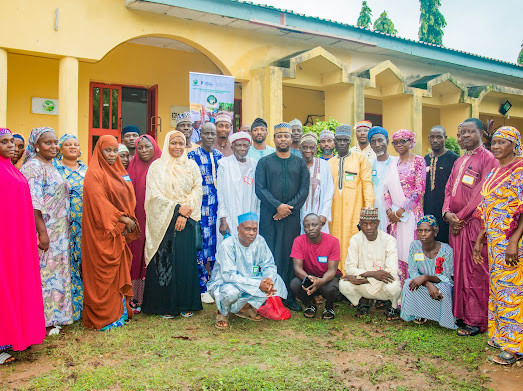
The University of Nottingham has convened a national stakeholders’ workshop to examine the adoption of improved seed varieties and their effects on smallholder farming households in Nigeria.
The Abuja workshop formed part of a three-year research project funded by the Leverhulme Trust and brought together policymakers, researchers, development partners, farmer organisations, civil society representatives and other agricultural stakeholders to discuss improved seed adoption, agricultural productivity and rural livelihoods.
The event followed the Seeds of Change Farmer Focus Group hosted by Zuma Agric Radio in Suleja, Niger State, where smallholder farmers engaged directly with the University of Nottingham research team and shared their experiences and perspectives on the use of improved seed varieties.
Insights from the farmer-focused engagement provided grassroots context for the national dialogue, linking the experiences of farming communities with broader policy and research discussions on agricultural development.
Dr. Aisha Abubakar, who leads the University of Nottingham research team in Nigeria, said understanding the realities faced by farmers was essential to producing evidence capable of shaping effective agricultural policies and practices.
“Understanding farmers’ lived experiences is fundamental to producing evidence that can inform effective agricultural policy and practice.
“By engaging directly with farming communities and national stakeholders, this research seeks to generate practical insights that can contribute to improving the livelihoods of smallholder farm households across Nigeria, ” she said.
Speaking on the collaboration, Managing Director/Chief Executive Officer of Zuma Agric Radio, Shuaibu Kere Ahmed, said the organisation was pleased to support the research initiative by creating a platform for direct engagement between farmers and researchers.
“Zuma Agric Radio is honoured to support the University of Nottingham’s important research initiative by providing a platform where farmers can engage directly with researchers.
We are pleased that the voices of farming communities are contributing to a national conversation on evidence-based agricultural development,” Ahmed said.
The three-year research project will continue to engage farmers, researchers, policymakers and development partners in generating evidence on improved seed adoption and its implications for agricultural productivity and rural livelihoods.
We’ve got the edge. Get real-time reports, breaking scoops, and exclusive angles delivered straight to your phone. Don’t settle for stale news. Join LEADERSHIP NEWS on WhatsApp for 24/7 updates →
Join Our WhatsApp Channel