Boat mishaps have become a grim and recurring feature of Nigeria’s waterways, turning what should be a routine means of transportation into a perilous gamble with life. Almost every incident leaves scores dead, underscoring the depth of a crisis that has been allowed to fester for too long. Disturbingly, two recent tragedies cast a dark shadow over the just-ended festive season.
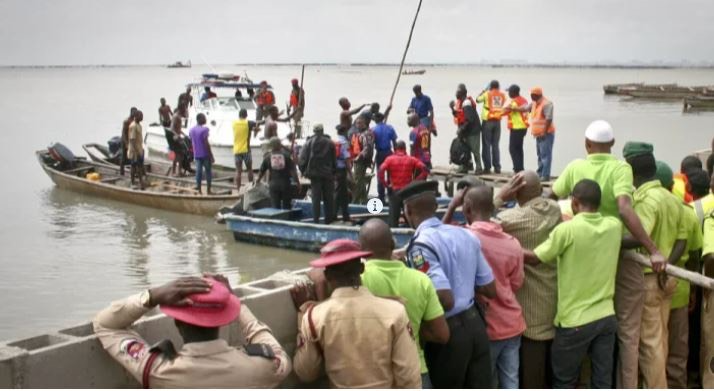
On December 30, a passenger boat capsized near Ilashe Beach House in Lagos, claiming six lives, while four others were rescued. Preliminary findings by the Lagos State Waterways Authority (LASWA) and the National Inland Waterways Authority (NIWA) pointed to a collision with a submerged object and a clear violation of the “no night travel” regulation. Even more tragic was the accident that occurred four days later in Yobe State. A canoe conveying about 52 passengers from Adiyani village in Jigawa State to Garbi in Yobe overturned mid-journey, leaving 29 people confirmed dead, with several others still missing.
The Jigawa State Police Command attributed the incident to leakage in the canoe, compounded by overloading and night travel—both in clear breach of existing safety laws. The driver, authorities said, would face prosecution for criminal negligence. Yet, beyond individual culpability, these incidents reflect a broader systemic failure.
Available statistics paint a bleak picture. By August 2025, about 90 deaths had already been recorded across Rivers, Niger, Kwara and Sokoto states. In September, another 60 lives were lost in Niger State when an overloaded boat struck a tree stump on the River Niger. While NIWA claims a 30 per cent reduction in accidents in 2024 and a 72 per cent drop in 2025 compared to 2022, water transport remains a high-risk venture for millions of poor Nigerians who depend on it daily.
Several factors continue to fuel these tragedies: overloading of vessels, poor maintenance, the widespread use of fragile wooden boats, and illegal night travel. A report by the Nigeria Safety Investigation Bureau (NSIB) reveals that more than two-thirds of boat accident fatalities result from drowning, and alarmingly, 90 per cent of the victims were not wearing life jackets. In most cases, rescue equipment and emergency response facilities are either inadequate or completely absent.
Ignorance also plays a significant role. Water transport in many communities is largely informal, operated and patronised by locals with little or no knowledge of safety standards or best practices. This reality makes the situation even more precarious.
As a newspaper, we are compelled to call for a decisive shift from the current reactive posture—marked by rescue operations, condolences and official lamentations—to proactive, preventive action. These deaths are avoidable, and preventing them must be the priority.
There is an urgent need for sustained community-level sensitisation, leveraging traditional rulers and religious institutions to educate people on safe boating practices. Governments at all levels must also invest in the development and upgrade of water transport infrastructure. The case of Sokoto State, where eight boat accidents between 2020 and 2025 claimed at least 78 lives, illustrates the cost of inaction and the necessity of practical, long-term solutions.
NIWA’s recent three-day safety training for boat operators across the six geopolitical zones is a welcome step. However, training alone is insufficient without strict enforcement of waterways regulations. Too often, passengers are left at the mercy of operators who prioritise profit over safety. Just as operators in land, rail and air transport are certified, water transport operators must also be properly trained, licensed and regularly monitored.
We also support the call by the Minister of Marine and Blue Economy, Adegboyega Oyetola, for state governments to ban wooden boats for commercial use and replace them with safer fibre-reinforced plastic or aluminium vessels. The continued reliance on rickety, poorly constructed wooden boats is a major contributor to accidents in riverine communities. Such boats deteriorate rapidly, develop cracks and leakages, and are inherently unstable, lacking even the most basic safety features.
Phasing out wooden boats and replacing them with modern, safer alternatives would significantly improve safety on Nigeria’s waterways. Ultimately, the right to life must outweigh the convenience of cheap, unsafe transport.
State authorities need to act fast for until decisive steps are taken, the nation’s rivers will continue to be the source of avoidable loss of lives.
We’ve got the edge. Get real-time reports, breaking scoops, and exclusive angles delivered straight to your phone. Don’t settle for stale news. Join LEADERSHIP NEWS on WhatsApp for 24/7 updates →
Join Our WhatsApp Channel