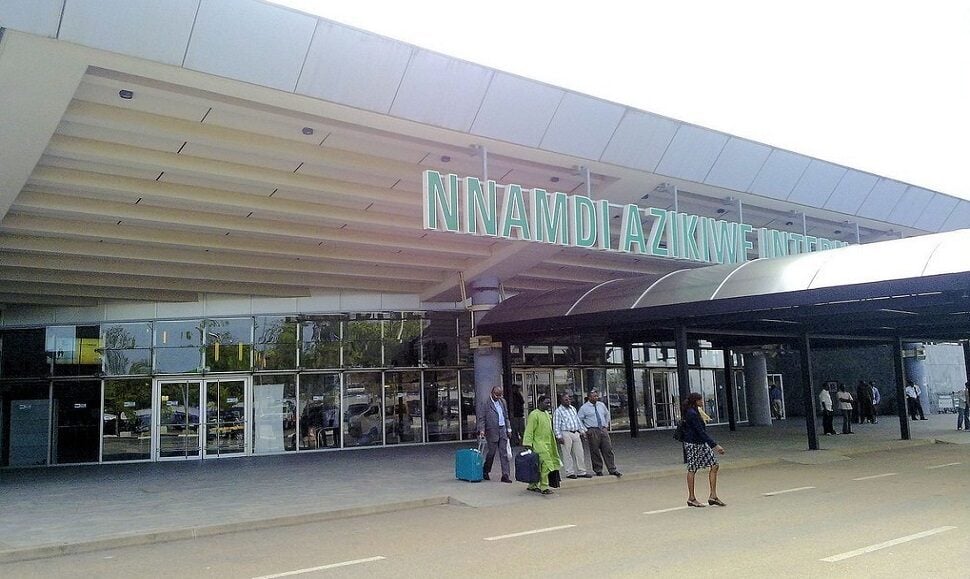
So let me get this straight. A one-way ticket from Abuja to Lagos now costs between N400,000 and N600,000. Routes to the South-East and South-South have jumped from N120,000 to over N300,000 – a 150 per cent increase in just a few months.
And the government’s response? “We can’t do anything. The sector is deregulated.” Really?
The Aviation Minister, Festus Keyamo, told us on Wednesday that the federal government has no legal powers to regulate airfares because the sector was deregulated during the Babangida administration. According to him, we should all just wait patiently – more aircraft are coming, competition will kick in, and prices will magically crash.
I don’t know about you, but I find this answer both convenient and incomplete. Yes, the aviation sector is deregulated. I understand what that means. Airlines are private enterprises and they set their own prices based on market forces. Fair enough.
But here’s where the minister’s logic falls apart: the same government that claims it can’t fix prices controls almost everything else that determines those prices. The taxes, the charges, the aviation fuel costs, the foreign exchange rates, airlines need to lease aircraft and conduct mandatory maintenance abroad – all of these are directly or indirectly controlled by the government.
So which one is it? Are we running a free market or aren’t we? You can’t claim deregulation when it’s time to defend high prices, then turn around and collect multiple taxes and charges that make those prices even higher. That’s not free market economics, that’s having your cake and eating it.
The airline operators themselves have been consistent on this point. Prof. Obiora Okonkwo of the Airline Operators of Nigeria, in an interview, said that excessive taxes and fees are major contributors to high airfares. He pointed specifically to the Aviation Oversight Tax and other levies as examples of unnecessary financial strain on an already struggling industry.
And here’s the interesting part: ECOWAS agrees with them.
At their December 2024 meeting in Abuja – right here in Nigeria’s capital – ECOWAS Heads of State adopted a measure to reduce air transport taxes and passenger charges by 25 per cent across West Africa, effective January 1, 2026. They described the high cost of flying in West Africa as “one of the highest on the continent” and noted its negative impact on tourism, trade, and the free movement of people.
So a regional body can identify the problem and prescribe a solution, but the Nigerian government says,
“Sorry, our hands are tied”?That doesn’t add up.
Let me be clear about something: I’m not one of those people who think government should be fixing prices in a deregulated market. That’s a recipe for disaster and we’ve seen how price controls distort markets and create shortages in other sectors.
But there’s a difference between fixing prices and creating an enabling environment. There’s a difference between market intervention and removing the barriers that prevent markets from working efficiently.
When Minister Keyamo says the government cannot dictate prices for private enterprises, he’s technically correct. But when airline operators are telling you that taxes and charges are crushing them, and when ECOWAS is mandating a 25 per cent reduction in these same charges, then the conversation shifts from price control to tax reform. That’s not market interference, that’s government doing its job.
The minister disclosed that a major global aircraft lessor recently returned to Nigeria after nearly two decades and approved a dry lease at a rate three times cheaper than previous offerings. He attributed this to reforms around the Cape Town Convention. Good.
He also said that with cheaper leases, more airlines will have access to aircraft, which will increase competition and bring prices down. Also good in theory.
But how long will this take? And what are Nigerians supposed to do in the meantime?
The festive season is here. People need to travel home to see their families. Some haven’t been home in years because they couldn’t afford it. Now the few who managed to scrape together N120,000 for a ticket are being told to find N300,000 instead – or forget about flying.
What’s the alternative? The roads?
Senator Buhari Abdulfatai raised this exact point during the Senate debate. He noted that the situation is particularly troubling given the growing insecurity and challenges on major highways. Bandits, kidnappers, and criminals have made road travel a nightmare in many parts of the country.
So you can’t fly because it costs half a million naira. And you can’t drive because you might get kidnapped or killed. What exactly are Nigerians supposed to do – teleport?
This is where the government’s convenient amnesia becomes dangerous. They’ve created an environment where the average Nigerian is trapped. Air travel has become a luxury reserved for the rich, and road travel has become a death trap.
And then they turn around and tell us, “It’s a free market, we can’t interfere.”
But let’s talk about this free market for a moment. How free is a market where the government controls access to foreign exchange? Where are fuel prices determined by government policy? Where do multiple aviation taxes go directly into the Federation Account? Where do airlines need government permission to operate routes?
Senator Solomon Olamilekan made an important point during the Senate debate.
He noted that airline operators have already received multiple concessions, especially on spare parts. So if they’ve received concessions and support from the government, shouldn’t there be some accountability for how they price their services?
I’m not saying airlines are making excessive profits. The aviation business is notoriously difficult and many Nigerian airlines have collapsed over the years. Operating costs are real – aircraft leasing, maintenance, aviation fuel, insurance, regulatory compliance, and ground handling fees. These costs add up.
But passengers also need to see transparency. When fares jump 150 per cent in a few months, people have a right to ask: where exactly is this money going? What’s the breakdown? How much are operational costs, and how much is profit?
The Senate did the right thing by summoning Minister Keyamo and airline operators to explain the fare hikes. That’s their oversight function and they should exercise it vigorously.
Here’s what needs to happen – and I mean now, not in some vague future when “competition kicks in”:
First, the federal government must immediately adopt the ECOWAS directive on aviation charges and taxes. If our regional partners can agree to cut charges by 25 per cent, why should Nigeria be the outlier? The Minister of Finance, the tax authorities, and aviation regulators need to sit down this week and work out how to implement this.
Second, airline operators must provide transparent breakdowns of their cost structures. Show Nigerians exactly how much of that N400,000 ticket is going to fuel, leasing, taxes, maintenance, and profit. Let’s see the numbers. Transparency builds trust.
Third, fast-track whatever approvals are needed to get more aircraft into the country. The minister says competition will bring prices down. Fine. Let’s see that competition materialise in Q1 2026, not in some distant future.
And fourth – this one is for the long term – we need to fix our roads and rail system so people have alternatives. You can’t have a situation where air travel is unaffordable and ground travel is unsafe. That’s a mobility crisis and it affects everything from commerce to family cohesion.
The Senate needs to follow through on this. Not just summon people for a photo opportunity, but actually extract commitments and timelines. When will the ECOWAS charges be implemented? By when should we expect additional aircraft? What’s the timeline for reviewing the multiple taxes? These are the questions.
Minister Keyamo is a smart man and I believe he understands these issues. But he needs to stop hiding behind “deregulation” and start using the considerable powers his ministry and the government have to create an environment where airlines can operate efficiently and Nigerians can afford to fly.
Because right now, the only people who can afford domestic flights in this country are politicians, top civil servants, and business executives. Regular Nigerians – teachers, nurses, small business owners, young professionals – have been priced out of the skies.
And that’s not a free market failure, that’s a government failure. Let’s be honest about that.
We’ve got the edge. Get real-time reports, breaking scoops, and exclusive angles delivered straight to your phone. Don’t settle for stale news. Join LEADERSHIP NEWS on WhatsApp for 24/7 updates →
Join Our WhatsApp Channel