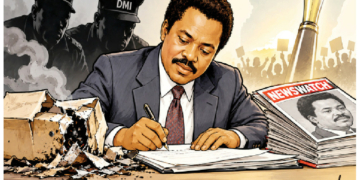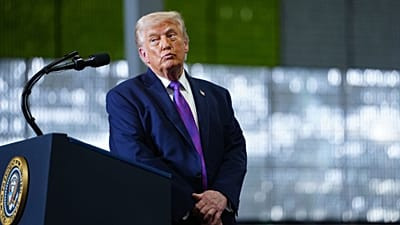
In the movie ‘Olympus Has Fallen’ written by Creighton Rothenberger and Katrin Benedikt and directed by Antoine Fuqua showed how the unthinkable happened with unsettling ease: the citadel of American power was breached, its mythology punctured not merely by force, but by overconfidence. Fiction, of course. Yet in the spring of 2026, under Donald Trump, Washington staged a geopolitical sequel—this time without a scriptwriter to impose a tidy ending, a replica of the 2013 movie.
The war with Iran began, as such misadventures often do, with certitude masquerading as strategy. The White House spoke of “imminent threats” and decisive blows. Bombers were dispatched, ultimatums issued, and the language of annihilation deployed with theatrical gusto. Yet wars, like markets, are unimpressed by bravado. They respond to structure, incentives—and, inconveniently for empires, to resistance.
Within weeks, the campaign had metastasised into something far costlier and far less coherent. Over 13,000 airstrikes later, Washington declared its objectives largely met, even as it scrambled for a ceasefire it had once framed as unnecessary. That volte-face—threaten obliteration, then sue for pause—betrayed not strength but strategic fatigue. At home here, many war mongers danced in ecstasy with many of them mocking the murder of Ali Khomeini the Iran supreme leader. So insensitive were these shallow minded Nigerians that they teased that 70 virgins awaited the slain leader.
For the US, the embarrassment is not merely military. It is reputational. For decades, the United States has traded on an aura of overwhelming, almost metaphysical superiority—the assumption that escalation dominance was its birthright. Iran, a sanctioned, economically constrained republic, was expected to bend. It did not.
Tehran’s conduct, though hardly pacifist, has followed a recognisable doctrine: retaliatory, calibrated, stubborn. It did not initiate this phase of conflict; indeed, the opening salvos came from joint U.S.–Israeli strikes on Iranian targets. But once engaged, Iran demonstrated a capacity to absorb punishment and impose costs—closing the Strait of Hormuz, rattling energy markets, and forcing Washington into negotiations mediated, tellingly, not by its allies but by others.
For those with deep and careful understanding of the Iranian regime, they will never start a fight but they never run away from one when you touch them. To them, it is cowardice to attack the unprepared, unaware and the vulnerable.
This is not the behaviour of a state seeking conquest. It is the reflex of a regime steeped in strategic defensiveness, shaped by decades of sanctions, coups, and encirclement. Iran rarely throws the first punch; it simply refuses to be the one left on the canvas.
Meanwhile, the human ledger grows grim. Civilian infrastructure—bridges, factories, universities—has been degraded, with thousands of casualties reported and public sentiment in Iran shifting from wary hope to exhausted resentment. If the aim was to win hearts while breaking a regime, the effort has achieved the inverse. Infact, the killing of their supreme leader emboldened their resolve, they became more stoic and impenetrable.
The war is telling on America. The war has cost over $100bn, disrupted global energy flows, strained alliances, and exposed the limits of unilateral force in a multipolar age. Even at home, political backlash has been sharp, with critics decrying both the legality and the logic of the war. According to the late political scholar of ABU Zaria,Prof Ayo Dumoye, ‘ being belligerence, comes with heavy cost ‘
What, then, was achieved? Iran remains intact. Its negotiating position, if anything, has hardened. It now sits at the table not as a supplicant but as a survivor—one that has demonstrated leverage over one of the world’s most critical power corridors.
The parallel with Olympus Has Fallen is thus not about spectacle but about illusion. In the film, America is shocked that its fortress can be breached. In reality, the shock is subtler: that power, when misapplied, can erode itself.
Empires seldom fall in a single, cinematic moment. They fray—through miscalculations, overextensions, and wars entered with clarity but exited in ambiguity. In choosing confrontation over containment, and theatre over strategy, Mr Trump has not destroyed Iran. He has merely reminded the world that even Olympus can bleed.
And in geopolitics, as in cinema, once the illusion is broken, it is exceedingly difficult to restore.
For the US, Donald Trump has exposed the ‘almightiness’ of America as bottled and exaggerated might – like Dr Kabiru Danladi Lawanti said, this is the time for all nations with the capabilities to own its weapon of strength whether nuclear or biological,and of course, stoic might like the Iranians.
Good night America ‘s Trump. Decimatingly musing
We’ve got the edge. Get real-time reports, breaking scoops, and exclusive angles delivered straight to your phone. Don’t settle for stale news. Join LEADERSHIP NEWS on WhatsApp for 24/7 updates →
Join Our WhatsApp Channel