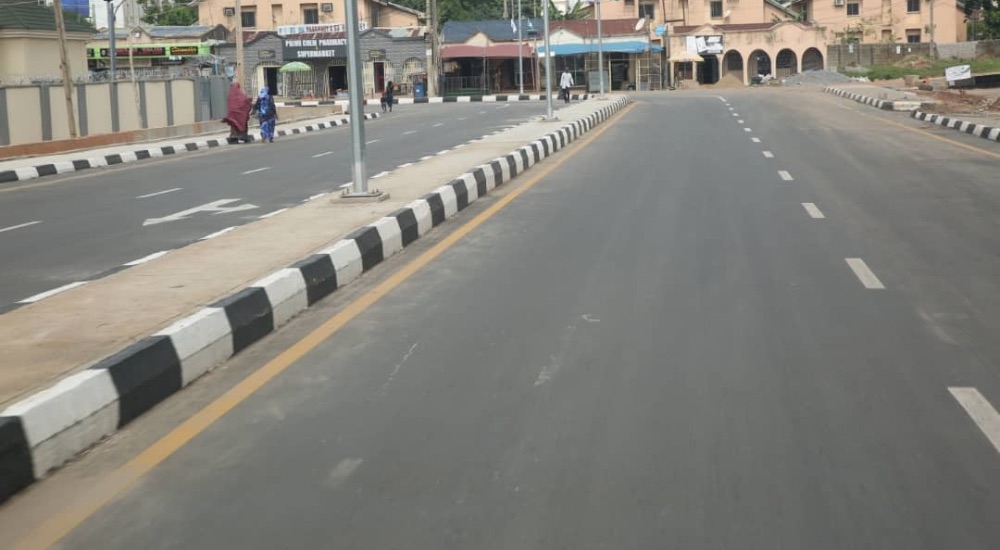
Residents across the Federal Capital Territory are asking a question this newspaper considers entirely fair: why should a road built with taxpayers’ money become the justification for a landlord to raise their rent. That is the complaint now coming out of Karu, Apo, Kado, Gwarinpa, Wuye, Jahi, Wuse and Lugbe, where tenants describe rent increases of between 50 and 100 per cent over the past three years, a period that lines up precisely with the removal of fuel subsidies and the unification of the exchange rate. Residents accuse landlords of treating public infrastructure development as a licence to extract more from tenants who had no say in either the building of the road or the price now attached to living near it.
There is a genuine economic story behind part of this increase, and this newspaper is not inclined to pretend otherwise. Fuel subsidy removal and currency unification raised the cost of nearly everything in Nigeria at once, from building materials to maintenance to the transport costs landlords themselves absorb in managing their properties. Rent, like every other price in the economy, was never going to sit still through a shock of that size. But a housing market responding to genuine cost pressure looks different from one exploiting a captive population, and what residents are describing increasingly resembles the latter.
New infrastructure raises the value of nearby land almost by definition, yet Nigeria has no mechanism to ensure any of that publicly funded uplift benefits the tenants who actually use the road, rather than flowing entirely into a landlord’s asking price. The public pays for the road. The private landlord captures the value it creates. The tenant is left covering both bills at once.
Layered on top of the rent itself is a second and more troubling development: the normalisation of agency fees, legal fees, caution deposits and service charges that tenants across Abuja, Lagos and Port Harcourt now describe as an unavoidable cost of finding somewhere to live. That these charges have become, in the words used to describe them, the “new norm” in Nigeria’s major cities should alarm policymakers rather than reassure them.
A norm is not the same as a fair practice. It is a practice nobody has yet been forced to justify, and an unregulated fee structure that has quietly become standard across three of the country’s biggest rental markets deserves scrutiny precisely because it has gone unchallenged for this long.
A human rights lawyer, Deji Adeyanju has now put a name to what many Nigerian tenants have been living through without one, describing the housing market in an open letter to the President as “predatory” and warning that it is stripping citizens of their dignity while forcing many into poverty.
That is strong language, and this newspaper does not think it overstates the situation. The lawyer’s letter calls for a declaration of a state of emergency in the housing sector, a request that reflects the scale of the crisis rather than rhetorical excess. What makes the appeal harder to dismiss is the breadth of Nigerians it identifies as affected: civil servants, artisans, young professionals, remote workers, middle-income earners and vulnerable families alike. This is not a crisis confined to Nigeria’s poorest, who have always struggled with housing costs. It has reached deep into the ranks of people with steady jobs and formal incomes, which tells its own story about how far rents have detached from what ordinary earnings can sustain.
We take the state of emergency request seriously, not because a declaration by itself solves anything, but because it forces a level of government attention this crisis has not yet received. Nigeria’s housing affordability problem has been treated for years as background noise, a familiar complaint every tenant learns to live with rather than a policy failure demanding intervention. The scale described here, rent increases of up to 100 per cent in three years stacked on top of fee structures adding a further fifth or more of the base rent, is not background noise. It is a crisis that happens to be unfolding quietly, one lease renewal at a time, without the visible drama that usually forces Nigerian governments to act.
Government’s obligation here does not require it to fix prices, an approach that would likely drive landlords out of the formal rental market altogether and leave tenants worse off. What it does require is regulation of the parts of this market that have nothing to do with genuine cost pressure and everything to do with unchecked extraction: agency and legal fees that bear no relationship to the service actually rendered, caution deposits that vanish rather than get refunded, and service charges levied with no transparent accounting behind them. None of that regulation requires new public spending. It requires the political will to treat housing as the constitutional and human right Nigeria has signed up to protect, rather than a private transaction government has no business examining.
The residents raising their voices in Abuja are not asking for free housing or rent frozen by decree. They are asking why a public investment meant to benefit everyone has become a private instrument used against the very people who paid for it, and why an increasingly hostile fee structure has been allowed to spread across the country’s largest cities without so much as a regulatory framework to check it. Those are reasonable questions. Nigeria’s government owes its citizens a reasonable answer, and it owes them one before the next round of infrastructure completion becomes the next excuse for another rent increase nobody had to justify.
We’ve got the edge. Get real-time reports, breaking scoops, and exclusive angles delivered straight to your phone. Don’t settle for stale news. Join LEADERSHIP NEWS on WhatsApp for 24/7 updates →
Join Our WhatsApp Channel