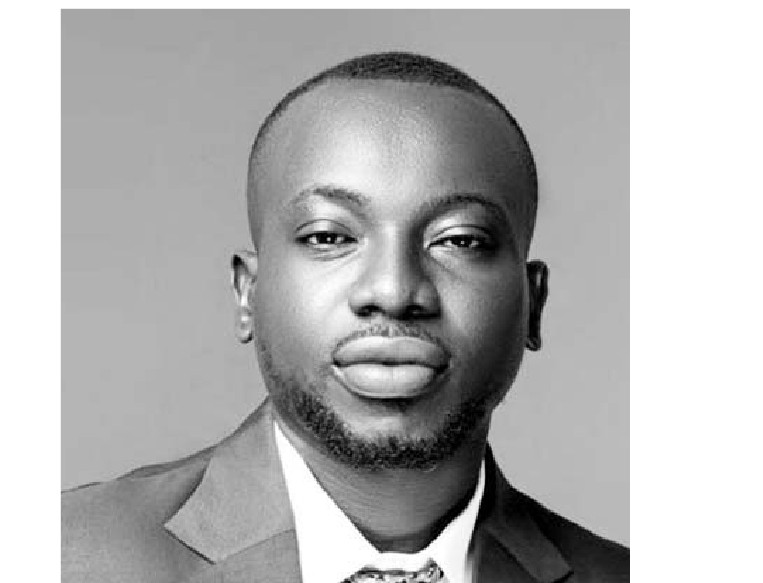
Every so often, you come across a voice that feels both new and deeply familiar—one that understands the quiet language of human emotion and dares to translate it with honesty. That is the kind of writer Clinton Ikechukwu is proving himself to be.
At his core, Clinton is a storyteller driven not just by ideas, but by emotion—raw, reflective, and profoundly human. His writing leans into the textures of everyday life: love, longing, laughter, and the unspoken weight of experience. He writes with intention, crafting scenes that are vivid yet restrained, trusting the reader to feel as much as they see.
What makes his craft even more compelling is its unlikely pairing with precision. Trained as an engineer, Clinton brings a deliberate structure and clarity to his work—storyboarding his narratives, shaping tension, and building worlds with careful detail. Yet, beyond the discipline of engineering lies a creative spirit nurtured by theatre, community, and lived experience. The result is a writer who exists beautifully at the intersection of *logic and imagination, science and soul.
Beyond the page, he is an accomplished innovator—an AI and manufacturing engineer working at the cutting edge of Industry 4.0, and a global prize winner. But even within these achievements, storytelling remains central, guiding how he sees the world and the people within it.
In this edition, Adejoke Alabi Henry sits down with him for a beautiful, thoughtful conversation—one that explores not just what he writes, but why he writes, and the quiet truths he hopes his words will carry into the world.
You’re trained as an engineer—how does that structured way of thinking influence your storytelling style and narrative construction?
Quite an interesting question. People have often felt that Creative Writing and Engineering are distinct disciplines, something far apart, at least in practice. I could have agreed, but as one who deeply explores both, I do not experience them as opposites. I see them doing the same thing – solving problems – in different ways. Engineering tells a story by beautifully shaping the world, and so does creative writing. Of course, deep within the many layers of engineering, storytelling is alive. It unravels all sense of engineering sophistication, making it relatable to any audience. Personally, they both complement one another. To answer how engineering has specifically influenced my storytelling style, I would say that when I write, I often pursue detailedness and clarity. When I build my world, I do so with vivid details and evocative verbs, guiding my audience to my precisely rendered scenes. I want them to feel attached, at every instant, like they are part of the story. I want them to make sense of my world and move through it, feeling the pressure of my themes. I am drawn to how little detail captures humans’ attention, but I learn to do so without overwriting. And I like to think that such clarity came from engineering. For my narrative construction, engineering helps my design. Part of my creative process is storyboarding – designing scenes after scenes, holding the tension and pace. In that sense, engineering has made me a more deliberate writer
When you sit down to write, what usually comes first for you: the idea, the emotion, or the characters—and why?
Every time I sit down to write, I’m drawn to emotions. I’ve often thought of art as a sea of emotions. And I consider humans to be story-attentive beings and, so, emotionally wired creatures. And this wiring is something I set out to engage, even before the characters, but the ideas are often intertwined with the emotions. It’s often spontaneous. There is often an emotional weight that speaks to me and drives my creative process. Now, through this emotional pull, I begin to negotiate ideologies and culture. Perhaps, if I can stir something inside my reader, a surge of energy or moment of epiphany or quiet ache of recognition, I would be convinced that I have achieved a profound objective. It is a kind of power: to be able to create a body of work that connects so deeply with another human. Because when my SS1 teacher said, Literature is a mirror of the society, by which we see ourselves and connect with our shared humanity,’ I think this was exactly what she was talking about. It stayed with me. Emotions are critical to my writing because I have come to understand that we cannot move others if we aren’t consumed by our own art. It is peaceful violence, sort of. There must be an emotional connection for me; only then would I be convinced that this piece or chapter is truly alive.
- Your writing has been described as expressive and insightful—what themes do you find yourself naturally returning to, even unconsciously?
I often find myself returning to themes of love, happiness and laughter because these speak to what it means to really live and feel alive. Think about it: so much of everything happening around us has a certain undertone of love, happiness, or longing. Think about a professor having his class with the characteristic smile of someone who is in love with his job or something close to it. Run a social experiment, let’s take Facebook as a case study. Ask five(5) different people to scroll through their feed for 5 minutes, and ask them to jot down the main theme of every post they encounter. Love, happiness, and laughter are inescapable themes that they would encounter. Right now, in Paris, a lady is blushing and posing with her family in front of the Eiffel Tower. Just across the border, in the City of Turin, there is a clown creating skits. Across the streets of humanity, couples are entangled in public, on the metro or tram, locking lips and sharing love. These things shape our lives, and I am interested in telling real human stories. In my upcoming novel, I set out to explore some of these themes, but in a different form.
Can you walk us through your creative process—from the first spark of an idea to a finished piece?
For storytelling, my creative process can be dramatic, especially when I am in a secluded space, partly because I grew up in the theatre, in community spaces and in church. Those formative years moulded how I picture my scenes. I immerse myself fully in the world I am creating. I like to wear the role of my characters and dramatise them, and in between, I move back to my page. When I am writing fiction, I like to be alone, where I can hear the sound of my silence, almost like I am exorcising my inner demons. Lol.
There is never a perfect ritual, I would say. Sometimes, I am impulsive and picturesque; it depends on what triggers my thoughts. Once I begin, I just drive everything out.
- How do you balance clarity and complexity in your writing, especially given your technical background?
I read literature a lot. I like to think that reading widely and long enough helps one. I am science inclined, but I tell stories. I think part of this success can be attributed to the Nigerian educational system. If you recall, by SS1, one does all science and arts courses, and I believe this gave me freedom and exposure to explore and learn the basics of literature. Later on, I studied many established authors and learnt a great deal from them. Over the years, I practised and experimented with various storytelling techniques. I believed this helped me manage clarity and complexity.
- Who are the writers, books, or even life experiences that have most shaped your voice as a storyteller?
I am a big fan of Chinua Achebe – his simplicity, style and provocative themes are powerful. Chimamanda’s The Danger of a Single Story is also really fascinating. I remember watching it as a teenager. It was so powerful – her grace, air, and endearing way with words. Trevor Noah is also someone I read and listen to a lot, with his distinct brand of storytelling and comedy. I read lots of British books while growing up, and that shaped my ear for language in different ways. Charles Dickens and George Orwell’s classics, and even poets like William Blake, were my go-to books. I do have too many authors to name, but beyond books, life itself has shaped my voice as a storyteller: growing up around theatre, church, community, and the many quiet dramas of everyday human life. I think my voice has been formed not only by what I have read, but also by what I have witnessed, felt, and carried. And I started writing until my voice was found. I am convinced that the first identity of a writer is their voice; it is earned, not borrowed, and shaped by all they have seen, lost, suffered, enjoyed and their perception of the world.
- Do you write with a specific audience in mind, or do you write primarily for yourself and let the audience find you later?
I am interested in stories and things around me. I do not honestly categorise my writing to fit a specific audience; I simply write as a human, hoping to be read by another human.
- What does a ‘good sentence’ mean to you? Is it about rhythm, meaning, simplicity, or something else entirely?
This is a fine question. A good sentence is a sentence that earns its place with a distinct voice, with no embellishment of words. The writer doesn’t overexplain; they trust the reader. Of course, I assume that all grammatical issues are already settled.
- Have you ever struggled with creative doubt or writer’s block? If so, how do you push through it?
Sure, especially when machine learning and engineering take me away for too long. I get rusty and less fluid. One of my favourite things to do when such happens is to read Op-ed articles from The New York Times or Wired. It becomes refreshing, reading others, and over time, I get into the flow again. To avoid such, I must write consistently because whatever is not growing is dying; whatever is not sprouting is withering. I understand this. And I rather aim for consistency than perfection.
- If someone reads your work years from now, what do you hope they feel or understand about you as a writer?
I would want them to feel that I was honest. That I wrote from a real place and did not shy away from the difficult, quiet, or uncomfortable parts of being human. I would want them to understand that I was a writer deeply interested in human feeling, in the things people carry in silence, and in the fragile, complicated ways we try to live, love, survive, and make meaning. More than anything, I would want them to feel that I had a voice of my own– one that was earned, not borrowed — and that through my work, I was always reaching for something true, something that could connect deeply with another human being. Though I write fiction, and my upcoming novel might be fictitious, it is set in a city I actually grew up in, shaping the world, even if in a little way.
I am working on my first novel. I am an AI Engineer and Manufacturing/Materials Engineer at the frontier of Industry 4.0, computer vision, and data-driven systems. A Global Innovation Prize winner, Erasmus Mundus meta 4.0 Scholar, and storyteller, I write at the intersection of technology and human experience, often thinking about what we build with technology and what we may risk losing to it.
We’ve got the edge. Get real-time reports, breaking scoops, and exclusive angles delivered straight to your phone. Don’t settle for stale news. Join LEADERSHIP NEWS on WhatsApp for 24/7 updates →
Join Our WhatsApp Channel