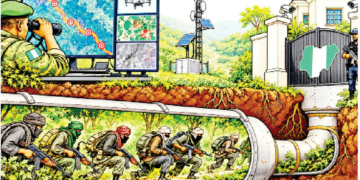
A dangerous trend is unfolding in Nigeria, quietly but insistently, like a cracked pipe leaking beneath a newly tiled floor. The country’s youthful energy—once celebrated as its greatest demographic advantage—is being channelled, en masse, into entertainment, performative activism and digital celebrity. Content creators proliferate; influencers multiply; midday trends metastasise across screens. Yet beneath the noise, a more consequential silence grows. Nigeria is running short of artisans. And growing astronomically with RATELs membership and anti banditry celebrity squads.
Plumbers, electricians, carpenters, mechanics, masons, welders, salonists—those who keep cities habitable and economies functional—are becoming scarce. When a pipe bursts, a generator fails, or a door frame collapses, the search for skilled hands increasingly resembles a scavenger hunt. This is not a minor inconvenience. It is a structural warning.
History is unkind to societies that confuse spectacle with substance. Ancient Rome, often invoked for its engineering prowess, also offers a cautionary tale. As civic virtue waned, emperors leaned heavily on panem et circenses—bread and circuses—to pacify an urban population disengaged from productive labour. Entertainment expanded as republican discipline collapsed. The Colosseum thrived; the legions thinned; infrastructure decayed. Rome did not fall because it lacked entertainers. It fell because it lost productive balance.
A similar pattern appeared in 16th-century Spain, flush with New World silver. Wealth flowed without corresponding investment in domestic industry or skilled trades. The aristocracy preferred courtly display; labour was devalued; artisanship stagnated. When the bullion stopped flowing, Spain discovered it had imported consumption but exported competence. Decline followed abundance.
Even in modern times, economies overly tilted toward performative sectors suffer distortions. America’s reality-television boom in the early 2000s coincided with a long neglect of vocational education. While not fatal—thanks to strong institutions and immigration—it produced skills gaps now painfully evident in construction, manufacturing and maintenance. Advanced economies survived the imbalance by importing labour. Nigeria, with mass unemployment, cannot.
Yet Nigeria appears determined to replay these errors at scale.
Universities churn out graduates with padded certificates but limited practical competence. Faced with a labour market that undervalues skills and over-celebrates visibility, many young people retreat into content commodification. Phones replace toolboxes. Hashtags substitute for hard hats. Some become celebrity enforcers; others rebrand grievance as activism; a few act as informal intelligence intermediaries for security agencies. All generate attention. Few generate durable value.
The result is a paradox. Nigeria has millions of unemployed youths, yet struggles to find competent artisans. The roadside mechanic, the informal plumber, the unlicensed builder—often unlettered, ageing and overstretched—remain the backbone of everyday life. They keep vehicles running, water flowing and houses standing. But they are rarely replaced. Apprenticeship chains are breaking. Skills are not being transferred. An entire productive culture is ageing out.
No nation survives when its most energetic cohort pursues ephemeral trades while abandoning critical services that affect daily life. Economies are not sustained by applause metrics. They are sustained by competence, repetition and mastery.
Defenders of the current trend argue that digital creation is the new economy—and in part they are right. Entertainment, media and technology matter. But no serious country allows these sectors to crowd out foundational skills. Germany’s industrial strength rests as much on its Meister craftsmen as on its engineers. South Korea’s ascent combined pop culture with rigorous technical education. Even China’s digital economy is underwritten by vast armies of technicians and skilled tradespeople.
Nigeria’s problem is not creativity. It is misallocation.
When too many chase visibility and too few pursue utility, prices rise, quality falls and frustration spreads. Buildings fail inspection. Electrical faults spark fires. Imported labour becomes attractive. Informality deepens. Eventually, even the entertainers discover that unreliable power, unsafe roads and collapsing infrastructure make content creation harder—not easier.
The danger, then, is not merely economic. It is civilisational. A society that glamorises performance over production slowly erodes its capacity to reproduce itself. What looks like freedom today becomes fragility tomorrow.
Nigeria is edging toward such a precipice. The booming effect—when it comes—will not announce itself on social media. It will appear in stalled projects, unsafe housing, expensive repairs and rising dependence on external expertise. By then, it will be too late for nostalgia.
The corrective is neither moral panic nor anti-technology romanticism. It is recalibration. Nations endure when they reward skill, dignify labour and align aspiration with necessity.
To young Nigerians, the call is simple and urgent: step down from esoteric postures of content commodification. Step into workshops, sites and studios of craft. Learn a trade. Master a skill. Build something that works when the lights go out and the trends move on. Real-time engagement in artisanal competence is not a retreat from the future—it is how a serious nation secures it.
We’ve got the edge. Get real-time reports, breaking scoops, and exclusive angles delivered straight to your phone. Don’t settle for stale news. Join LEADERSHIP NEWS on WhatsApp for 24/7 updates →
Join Our WhatsApp Channel