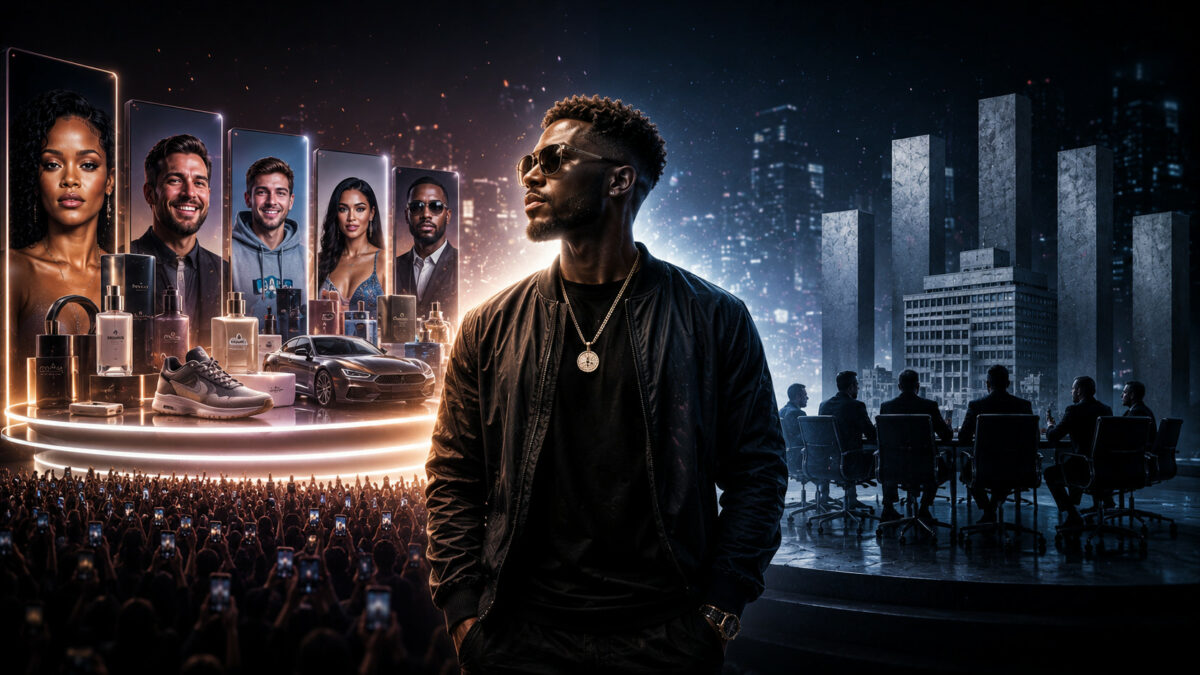
Celebrity brands have moved well past the era of licensing deals and endorsements. Rihanna, Ryan Reynolds, MrBeast, Kim Kardashian, and Davido have all built companies that operate independently of their entertainment careers and generate revenue on their own terms. The question is no longer whether celebrities can build businesses but why those businesses are outperforming many traditional competitors.
Why Celebrities Are Becoming Entrepreneurs
The shift started with audience ownership. A celebrity with 50 million followers on social media has a direct communication channel to potential customers that most traditional businesses spend years and millions of dollars trying to build. That access compresses the timeline between a product idea and its first sale dramatically.
Celebrity-owned businesses also benefit from earned trust. When an audience has followed someone for years through personal stories, public struggles, and creative output, they arrive at a product launch with a level of familiarity that paid advertising cannot replicate.
The economics reflect this. Customer acquisition costs for celebrity-founded brands are often a fraction of what traditional consumer goods companies spend, because the founder’s existing audience handles initial distribution organically.
Rihanna and the Success of Fenty
Fenty Beauty launched in 2017 with 40 foundation shades and generated $100 million in revenue within 40 days. By 2023, the brand had surpassed $1 billion in cumulative sales. The product success was real, but the launch strategy was what made it work.
Rihanna identified a gap in the market, inclusivity in cosmetics, that existing brands had ignored. Her audience trusted that the product reflected her values rather than a corporate calculation. That perception of brand authenticity drove initial sales and sustained them through word of mouth across markets where traditional beauty advertising had limited reach.
Fenty Skin and Savage X Fenty followed the same model: category chosen for cultural relevance, product quality designed to stand alone, and launch amplified through direct audience engagement rather than traditional retail partnerships.
Ryan Reynolds, MrBeast and Modern Brand Building
Ryan Reynolds sold Aviation Gin and Mint Mobile at significant valuations not just because the products were strong but because he made himself part of the product experience. His marketing was specific, self-aware, and consistently entertaining. That approach generated press coverage and social sharing that extended reach far beyond paid media.
MrBeast operates at a different scale. His food brand, MrBeast Burger, used ghost kitchens to launch across hundreds of locations simultaneously by leveraging his YouTube audience for instant demand. Influencer marketing at this level is not a campaign. It is a distribution system.
Both Reynolds and MrBeast showed that the playbook works across different industries and audience types, which suggests the model is structural rather than individual.
Davido’s Business Expansion Beyond Music
Davido’s commercial activity in Nigeria shows how the model applies in African markets. Beyond music, he has invested in entertainment venues, fashion, and digital content partnerships that connect his audience to products and services through the same channels where they already follow him.
Consumer trust built through music and public personality translates into commercial influence in Nigeria in ways that traditional brand partnerships from outside the culture struggle to replicate. Local audiences respond to founders who share their reference points.
Lessons From Celebrity-Owned Companies
The table below compares key characteristics of celebrity-owned brands versus traditional consumer companies:
| Factor | Celebrity-Owned Brand | Traditional Business |
| Customer acquisition cost | Low, audience pre-exists | High, built through advertising |
| Launch speed | Fast, direct audience access | Slow, requires distribution build |
| Brand trust | Personal and earned | Institutional and constructed |
| Marketing dependency | Founder’s channel | Paid media |
The pattern across these businesses points to a consistent model: build audience trust first, then convert it into commerce. Digital platforms across entertainment, fashion, and technology have studied this model and applied it to their own growth strategies. Companies like Pin-Up, alongside other digital brands expanding into new markets, use direct audience engagement and personalized experience as the core of their acquisition strategy rather than mass advertising.
In conclusion, celebrity-owned businesses outperform because they start with distribution and trust already in place. The product still has to work, but the gap between launch and scale is compressed in ways that traditional businesses cannot replicate without years of brand building first.
We’ve got the edge. Get real-time reports, breaking scoops, and exclusive angles delivered straight to your phone. Don’t settle for stale news. Join LEADERSHIP NEWS on WhatsApp for 24/7 updates →
Join Our WhatsApp Channel