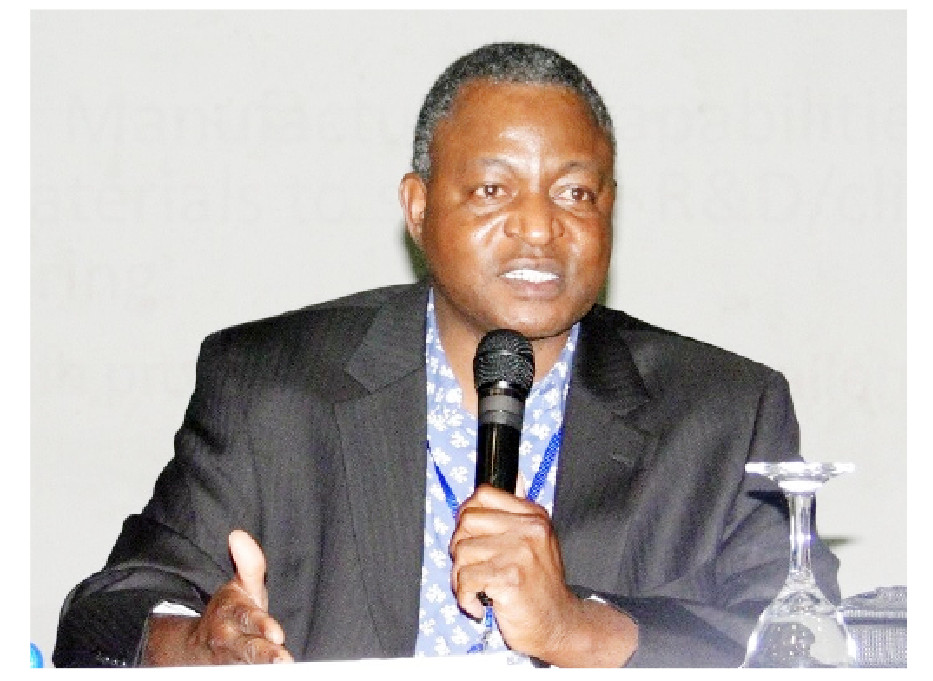
Dr Simon Agwale is the chief executive officer, ofInnovative Biotech Nigeria and Innovative Biotech USA. He also chairs the Technology Working Group and serves as Vice Chairman of the Board of the African Vaccine Manufacturing Initiative (AVMI). In this interview with PATIENCE IVIE IHEJIRIKA, he speaks about his long-standing ambition to build an indigenous, end-to-end vaccine manufacturing company in Nigeria and explains what this could mean for national health security, students, and researchers.
In simple terms, what is a vaccine, and how safe is it?
Vaccines are the most cost-effective health intervention known to mankind because they prevent disease before infection occurs. Across the world, many disease-causing organisms—including those responsible for malaria, typhoid, and sexually transmitted infections—are becoming increasingly resistant to antibiotics, creating a serious long-term threat.
Vaccines have completely eradicated diseases like smallpox, dramatically reduced polio, and eliminated measles and hepatitis B in many regions. Africa, however, continues to suffer disproportionately due to delayed vaccine introduction and low uptake. Local vaccine manufacturing can help address this by building public trust and confidence, which improves acceptance and coverage.
Vaccines are safe—indeed, they are among the safest medical products ever developed. Their development follows extremely strict regulatory standards. Before reaching humans, vaccine candidates undergo extensive animal testing, including toxicity and biodistribution studies in at least two animal models.
Human clinical trials are conducted in three phases, each requiring regulatory approval based on safety and effectiveness data. Even after approval, vaccines are continuously monitored through pharmacovigilance systems. Unlike medicines given to sick patients, vaccines are administered to healthy people, which is why safety standards are exceptionally high. If vaccines were unsafe, humanity would not have survived their widespread use. Vaccines are safe, effective, and indispensable to public health.
What drives your determination to establish a local vaccine manufacturing company in Nigeria?
The vision began over two decades ago. It has been a challenging journey, particularly in terms of raising the required capital. Our goal is to build a truly end-to-end vaccine manufacturing facility. Today, most vaccine plants in Africa import active pharmaceutical ingredients (APIs) and limit local operations to formulation or packaging.
Our model is different. We plan to conduct research and development, manufacture active ingredients locally, and carry out fill-and-finish operations for vaccines that are critically important to Nigeria, especially those targeting emerging and re-emerging diseases.
What stage has the project reached?
We currently have several vaccine candidates in development, including vaccines for Lassa fever, HIV, and Ebola. In addition, we license already commercialised vaccines for local formulation and filling. These include vaccines used in Nigeria’s routine childhood immunisation programme, as well as vaccines for diseases such as typhoid—where we have a typhoid conjugate vaccine—and outbreak-prone diseases like meningitis.
How will this initiative affect researchers and students?
At present, no Nigerian university fully equips students for careers in vaccine manufacturing. As part of this project, we are already sending staff members abroad for specialised training. At the early stages, experienced international professionals will lead key units while mentoring Nigerian experts.
We will also partner with universities to offer hands-on training in vaccine research, biomanufacturing, good laboratory practices, and clinical research. Our laboratory in Keffi, Nasarawa State, has already trained many Nigerian students, and we intend to scale this up significantly. This is our contribution to producing industry-ready graduates capable of driving innovation in biotechnology and vaccine manufacturing.
How has the journey been so far, and what partnerships are involved?
Developing a full end-to-end vaccine manufacturing facility requires an investment of more than $100 million. Recently, we received support from the African Export–Import Bank (Afreximbank) to conduct detailed feasibility studies. These covered technical feasibility, conceptual process design, and financial viability, including capital and operational expenditure, cash-flow projections, equity and investment structures, as well as an Environmental Impact Assessment (EIA) for our proposed site at the Abuja Technology Village.
The EIA has been completed and is awaiting certification from the Federal Ministry of Environment. Once approved, we will begin establishing the research and development component. The manufacturing facility itself will be modular—built in Europe and shipped to Nigeria for on-site assembly.
When do you expect the project to take off?
We are currently working with an international development finance institution, and, as expected, several approval processes are involved. The first step is the feasibility study, which will be submitted for review. Once approved, the project will move into the implementation phase.
If funding becomes immediately available, the factory could be completed within 18 months, followed by about four months for qualification, validation, and regulatory testing before production begins. However, because the timeline for the next approval phase with Afreximbank is uncertain, it is difficult to be precise. That said, we are targeting the first quarter of 2026 to begin implementation.
What will Nigeria gain from this initiative?
First, it will create high-technology jobs. By embarking on full end-to-end vaccine manufacturing, the project will significantly strengthen national health security, enabling Nigeria to respond quickly to pandemics—unlike during COVID-19, when we depended largely on global goodwill for vaccine access.
The project will generate both direct and indirect employment, and a significant share of production will be exported, contributing to foreign exchange earnings. Vaccines will be sold in US dollars to other African countries and global markets, depending on the product. Our vision mirrors what Dangote has achieved in the oil sector: ensuring Nigeria no longer relies on imports but produces vaccines locally for national use, conserving foreign exchange.
Beyond manufacturing, we aim to establish a training and innovation platform for Nigerian students and researchers. Students will gain hands-on experience in vaccine manufacturing, good laboratory practices, and regulatory science, while postgraduate students will have opportunities for advanced research. We also plan to produce rapid diagnostic test kits—particularly for vaccines we manufacture—to enable real-time monitoring of effectiveness. This will help nurture the next generation of Nigerian scientists and stimulate the growth of related industries.
What level of support have you received from the Federal Government?
The Presidential Initiative for Unlocking the Healthcare Value Chain (PVAC) has been supportive and open to assisting us. We already have funding support from Afreximbank and are in discussions regarding a possible equity component. We are also engaging the National Primary Health Care Development Agency (NPHCDA) on a potential off-take agreement, which is critical for securing financing, given that governments are the largest purchasers of vaccines.
As we move into the next phase, NAFDAC will be involved from the outset and will work closely with us to ensure smooth regulatory approval. While regulatory support has been strong, we have not yet received direct government funding.
Are there vaccine manufacturing companies elsewhere in Africa?
Most vaccine manufacturing facilities in Africa—particularly in South Africa and Morocco—focus on fill-and-finish operations. The Institut Pasteur de Dakar (IPD) in Senegal is a notable exception, producing the yellow fever vaccine end-to-end and expanding into other vaccines. In Egypt, most facilities still focus on fill-and-finish, although there are plans to move into active ingredient production.
What sets our project apart is that we own intellectual property for some vaccines and are not only manufacturing APIs but also actively engaged in vaccine discovery and development.
We’ve got the edge. Get real-time reports, breaking scoops, and exclusive angles delivered straight to your phone. Don’t settle for stale news. Join LEADERSHIP NEWS on WhatsApp for 24/7 updates →
Join Our WhatsApp Channel