China has strengthened its ties with Africa in varying ways and has taken significant steps to boost Africa’s productivity by enabling access to its huge market to African products.
Effective May 1, 2026, China’s zero-tariff policy as announced by President Xi Jinping, has taken effect and it offers African nations duty-free access for 98 per cent of tariff items. The aim is to boost exports of agricultural products and high-value manufactured goods, diversify economies, and reduce trade imbalances.
The ambassador of the People’s Republic of China to Nigeria, Yu Dunhai, assured that the zero-tariff policy for African products into the Chinese markets will enhance African products and build the continent’s capacity in diverse ways making their products more competitive.
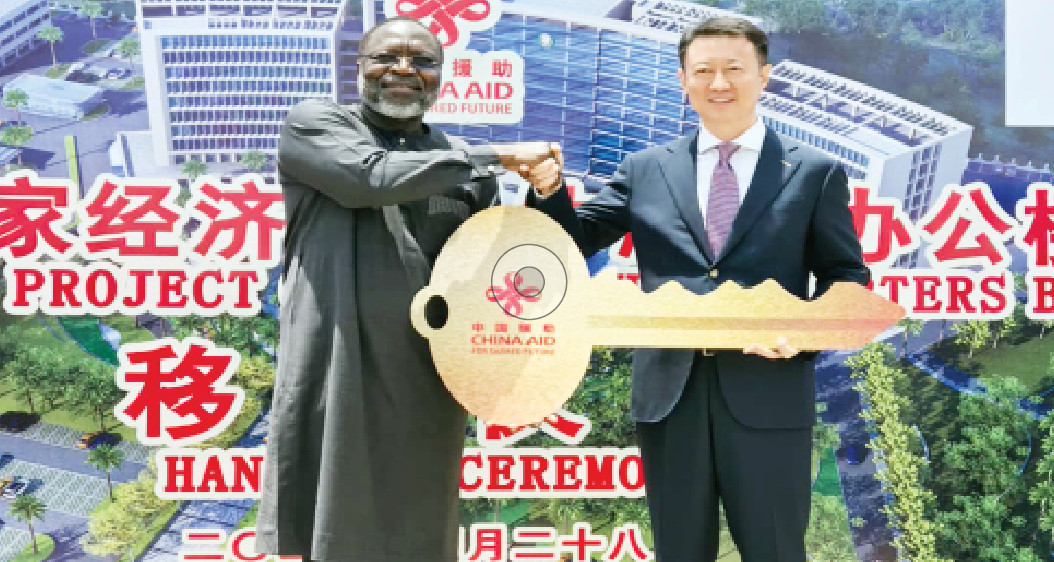
The envoy said this while delivering his address during the official handing over ceremony of the newly completed $56.5 million headquarters building of Economic Community of West African States (ECOWAS) to the President of the ECOWAS Commission, Dr. Omar Touray and other dignitaries in Abuja on Tuesday.
He said, “Effective May 1st, China will provide zero-tariff treatment for 100 per cent of tariff lines to all African countries having diplomatic ties with China.
“These initiatives are a testament to the continuity and evolution of China’s Africa policy over 70 years. They underscore our firm resolve to march hand-in-hand with our African brothers and sisters, opening new horizons for Africa’s prosperity and our shared dream of modernisation.
“As Africa’s preeminent regional organisation, ECOWAS is a vital engine for West African integration, regional peace, and coordinated development.
“We deeply appreciate the long-standing commitment of ECOWAS and its member states to the One-China principle and the invaluable support provided in the United Nations and other multilateral fora.”
President of the ECOWAS Commission Dr. Omar Touray, who received the key on behalf of the region, in his remarks, commended the Chinese Government for the zero tariff policy adding that it will make Chinese markets accessible to diverse African products, thereby increasing productivity, technology transfer, skill development and job creation.
He added that it will provide significant market opportunities, enhance industrialisation and promote economic growth.
This policy is particularly good for Nigeria as it will encourage shifting from exporting raw materials to higher-value processed goods, strengthening local industrial development, job creation, and technology transfer.
Nigeria can leverage its economic ties with China for this opportunity for its agriculture products but it must embark on massive manufacturing especially in food processing to remain competitive and add value to its products.
If Nigeria takes advantage of this opportunity it will increase its exports directly resulting in higher foreign exchange earnings, strengthen national reserves and support industrialisation efforts.
The policy will also help Nigeria to diversify its export base beyond traditional raw commodities, enhancing long-term economic resilience.
Also leveraging the African Continental Free Trade Area (AfCFTA), this initiative will help align regional value chains with global export opportunities for African countries in general and Nigeria in particular as well as reduce trade disparities.
The policy directly addresses the trade imbalances by providing a “green channel” for African goods, shifting the bilateral relationship toward a more balanced, trade-driven partnership
The Chinese market is sophisticated in its demands and its giant size gives Nigerian products an edge as they will become more competitively priced in the Chinese market.
During the 2023 China International Import Expo (CIIE) in Shanghai, the Nigerian pavilion displayed very few products, mostly unprocessed cashew nuts, sesame seeds, cocoa beans, millet and sorghum. But some other African countries notably Tanzania showcased processed mango fruits that were accepted and priced handsomely by the Chinese market.
This is the challenge and the Nigerian government must liaise with the private sector to invest in the massive processing of Nigerian raw materials. That is the only way it will remain relevant in the Chinese market.
We’ve got the edge. Get real-time reports, breaking scoops, and exclusive angles delivered straight to your phone. Don’t settle for stale news. Join LEADERSHIP NEWS on WhatsApp for 24/7 updates →
Join Our WhatsApp Channel