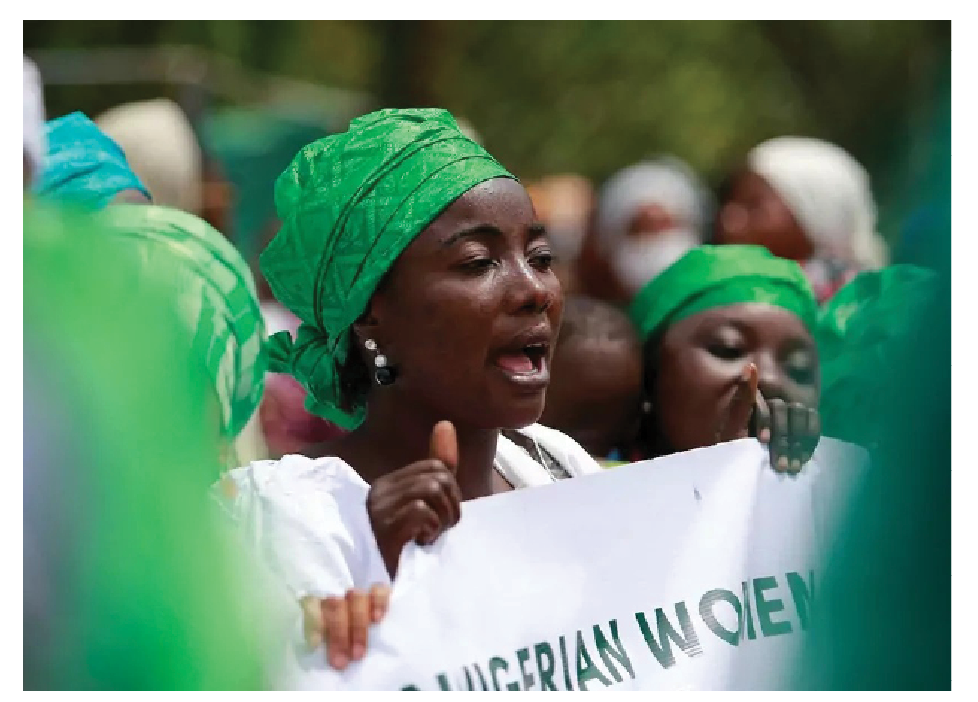
A coalition of women groups and civil society organisations has criticised political parties over what it described as declining female representation ahead of the 2027 general elections.
The groups said despite repeated promises by President Bola Ahmed Tinubu and the Nigeria Governors’ Forum (NGF) to promote women’s inclusion in governance, results from ongoing party primaries showed that many female aspirants were being sidelined.
At a press conference in Abuja, the co-founder of Voice of Women, Toun Okewale Sonaiya, said the conduct of the All Progressives Congress (APC) House of Representatives primaries had exposed a wide gap between public commitments and political reality.
She said only a few states, including Katsina, Edo, Imo, Ogun, Abia and Benue, had produced female candidates through the primaries so far.
Sonaiya alleged that several female aspirants across the country were pressured to withdraw in favour of consensus candidates, while others faced disqualification during screening processes.
She cited the disqualification of Rivers West Senator and former deputy governor, Epalibu Banigo, by the APC Senatorial Screening Committee as an example of the challenges confronting women in politics.
According to her, Banigo is one of only four serving female senators in the 10th National Assembly.
She also referenced the APC primaries in Imo State, where the adoption of the Option A4 voting system reportedly led to the defeat of ranking lawmakers, including Chairperson of the House Committee on Tertiary Education, Miriam Onuoha.
Sonaiya urged other political parties yet to conduct their primaries, including the Labour Party, ADC, SDP, NDC and AA, to ensure greater inclusion of women in their candidate selection processes.
“For Labour Party, ADC, SDP, NDC and AA, the primaries are still ahead. This is your window to turn commitments into candidates,” she said.
President of the League of Women Voters of Nigeria, Irene Awunah Ikyegh, said political will should not be measured by speeches but by the number of women who eventually emerge as candidates.
She urged parties to remove barriers that prevent women from scaling screening and selection stages.
Ikyegh argued that increasing women’s participation would expand voter mobilisation, improve party credibility and strengthen attention to issues such as healthcare, education and grassroots development.
Also speaking, president of the Women in Politics Forum, Ebere Ifendu, called on political parties to publish clear criteria for candidate selection and disclose gender statistics of aspirants at every stage of the primaries.
She said Nigerians were watching to see whether parties would translate promises of inclusion into actual candidacies ahead of the 2027 elections.
The groups vowed to continue monitoring the level of women’s inclusion throughout the election cycle and make their findings public.
We’ve got the edge. Get real-time reports, breaking scoops, and exclusive angles delivered straight to your phone. Don’t settle for stale news. Join LEADERSHIP NEWS on WhatsApp for 24/7 updates →
Join Our WhatsApp Channel