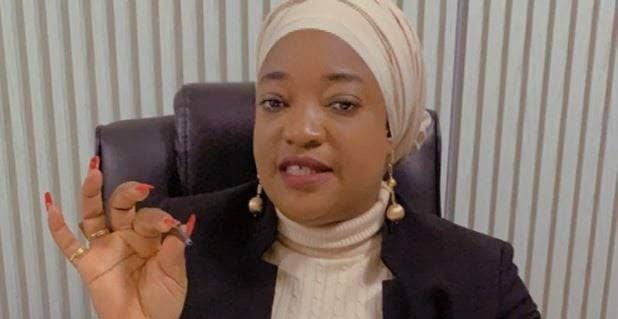
The executive director of Women in Mining Africa (WiM-Africa), Dr Comfort Asokoro-Ogaji, has called for stronger African participation in global metals pricing, urging the continent to move beyond raw mineral exports by developing the market intelligence, processing capacity and financial structures that determine mineral value.
She said Africa’s vast deposits of copper, cobalt, lithium, manganese, platinum-group metals, gold and other critical minerals had not translated into commensurate influence over the international markets where their prices were determined.
Asokoro-Ogaji spoke at a roundtable on Eastern Pricing 2.0: Integrating Futures, Physical Markets, Industry and Finance for the Next Stage of Global Metals Pricing, at the Shanghai Metals Expo 2026.
She said that as Asian markets expanded their influence in metals trading, processing, financing and price discovery, Africa must develop the capacity to participate in the institutions and commercial structures that shape mineral prices.
“Africa possesses some of the world’s most strategically important mineral resources. Yet the possession of resources does not automatically translate into market influence,” she said.
She warned that African countries could remain major mineral producers while having limited access to the information, processing capacity and financial instruments needed to negotiate favourable prices.
“International prices respond to supply, demand, quality, inventories, financial conditions, risk and market expectations. Africa cannot simply announce the prices it wishes to receive.
“What we can do is strengthen our bargaining position, reduce information asymmetry, improve product quality and participate more effectively in the commercial structures through which minerals are traded,” she said.
Speaking on the challenges, Asokoro-Ogaji cited copper concentrate pricing, explaining that the value realised by producers depended not only on international benchmarks but also on mineral grade, moisture content, payable metal, treatment and refining charges, impurities, transportation costs and contract terms.
She said inadequate laboratory testing, limited market information, poor access to finance and restricted buyer networks could prevent African producers from realising the full value of their resources.
She identified five priorities for addressing the challenge: stronger mineral market intelligence; investment in testing, standardisation and traceability; expanded beneficiation and regional value chains; improved access to commodity markets and finance; and inclusive participation in the mineral economy.
She also called for better coordination among African mineral-producing countries, geological institutions, mining companies, laboratories, regulators and financial institutions, noting that fragmented resources, information systems and processing facilities weakened the continent’s market position.
On beneficiation, she advocated investment in local processing to enable African countries to move from exporting predominantly unprocessed minerals to supplying products that meet higher industrial specifications.
However, she noted that not every mineral needed to be processed in every country, making regional collaboration essential.
She also urged stronger links between African producers, commodity markets and financial institutions, stressing that access to working capital, trade finance, secure payment systems, risk-management instruments and credible offtake agreements would improve their competitiveness.
The WiM-Africa chief executive warned against excluding women from emerging global metals trading and pricing structures, saying their participation must extend beyond extraction to processing, trading, financing and other higher-value activities.
She observed that although African women participated in mining, mineral trading, processing, cooperatives and related services, many lacked access to finance, equipment, technical expertise, market information and formal supply chains.
“If the next generation of metals pricing is being designed around stronger connections between physical markets, futures markets, industry and finance, then we must ask: Where are women-led enterprises within that emerging ecosystem?” she asked.
She said women-led mining cooperatives should be able to access reliable assay services, transparent international price information, financing, processing technology and legitimate buyers.
According to her, their inclusion was not merely a question of gender representation but also of economic participation, competitiveness and market development.
She said WiM-Africa’s strategic partnership with Shanghai Metals Market offered opportunities to connect African women-led enterprises with market intelligence, technology, industrial networks, research institutions and commercial opportunities.
Asokoro-Ogaji described Eastern Pricing 2.0 as an opportunity to deepen relations between African mineral-producing economies and China’s industrial, financial and trading systems.
She called for partnerships beyond mineral purchases, including collaboration in market intelligence, laboratory development, processing technology, professional training, responsible sourcing, investment readiness and direct buyer relationships.
Acknowledging China’s industrial expertise and processing capacity, she said Africa brought mineral resources, developing industrial markets, investment opportunities and a growing generation of entrepreneurs to such partnerships.
She stressed that Africa was not seeking to replace established international benchmarks with arbitrary national prices but to develop the capacity to understand them, negotiate better terms, participate directly in markets and retain a greater share of the value generated by its resources.
“The future of metals pricing should not be viewed solely as a contest between established Western benchmarks and emerging Eastern pricing centres. It should also be an opportunity to build more transparent, internationally connected and inclusive mineral markets,” she said.
She urged African countries to strengthen their institutions, processing industries, market intelligence and financial capabilities to translate mineral wealth into industrial development and lasting economic opportunities.
“Because having minerals is not the same as having pricing power. And mineral wealth alone does not guarantee industrial prosperity.
“Africa has mineral power. It is time we built the market power to match it,” she said.
We’ve got the edge. Get real-time reports, breaking scoops, and exclusive angles delivered straight to your phone. Don’t settle for stale news. Join LEADERSHIP NEWS on WhatsApp for 24/7 updates →
Join Our WhatsApp Channel