Women-owned mining businesses across Africa need to embrace digital due diligence and strengthen their business records to take advantage of the opportunities presented by the African Continental Free Trade Area (AfCFTA), experts have said.
Stakeholders at a webinar said credible digital records, business visibility and compliance were increasingly critical for women miners seeking to access the continent’s market of about 1.4 billion people, attract investors, secure financing and establish relationships with international buyers.
The experts spoke during the first in a series of webinars organised under the Mansa Awareness Initiative, a collaboration between Women in Mining Africa and the African Export-Import Bank (Afreximbank).
Executive director, Women in Mining Africa, Comfort Asokoro-Ogaji, said women-owned mining enterprises must improve their digital visibility and ensure that relevant information about their businesses could be easily verified by prospective partners.
She said the expansion of cross-border trade had changed the requirements for businesses seeking to move beyond their local markets, stressing that having quality products and customers was no longer enough.
According to her, investors, financial institutions, suppliers and international buyers increasingly demand verifiable information about a business’s ownership, operations, legitimacy, compliance status and capacity to fulfil transactions.
“Having a product is important. Having customers is important. But when the business person needs to come to an institution, an investor, a supplier or new buyers of your products, there are questions that are asked,” she said.
Asokoro-Ogaji identified visibility, credibility and compliance as major challenges confronting women-led enterprises in the mining sector.
She said businesses that could not provide verifiable information about their operations risked losing investment, financing and market opportunities.
“When potential partners cannot find information about you from a verifiable sector player, it is a problem,” she said.
She also highlighted mineral traceability as an increasingly important requirement for businesses seeking access to international markets, particularly those dealing in gold and other minerals.
According to her, international buyers are increasingly interested in establishing the origin of minerals and ensuring that suppliers meet environmental, social and governance standards.
Asokoro-Ogaji said women were already active across the mining value chain, including mining, mineral processing, trading, supply, services and cooperatives.
However, she stressed that participation alone would not enable them to benefit fully from the expanding African market without proper business documentation and digital visibility.
She said the Mansa platform could help women-owned enterprises address the information gap by providing Africa-focused data for customer due diligence.
“Mansa is Africa’s due diligence data platform. Mansa provides Africa-focused information that can support due diligence on any African entity, including your enterprise,” she said.
According to a report in The Cabal, the Vice President for Administration, AfCFTA Young Entrepreneurs Federation, Prof. Frederick Ndalamani Nonde, said women and young entrepreneurs must position themselves to compete effectively in the expanding continental market.
Nonde said the opportunities presented by AfCFTA could only be fully exploited when African businesses were able to establish credible relationships with buyers, investors and financial institutions across borders.
“For an enterprise to move beyond its local market, to be able to establish credible business relationships, participate in cross-border trade or position itself for appropriate financial opportunities, it increasingly needs visibility, credibility and transparency,” he said.
He described the Mansa Digital Initiative as an important tool for closing the information gap that often makes it difficult for businesses to identify and assess potential partners within Africa.
Presenting the platform, Business Development Associate, Anglophone West Africa Region, Mansa Digital Business, Ngoma Nwankwo, said Mansa was developed to address the difficulty of obtaining reliable and comparable information on African businesses.
She said the platform provides centralised due diligence information on African entities, including financial institutions, corporations and small and medium-sized enterprises.
Nwankwo said the platform captures key information such as business registration details, ownership structure, board and management information and other relevant corporate and financial data.
She added that Mansa also provides information on investment opportunities across African countries, enabling businesses and potential investors to identify opportunities and prospective partners.
According to her, improved access to reliable information could encourage African businesses to source products, services and business partners within the continent rather than relying heavily on markets outside Africa.
She said this could deepen intra-African trade by making it easier for enterprises to identify credible partners and conduct cross-border transactions.
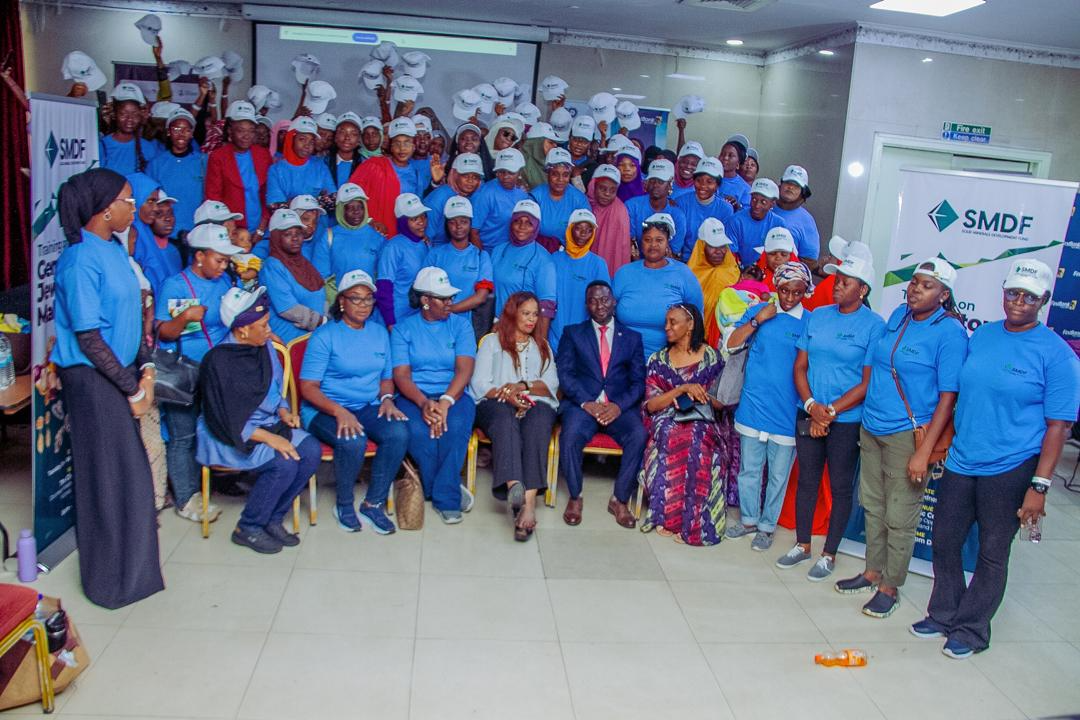
The webinar forms part of a wider capacity-building programme targeting women in mining, young entrepreneurs and other enterprises across the upstream, midstream and downstream segments of the mining value chain.
The organisers said the programme would equip participants with knowledge of customer due diligence, business credibility and the requirements for accessing finance, investment and regional and international markets.
We’ve got the edge. Get real-time reports, breaking scoops, and exclusive angles delivered straight to your phone. Don’t settle for stale news. Join LEADERSHIP NEWS on WhatsApp for 24/7 updates →
Join Our WhatsApp Channel