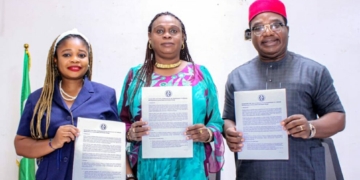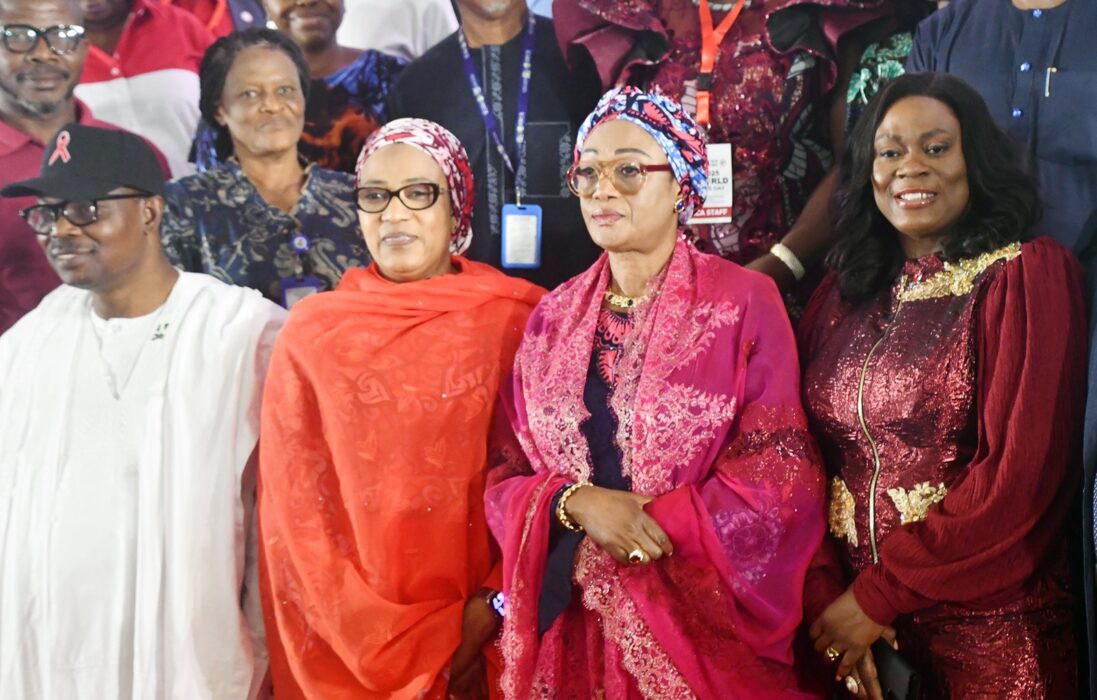
As Nigeria joined the global community to mark the World AIDS Day, the First Lady, Senator Oluremi Tinubu, has called for renewed commitment, increased domestic financing, and collaboration to end HIV/AIDS as a public health threat by 2030.
The First Lady stated this on Monday at the World AIDS Day 2025 commemoration, with the theme: “Overcoming disruption, transforming the AIDS response”, in Abuja.
World AIDS Day is commemorated every December 1. The day provides a platform to stand in solidarity with millions of people living with HIV. It reminds governments and communities of the need to ensure access to life-saving treatment, care, and social support.
Mrs Tinubu said the day offered an opportunity for “reflection, gratitude and renewed commitment” while commending the progress Nigeria has made in HIV prevention, treatment, and care, but stressed that the fight is far from over.
“Nigeria has made remarkable progress, yet we must not relent until everyone in need has access to life-saving services. Ending the epidemic requires sustained advocacy, innovation, compassion, and confronting the stigma that still surrounds HIV/AIDS,” she said.
The First Lady noted that Nigeria’s HIV response remains heavily donor-dependent, urging greater sustainability as global funding patterns shift. She highlighted ongoing efforts coordinated through the National AIDS and STD Control Programme (NASCAP) and the Free to Shine campaign launched across all six geopolitical zones through the Organisation of African First Ladies for Development (OAFLAD).
The campaign seeks to achieve the triple elimination of HIV, hepatitis, and syphilis by 2030 through early testing, treatment, and stigma reduction, especially for mothers and children.
She also welcomed the approval of $200 million by the Federal Government to support the HIV, Tuberculosis, and Malaria programme, and acknowledged engagements being initiated by the National Agency for the Control of AIDS (NACA) with state governments to drive sustainability.
“To our young people, take responsibility for your health, get tested, and know your status. To our communities, let us foster a culture of love, acceptance, and support. HIV/AIDS is no longer a disease of shame,” she urged.
In his opening address, the Minister of State for Health and Social Welfare, Dr. Iziaq Salako, disclosed that Nigeria has surpassed major global HIV treatment targets despite economic pressure and declining international aid.
“We have surpassed the UNAIDS target by putting 98 per cent of Nigerians living with HIV who know their status on treatment, achieved 95 per cent viral suppression, and are on track to ensure at least 95 per cent of Nigerians with HIV know their status,” he said.
The minister highlighted several recent policy milestones, including: reduction of consent age for HIV counselling and testing from 18 to 14 years, to improve early diagnosis among adolescents, integration of HIV, TB, malaria, nutrition, and RMNCAH services to reduce missed opportunities for care, expansion of Pre-Exposure Prophylaxis (PrEP) options, including long-acting formulations, nationwide and a strengthened National Clinical Mentorship Programme, now to be adopted by all state health ministries.
Salako, however, warned that persistent gaps remain, particularly new infections among young people, stigma, and inequities in service access.
“Ending HIV/AIDS is not just about healthcare; it is about justice, dignity, and the future of our children,” he said.
In her remarks, the Director-General of NACA, Dr. Temitope Ilori, emphasised Nigeria’s resilience despite disruptions from the global pandemic, economic uncertainty, and shifts in donor support.
“Nigeria has maintained an 87–98–95 performance on the global HIV targets and recorded a 46% reduction in new infections over the last decade,” she said.
According to her, 1.9 million Nigerians are living with HIV, while prevalence among adults aged 15–49 has dropped to 1.3 per cent, down from 2.8 per cent in previous years.
Ilori also highlighted major innovations in HIV prevention, including the emergence of twice-yearly injections to prevent HIV, a breakthrough now priced as low as $40 per person per year through global negotiations.
“This is what innovation in service of humanity looks like, and Nigeria is committed to ensuring our people benefit,” she added.
She applauded President Bola Tinubu for stepping in “decisively” with the $200m investment to prevent disruption of essential services when donor uncertainties threatened programme continuity.
We’ve got the edge. Get real-time reports, breaking scoops, and exclusive angles delivered straight to your phone. Don’t settle for stale news. Join LEADERSHIP NEWS on WhatsApp for 24/7 updates →
Join Our WhatsApp Channel