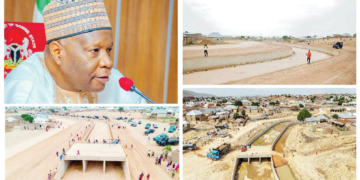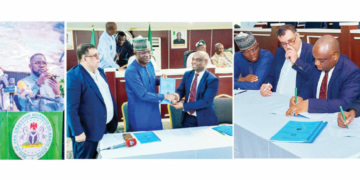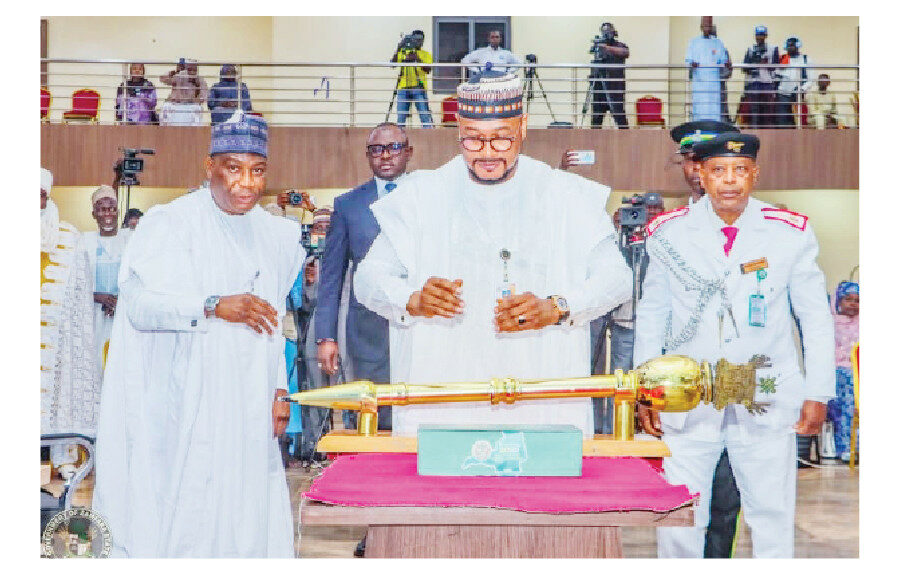
Last week, Governor Dauda Lawal presented the 2026 Appropriation Bill to the Zamfara State House of Assembly for consideration, debate and eventual passage. Tagged the Budget of Stability and Growth, the proposal outlines clear and ambitious measures aimed at strengthening the state’s economy, with a special focus on rescuing, reforming, and revitalising Zamfara state and its people.
Interestingly, the Zamfara 2026 Budget, christened the Budget of Stability and Growth, comprises N147bn, representing 17 per cent of the entire sum as recurrent expenditure, while N714bn, an impressive 83 per cent, is dedicated to capital expenditure. This structure alone signals a significant shift in priorities and aligns strongly with Governor Dauda Lawal’s rescue agenda.
The budget proposal reflects a strategic fiscal direction. With a provision of N147 billion (17 per cent) for recurrent expenditure, the state shows discipline and a deliberate effort to manage public spending responsibly. This approach not only aligns with international public finance standards, which recommend that subnational governments keep their recurrent expenditure at or below 60%, but it also demonstrates the administration’s commitment to meeting personnel and operational obligations without sacrificing the state’s broader developmental ambitions.
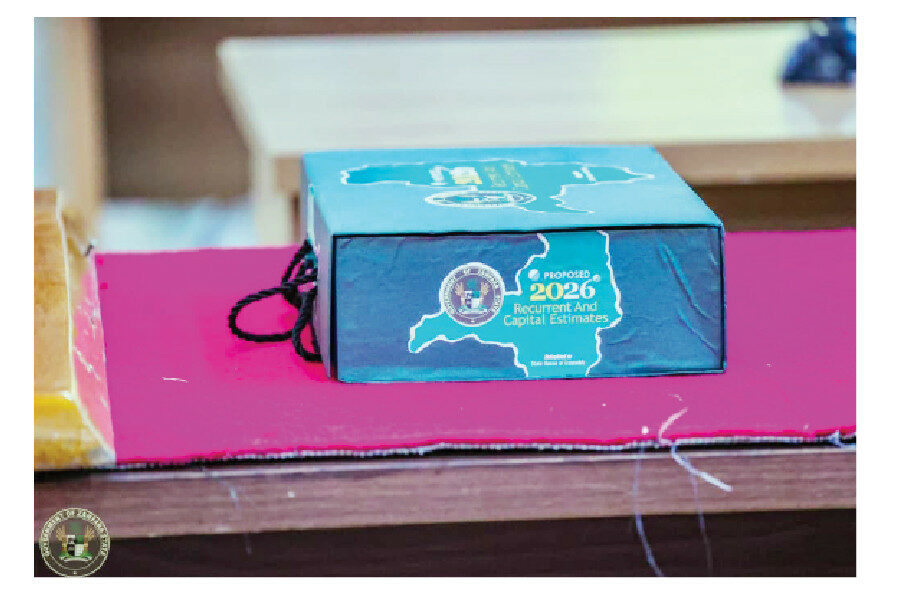
Essentially, the capital expenditure plan, which takes up a significant 83%, marks a decisive commitment to rebuilding infrastructure, strengthening security, revitalising agriculture, and expanding opportunities for unemployed citizens. For a state that has endured years of insecurity and directionless governance, this renewed focus is both timely and necessary.
For too long, Zamfara has received the short end of the stick. Insecurity, economic stagnation, and poor leadership by successive administrations made life extremely difficult for its people. The state’s enormous potential in farming, cattle rearing and trade was rendered almost meaningless due to the sustained insecurity arising from activities of bandits who attack, displace communities and kidnap for ransom.
For more than a decade, Zamfara has continued to endure the activities of these criminal elements, which have a catastrophic impact on its growth and development.
Hope returned in 2023 when, against all odds, citizens overwhelmingly voted for Governor Dauda Lawal of the opposition Peoples Democratic Party. In the last two years, the governor has worked tirelessly to restore trust in public institutions, rebuild critical sectors, and lay the foundation for sustainable development.
Since assuming office in 2023, his administration has confronted deep-rooted structural failures, broken infrastructure, salary arrears, a weakened civil service, and widespread insecurity that crippled the state.
Reflectively, one of the administration’s earliest interventions was sanitising the payroll, eliminating ghost workers, and blocking financial leakages. It also implemented a fair and dignified minimum wage for civil servants, ensuring that those who serve the state are treated with respect and receive just compensation.
In line with the rescue mission, the administration has been rehabilitating schools, equipping and upgrading hospitals, constructing roads, and creating opportunities for youth and women. It is reaffirming the belief that public resources can, and must, be deployed for the collective good.
This is the spirit that guided the formulation of the 2026 budget, reflecting Governor Lawal’s strong commitment to improving security, education, agriculture, infrastructure, civil service reform, and economic revitalisation. A notable feature of the budget is its substantial allocation to poverty alleviation. This is based on the understanding that insecurity cannot be addressed without tackling its root causes, which include poverty, inequality, and social exclusion. The administration is therefore prioritising humanitarian aid for displaced families, youth empowerment, and capacity-building programmes that equip young people with essential skills for sustainable livelihoods.
The governor captured this vision clearly when he noted that: “by investing in jobs, education, technology and community development, we are cutting off the oxygen supplies that fuel crime and restoring hope to vulnerable populations.”
Critical sectors, including agriculture, infrastructure, health, education, and security, are finally receiving the attention they have long deserved. At the heart of the rescue mission is the transformation of education. No society rises above the quality of its learning institutions, and the Lawal administration recognises this. That is why the Governor Lawal administration prioritised making Zamfara State University fully functional and competitive, while revitalising the College of Agriculture and Animal Science (CAAS) in Bakura, to strengthen the state’s tertiary education pipeline.
Beyond building new schools and rehabilitating dilapidated ones, the administration is designing a comprehensive state scholarship scheme to support talented young people. The scheme will fund critical fields of study and encourage students to enrol in reputable institutions where they can excel.
Recognising that good roads are the backbone of economic development, the government made copious provisions in the budget, to undertake major road projects. These include the Gusau-Magami-Dansadu road and the Mallamawa-Zarummai-Bukuyyum road, both of which are vital for trade and security. Other projects include constructing the 94-kilometre Yandoton Daji-Doka-Yan Waren Daji-Hayin Alhaji-Bedi-Yankuzo route; the 53-kilometre Jauri-Dogon Kade-Nassarawa Mai Layi-Nassarawa Godal road; as well as the Birnin Zauma-Gumi, Maradun-Makera, and Zurmi-Rukudawa roads. Additionally, provisions have been made for the Lambar Asako-Asako road, the Lambar Kaida-Kaida road, and the Kotorkoshi-Tofa-Samawa-Rawaya road (Bela Ward, Bungudu).
Concerning the fight against insecurity, the state’s primary challenge, the administration intends to develop a security framework based on resilience, modern technology, and community cooperation. For years, Zamfara has been combating banditry, but the new strategy aims to combine the capabilities of security forces with community intelligence, poverty alleviation, and infrastructure development.
As Governor Dauda observed, the budget is more than figures on paper; it is a roadmap for transformation, a pact with the people, and a declaration that Zamfara State will emerge stronger, more united, and more determined than ever before.
We’ve got the edge. Get real-time reports, breaking scoops, and exclusive angles delivered straight to your phone. Don’t settle for stale news. Join LEADERSHIP NEWS on WhatsApp for 24/7 updates →
Join Our WhatsApp Channel