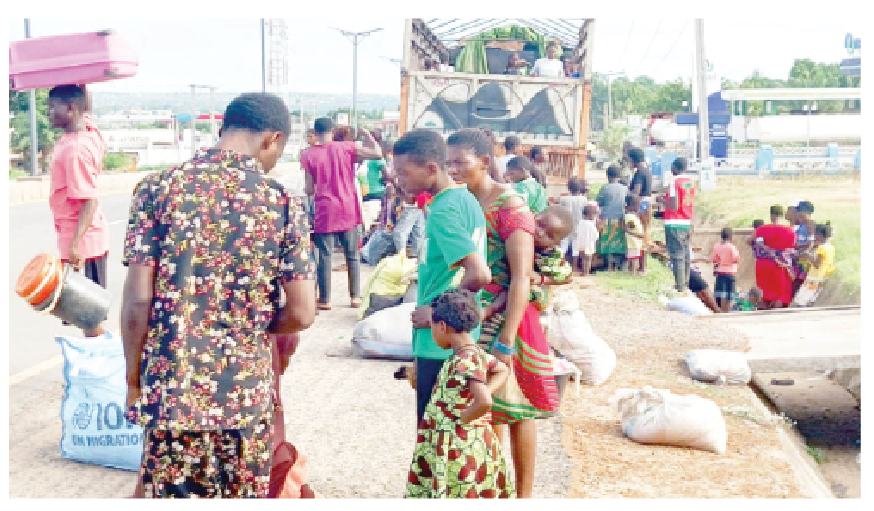
The recent protests by Internally Displaced Persons (IDPs) from Yelwata in Benue State have laid bare the harrowing reality of displacement in Nigeria. On June 19, 2025, these IDPs took to the streets of Makurdi, blocking major roads like George Akume Way, their voices rising against hunger, neglect, and the diversion of relief materials.
This unrest is not an isolated incident but a stark reflection of the dire living conditions plaguing IDPs across the nation. From overcrowded camps with no basic amenities to preventable deaths due to starvation, the plight of Nigeria’s displaced demands urgent scrutiny. Yet, the roles of the National Emergency Management Agency (NEMA), state emergency management agencies, and the broader governmental response reveal a troubling pattern of inefficiency, indifference, and misplaced priorities that must be challenged.
The conditions in IDP camps paint a grim picture. In Yelwata, IDPs are reported to be sleeping on bare floors, battling mosquito infestations, and watching children starve, as highlighted by their desperate roadblocks. In Benue, recent data reveals 15 births and 122 pregnancies in a single camp, where lack of food and medical care exacerbates maternal and infant mortality risks. Similarly, in Nasarawa State, an influx of over 4,000 IDPs from Benue has strained local resources, with reports of inadequate shelter and sanitation. Across Nigeria, camps in Borno and Adamawa, housing hundreds of thousands displaced by Boko Haram, face chronic shortages of clean water and medicine, with cholera outbreaks claiming lives in recent weeks. These examples underscore a systemic failure to provide humane living conditions, reducing IDPs to mere statistics in a bureaucratic quagmire.
NEMA, tasked with coordinating disaster response, is dining its utmost given the circumstances. Still we urge it continue to strive to execute its mandate in a manner that bring real succour to the afflicted.
While it deployed relief materials to Yelwata following attacks, the aid’s timeliness and adequacy remain questionable, with IDPs alleging diversion by officials. This mirrors broader criticisms: in 2024, NEMA faced accusations of hoarding supplies in warehouses while IDPs in the Northeast suffered, a claim the agency denied. State emergency management agencies fare no better. In Benue, the State Emergency Management Agency (SEMA) has been accused of abandoning Yelwata IDPs to hunger and mosquitoes, with relief materials allegedly siphoned off by corrupt officials. In Adamawa, SEMA’s failure to distribute palliatives promptly led to riots in May 2025. These agencies often shift blame to federal allocations, yet their lack of accountability and local coordination exposes a deeper malaise—prioritising political optics over human lives.
The role of legislators and governments distributing palliatives further complicates the crisis. Recent palliative schemes, intended to ease economic hardship, have disproportionately favoured urban elite and political loyalists, leaving IDPs marginalised. In Benue, while state allocations exist, local governments and traditional institutions receiving funds have shown little initiative in supporting IDPs, often citing insufficient resources – a convenient excuse that masks inaction. The establishment might argue these bodies lack capacity, but this ignores their constitutional duty to serve all constituents, including the displaced. The diversion of aid, as seen in Yelwata, suggests a systemic rot where survival is a privilege for the connected, not a right for the vulnerable.
This editorial urges a radical shift. Legislators must prioritise IDP welfare in budget allocations, enacting laws to enforce transparency in palliative distribution and penalise diversion. Governments at all levels should redirect resources to camps, ensuring food, healthcare, and shelter, with real-time monitoring to prevent corruption. Local governments and Emirates, funded by state allocations, must step up, collaborating with community leaders to identify and support IDPs effectively. NEMA and SEMA require overhaul — independent audits, leadership changes, and community-led oversight could restore credibility. The establishment’s narrative of limited resources is a hollow defence; the will to act, not the means, is lacking.
The Yelwata protest is a clarion call. Nigeria’s IDPs, numbering over three million, deserve more than promises. Their living conditions — marked by starvation, disease, and neglect —reflect a nation’s failure to uphold its social contract. As rains threaten further displacement and insecurity persists, the time for action is now. Let legislators, governments, local councils, and traditional authorities prove their worth by placing IDPs at the heart of their agenda by turning despair into dignity.
We’ve got the edge. Get real-time reports, breaking scoops, and exclusive angles delivered straight to your phone. Don’t settle for stale news. Join LEADERSHIP NEWS on WhatsApp for 24/7 updates →
Join Our WhatsApp Channel