The federal government has been advised to develop and institutionalise a national framework for education in emergencies to ensure that millions of internally displaced children in Nigeria have access to quality education despite the challenges of conflict, displacement and insecurity.
The dean of the Faculty of Humanities, Prof. Gabriel Egbe, made the call during the closing ceremony of a two-year research project conducted by the Teaching and Learning in Fragile Context (TLFC) Research Team of Veritas University, Abuja.
The four-member research team are Prof. Gabriel Egbe, Dr Chika Eze, Dr Abiodun Ayeni and Father Tyolumun Kinga-Upaa.
The research was funded by a Canadian educational development organisation and is one of 12 projects implemented across Africa under the Teaching and Learning in Fragile Context initiative, with Veritas University being the sole Nigerian beneficiary.
The project, titled “Assessing Quality Education for IDPs in Northern Nigeria: Phonological Awareness as Foundational Literacy Umbrella,” was carried out at the IDP Sharing Prosperity School in New Kuchingoro Internally Displaced Persons Camp in the Federal Capital Territory (FCT).
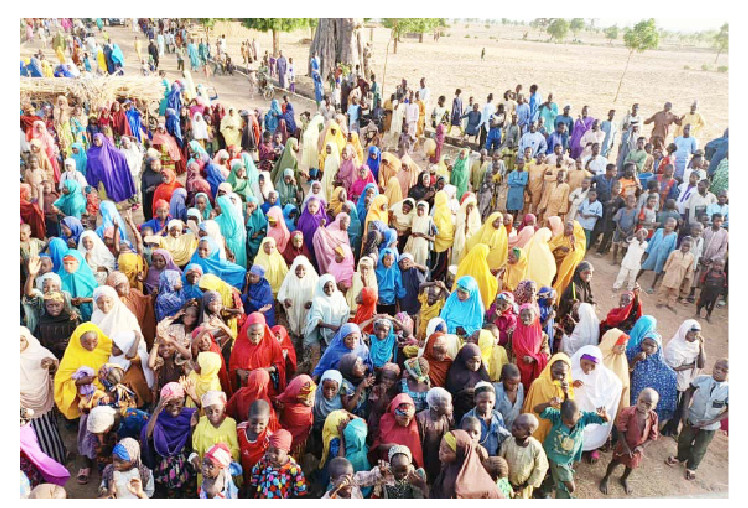
According to the researchers, Nigeria currently hosts about 3.6 million internally displaced persons (IDPs), making it the largest displaced population in Africa. Many of the displaced children face severe disruptions to their education due to insurgency, banditry and communal conflicts.
Presenting the findings, Prof. Egbe, the principal investigator, explained that the study was motivated by concerns over the educational future of children living in fragile and displacement-affected communities.
“Children in IDP camps suffer what we call double jeopardy. Even within the regular school system, Nigeria is grappling with learning poverty. When you add displacement, trauma, hunger and uncertainty about shelter, the challenge becomes even greater,” he said.
According to the report, teaching largely focused on rote memorisation of the alphabet, leaving pupils with weak reading skills.
Following the assessment, the research team organised a five-day intensive training programme for teachers on phonological awareness instruction and psychosocial support. Teachers also received continuous mentoring through a digital platform and classroom monitoring.
The study further highlighted the critical relationship between learning and welfare. Through focus group discussions, researchers identified food insecurity, inadequate learning materials and poor teacher welfare as major barriers to quality education.
To sustain learning gains, the project established a Mobile Literacy Tent equipped with reading materials, instructional charts, games and writing supplies for pupils and teachers.
Prof. Egbe stressed that the findings demonstrate that structured phonological awareness instruction, teacher capacity development and continuous monitoring can significantly improve foundational literacy even in resource-constrained settings.
He called on government to adopt a national policy framework for education in emergencies in line with the provisions of the Kampala Convention.
Other recommendations from the study include scaling up structured early literacy programmes, institutionalising regular literacy assessments, strengthening teacher professional development through coaching and peer learning communities, and providing targeted support to address both academic and psychosocial challenges.
The director of Research, Publications and Linkages at Veritas University Abuja, Dr Godwin Udourioh, described the project as a model of impactful research capable of transforming vulnerable communities.
Also, associate professor of Counselling Psychology and deputy director of Research at Veritas University, Dr Chika Eze, drew attention to the harsh living conditions faced by displaced children.
She noted that poor sanitation, inadequate infrastructure and deprivation negatively affect children’s ability to learn, stressing that addressing psychosocial needs is critical to educational success.
“It is not their fault that they are displaced. It is a collective responsibility for all Nigerians. Even if we cannot do something big, we can do something small to support them,” she said.
A member of the research team, Father Tyolumun Kinga-Upaa, urged government to intensify efforts to tackle insecurity and partner with educational institutions and development organisations to support displaced communities.
The federal commissioner and chief executive officer of the National Commission for Refugees, Migrants and Internally Displaced Persons, Dr Aliyu Tijani Ahmed, commended the research team and said the findings would provide valuable evidence for government interventions in IDP camps nationwide.
The headmaster of IDP Sharing Prosperity School, Luka Yathuma, said the project had significantly improved teaching and learning outcomes in the camp school.
“We started this school because we did not want the objectives of Boko Haram to succeed by keeping our children out of school. Through this intervention, our teachers have learned more effective and child-centred methods of teaching, and the children are benefiting greatly,” he said.
We’ve got the edge. Get real-time reports, breaking scoops, and exclusive angles delivered straight to your phone. Don’t settle for stale news. Join LEADERSHIP NEWS on WhatsApp for 24/7 updates →
Join Our WhatsApp Channel